Central banks need ‘heightened vigilance’ to risks amid Middle East conflict: MAS chief economist
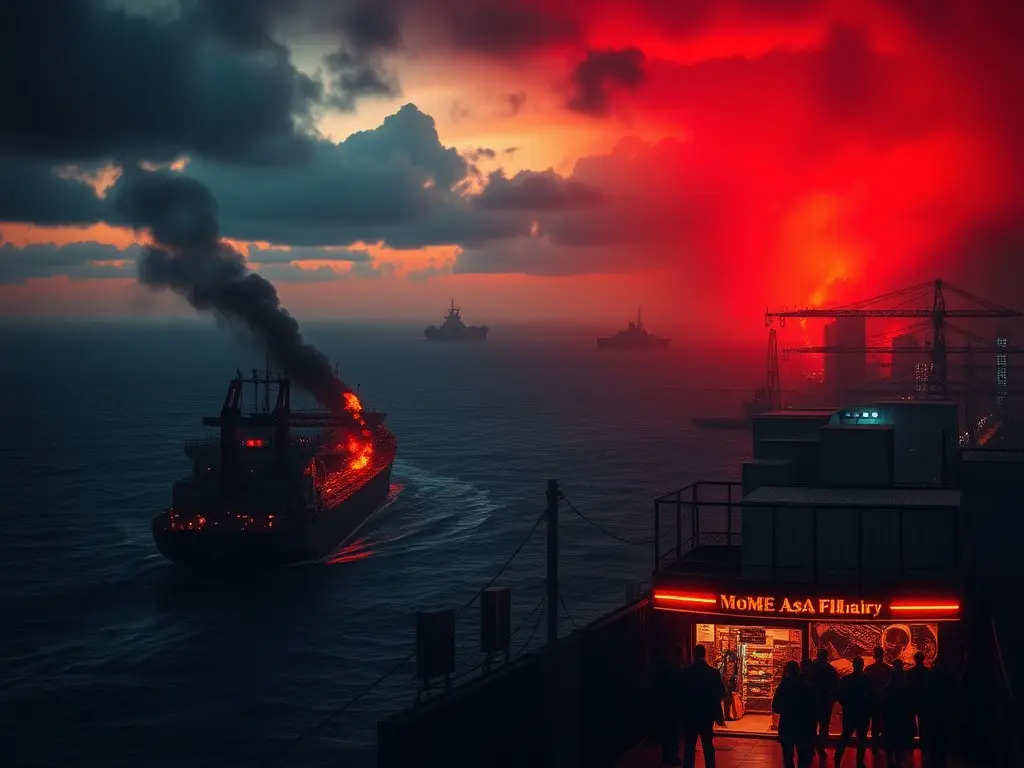
Monetary Authority of Singapore chief economist Edward Robinson warned that central banks must maintain heightened vigilance due to risks from the Middle East conflict, particularly for small open economies facing energy price shocks. He emphasized that supply-side policies and avoiding protectionist measures are critical to mitigating inflation and growth disruptions caused by restricted oil and gas flows through the Strait of Hormuz.
Singapore’s Monetary Authority of Singapore (MAS) chief economist Edward Robinson urged central banks to adopt ‘heightened vigilance’ amid financial and fiscal risks stemming from the Middle East conflict. Speaking at the 13th Asian Monetary Policy Forum on May 22, Robinson highlighted that small open economies—where energy costs rapidly impact wages and prices—face disproportionate strain from the conflict’s persistent supply shock. The closure of the Strait of Hormuz has disrupted global oil and gas flows, exacerbating inflation and growth pressures, particularly in Asia, where many nations rely heavily on energy imports. Robinson noted that demand-related policies are ineffective against energy shocks, while supply-side measures—such as securing advanced energy supplies—are more critical. He cautioned against protectionist moves like export curbs, which could worsen global supply conditions and fuel inflation. Robinson also addressed trade shocks, stating that while US tariffs have not collapsed global trade, their effects remain damaging. Tariffs have diverted trade flows, raised US inflation, and reduced economic efficiency by shifting sourcing to less competitive suppliers. Supply chain disruptions further amplify these costs, while long-term innovation and collaboration suffer. Despite recent resilience in trade, Robinson warned that tariffs’ orthodox negative impacts persist. On artificial intelligence, Robinson observed that its productivity gains have yet to materialize, with economic growth currently driven more by AI capital spending than labor augmentation. The global economy faces ongoing stress from geopolitical, trade, and energy shocks, demanding adaptive policy responses to sustain stability.
This content was automatically generated and/or translated by AI. It may contain inaccuracies. Please refer to the original sources for verification.