China advances toward scaled commercialization of humanoid robots
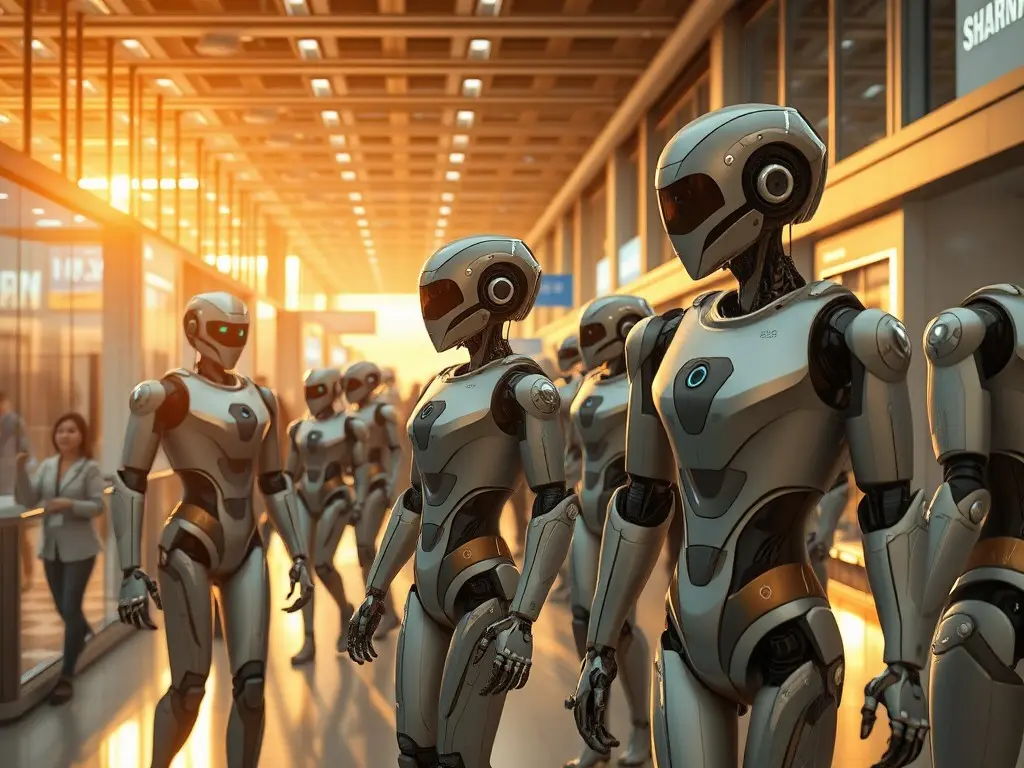
China’s 2025 World Artificial Intelligence Conference in Shanghai showcased over 60 humanoid robots transitioning from labs to commercial use, with companies like Keenon Robotics and Fourier Intelligence unveiling models for service, healthcare, and industrial applications. Officials and experts predict humanoid robots will disrupt sectors like manufacturing, logistics, and domestic services, integrating AI, sensors, and mechanics for advanced embodied intelligence.
China is accelerating toward large-scale commercialization of humanoid robots, with over 60 models on display at the 2025 World Artificial Intelligence Conference (WAIC) in Shanghai. The event, held from July 26 to 28, features 800 companies showcasing 3,000 products, emphasizing embodied intelligence—robots with physical presence and real-time environmental interaction. Du Guangda, deputy director of the Ministry of Industry and Information Technology, stated these robots are moving from lab experiments to mass production, targeting industries like manufacturing, logistics, and healthcare. Keenon Robotics debuted its bipedal humanoid service robot, XMAN-F1, capable of standardized tasks such as food preparation and table service. The company’s booth demonstrated integrated service ecosystems, including a robot bartender and medical delivery systems, blending specialized and general-purpose robots. Li Tong, Keenon’s CEO, noted both types will collaborate to serve society, with applications in domestic services, education, and border security. Fourier Intelligence unveiled its GR-3 humanoid care robot, designed for emotional interaction through expressive facial details and tactile design. The GRx series, already deployed at 300 medical sites serving over 1 million patients, aims for future use in care and education. The company’s shift from exoskeleton rehabilitation to humanoid companionship reflects growing demand for adaptive robotic assistants. Shanghai Kepler Robot Co Ltd showcased industrial humanoid robots for smart manufacturing, logistics, and automated inspection. Their models demonstrated embodied intelligence in automotive assembly and warehouse operations, reducing reliance on manual labor. Xu Xiaolan, president of the Chinese Institute of Electronics, called humanoid robots the next disruptive product after computers and smartphones, with potential to revolutionize multiple sectors. Advances in generative AI, chips, sensors, and mechanics are driving this progress, enabling robots to interact more intelligently with their surroundings. Officials and experts at WAIC highlighted the technology’s role in creating integrated service ecosystems, combining specialized and general-purpose robots for broader societal impact.
This content was automatically generated and/or translated by AI. It may contain inaccuracies. Please refer to the original sources for verification.