China catching up to U.S. on autonomous driving tech, experts warn
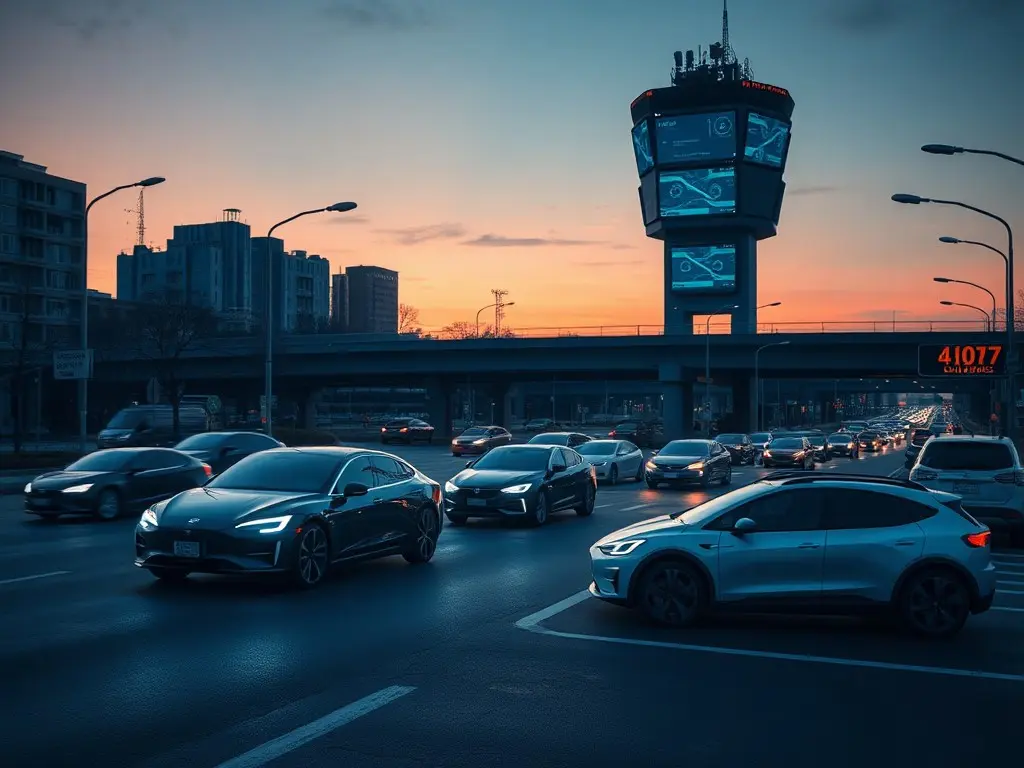
China is rapidly advancing in autonomous driving technology, threatening to surpass the U.S., as Tesla’s Full Self-Driving Supervised launches in China and domestic brands like BYD and Xpeng integrate advanced driver assistance systems. Regulatory caution in China contrasts with the U.S. approach, with stricter safety rules on hands-off driving, though both markets see fierce competition to differentiate EVs through AI-driven automation features.
China’s push into autonomous driving technology is narrowing the gap with the U.S., with Tesla’s Full Self-Driving Supervised system now launching in the country after years of delays. The move follows Chinese automakers like Xpeng and Xiaomi accelerating semi-autonomous features, while Tesla’s entry aligns with Elon Musk’s recent visit to Beijing. Experts cite China’s aggressive R&D investments and scaling efforts, mirroring its earlier dominance in battery technology, as key drivers of progress. Regulatory differences shape the competition: China restricts long-term hands-off driving (Level 2 automation) due to safety concerns, requiring vehicles to slow or stop if hands remain off the wheel for over a minute. In contrast, the U.S. permits systems like Tesla’s FSD, GM’s Super Cruise, and Ford’s BlueCruise without such constraints. Analysts attribute China’s caution to consumer confidence and international perception, favoring a ‘permission-first’ approach over the U.S. model of ‘innovate and adapt.’ The shift reflects broader market trends in China’s $4 trillion EV sector, where ‘involution’—intense competition—has driven prices down and forced brands to prioritize advanced driver assistance systems (ADAS) for differentiation. BYD, China’s top automaker, now embeds these features across models, with intelligence surpassing range as a selling point. Analysts note that ADAS adoption is expanding to mid-range vehicles, as affordability improves for Chinese consumers. Tesla’s delayed but eventual launch of FSD in China marks a strategic win in the world’s largest EV market, though full fleet-wide deployment remains pending regulatory approval. Meanwhile, Chinese firms like Baidu are expanding globally, with Waymo’s London operations positioning them as direct competitors. The race underscores China’s strategy to leverage AI-driven automation as a cornerstone of its tech leadership, despite safety-first policies that contrast with Western markets.
This content was automatically generated and/or translated by AI. It may contain inaccuracies. Please refer to the original sources for verification.