China launches rival rocket to SpaceX Falcon 9 for the first time
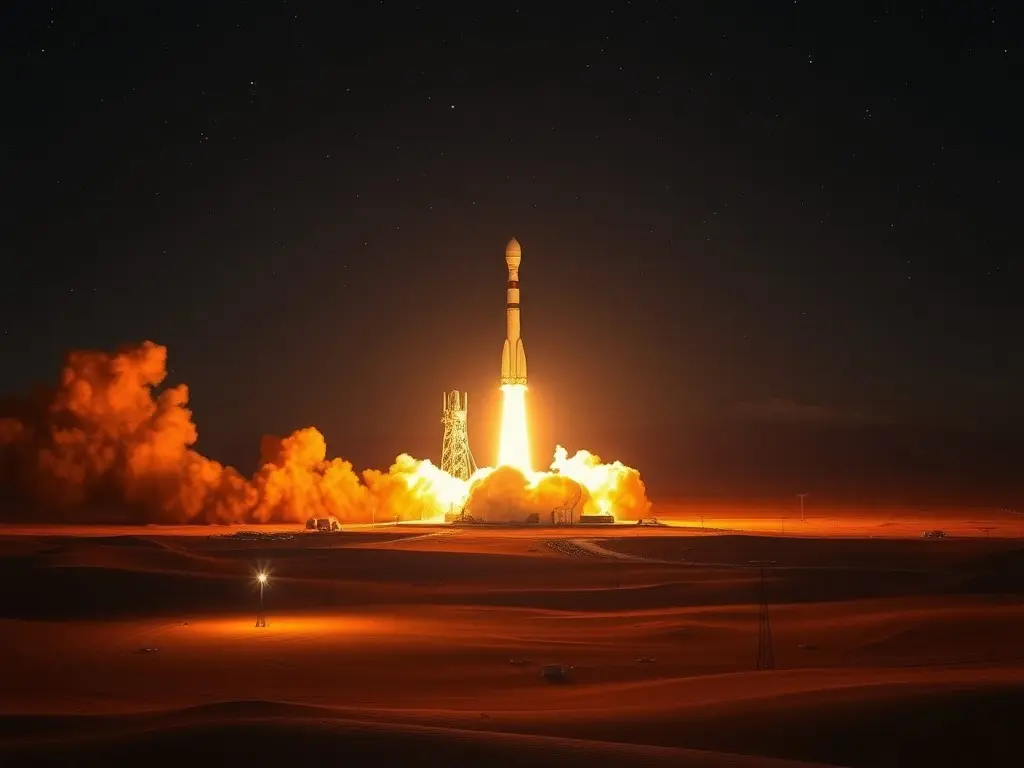
China conducted its first launch of the Long March 12B rocket without advance airspace or maritime warnings, deploying Qianfan megaconstellation satellites to rival SpaceX’s Starlink. The launch occurred at 4:40 A.M. EDT from the Dongfeng Commercial Aerospace Innovation Test Zone in the Gobi Desert, with CASC confirming success despite no debris mitigation measures.
China Aerospace Science and Technology Corporation (CASC) launched its Long March 12B rocket for the first time on Monday, deploying operational satellites for the Qianfan Internet megaconstellation. The launch took place at 4:40 A.M. EDT from the Dongfeng Commercial Aerospace Innovation Test Zone in the Gobi Desert, with no prior airspace or maritime warnings issued, violating global safety protocols. The rocket, comparable to SpaceX’s Falcon 9, successfully completed its mission, though CASC did not attempt first-stage recovery. The absence of warnings—standard practice per the International Civil Aviation Organization and International Maritime Organization—raises concerns about debris risks and compliance with international space law. China’s latest launch follows February’s successful test of the Long March 10 moon rocket, which entered orbit and performed a controlled splashdown in the South China Sea. Analysts expect China to pursue a crewed moon landing around 2030, accelerating competition with NASA’s Artemis program, which aims for a 2028 return to the lunar surface. The Qianfan megaconstellation, designed to rival SpaceX’s Starlink, marks China’s push for independent global satellite internet coverage. However, the lack of transparency in launch procedures and debris management continues to draw criticism from the international space community.
This content was automatically generated and/or translated by AI. It may contain inaccuracies. Please refer to the original sources for verification.