China launches rocket to send astronaut on year-long space mission as it eyes 2030 moon landing
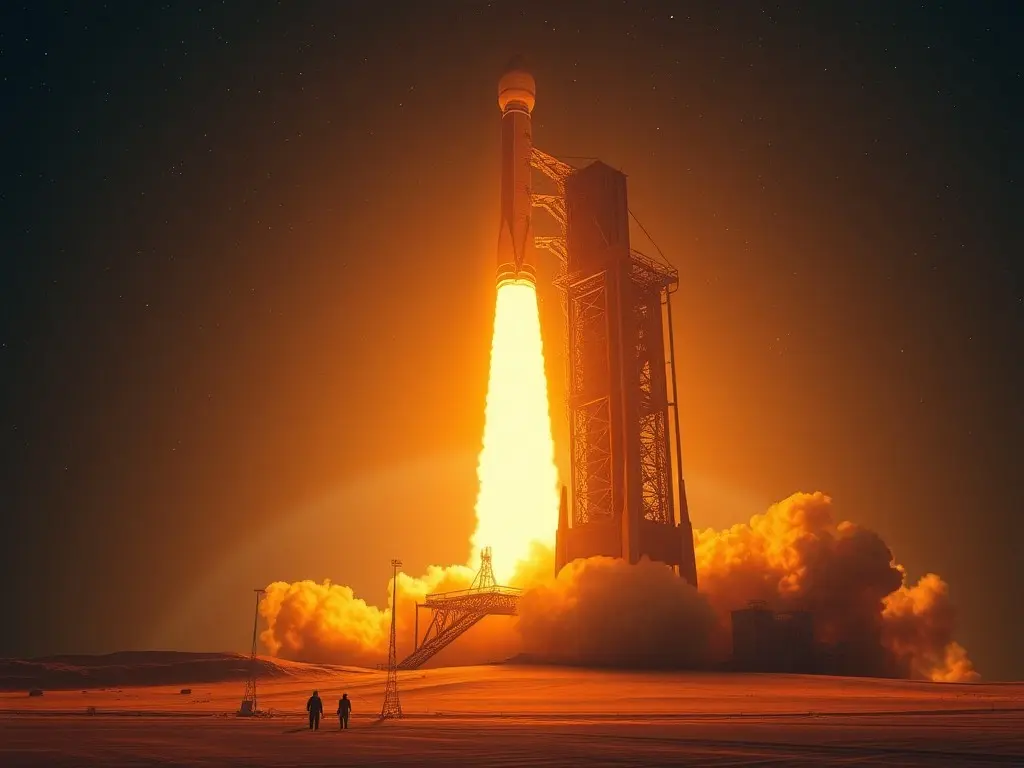
China launched the Shenzhou-23 mission on May 24 from Jiuquan, sending astronauts—including payload specialist Li Jiaying, the first from Hong Kong—to the Tiangong space station for a year-long stay, marking a key step toward its 2030 crewed moon landing. The mission, part of Beijing’s lunar ambitions, follows the US-led Artemis program and comes as China develops new hardware for its lunar goals, while rejecting US claims of militarizing the moon.
China successfully launched the Shenzhou-23 mission on May 24 at 11:08 PM from the Jiuquan launch center in the Gobi Desert, using a Long March 2-F rocket. The spacecraft entered orbit after separation, and the China Manned Space Agency (CMSA) confirmed the astronauts—commander Zhu Yangzhu, pilot Zhang Yuanzhi, and payload specialist Li Jiaying, a former Hong Kong police inspector—were in good condition. This mission marks the first time a Chinese astronaut will spend a full year in orbit, a critical test for Beijing’s plans to land humans on the moon by 2030. One crew member will remain on the Tiangong space station for the duration, with the selection dependent on mission progress. The 12-month stay, while shorter than the 14.5-month Russian record in 1995, aligns with China’s goal of establishing a permanent lunar base by 2035. The launch underscores China’s accelerating space race with the US, which aims for a crewed moon landing in 2028 via NASA’s Artemis program. Earlier this month, SpaceX conducted an uncrewed test flight of its Starship rocket, designed for future lunar missions. China has dismissed US allegations of lunar colonization and resource mining, emphasizing its scientific and exploratory objectives. China’s Shenzhou missions have previously sent astronauts to Tiangong for six-month stays since 2021. The country is also training Pakistani astronauts, one of whom may join a short-duration mission to Tiangong later this year. Meanwhile, China faces challenges in developing new lunar-specific hardware and software to ensure astronauts can transition safely from low-Earth orbit to the moon’s surface. The mission follows the Shenzhou-22 launch in November, which was expedited after the Shenzhou-20 vessel was damaged by space debris. Despite setbacks, China’s robotic lunar missions and advancing space capabilities highlight its growing expertise in deep-space exploration.
This content was automatically generated and/or translated by AI. It may contain inaccuracies. Please refer to the original sources for verification.