China to send astronaut on year-long space mission as it eyes 2030 moon landing
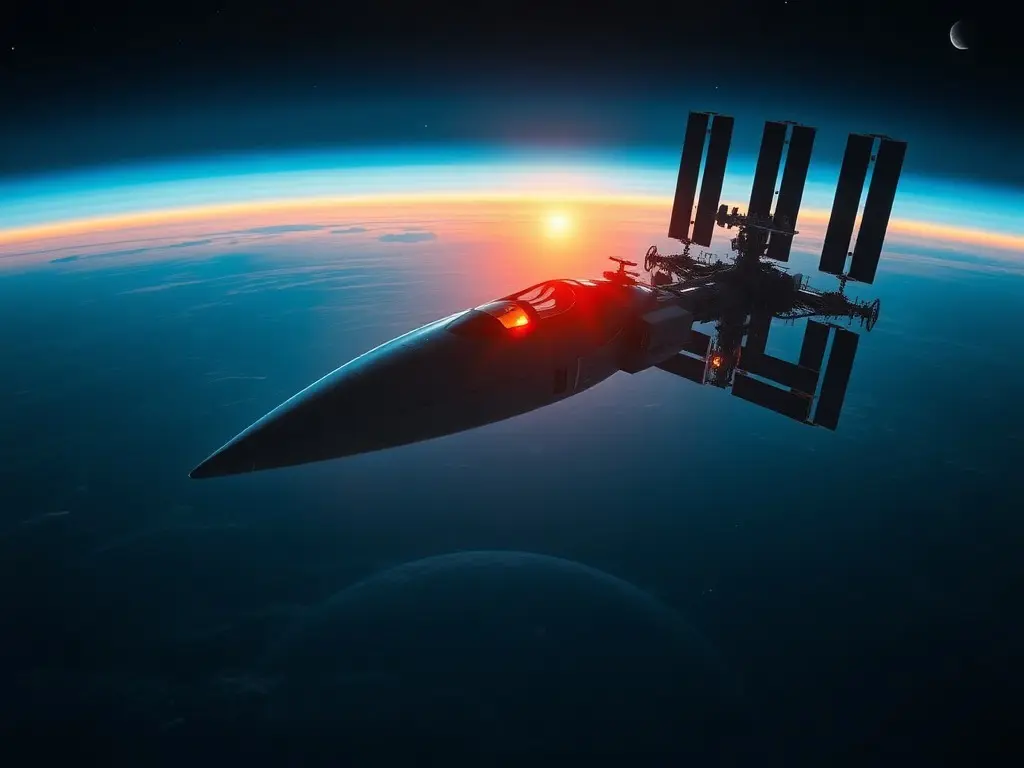
China will launch the Shenzhou-23 mission on May 25, sending astronauts—including Li Jiaying, the first from Hong Kong—to its Tiangong space station for a year-long stay to study long-duration space effects, as the country prepares for a crewed moon landing by 2030. The mission includes testing autonomous docking procedures and hardware development for lunar missions, while China races against the U.S. in lunar exploration ambitions, despite U.S. warnings about potential colonization plans.
China’s Shenzhou-23 mission will launch at 11:08 p.m. local time on May 25 from the Jiuquan Satellite Launch Center, carrying three astronauts—commander Zhu Yangzhu, pilot Zhang Yuanzhi, and payload specialist Li Jiaying, the first from Hong Kong—to the Tiangong space station for a year-long stay. This marks China’s longest crewed mission to date, aiming to study physiological effects of prolonged spaceflight, including radiation exposure and bone density loss, as part of preparations for a crewed moon landing by 2030. The mission will also test an autonomous rapid rendezvous and docking procedure with Tiangong’s core module, a critical step for China’s 2030 lunar program, which requires automated lunar-orbit rendezvous between the Mengzhou spacecraft and the Lanyue lander. China has been developing new hardware, including the Long March-10 rocket and lunar lander, with safety tests underway over the past year. China’s lunar ambitions accelerate amid a space race with the U.S., which aims for a crewed moon landing in 2028 via the Artemis program. NASA’s recent Artemis II mission took astronauts farther from Earth than ever before, while SpaceX’s uncrewed Starship test flight in May advanced lunar mission capabilities. China has rejected U.S. claims about lunar colonization plans, emphasizing scientific exploration. The Shenzhou-23 crew will join two Pakistani astronauts expected to visit Tiangong later this year, expanding international collaboration. China previously recovered lunar samples from the moon’s far side in 2024 and plans to establish a permanent lunar base with Russia by 2035. The mission’s success will determine whether an astronaut remains in orbit for the full year, with the final decision based on progress. China’s space program has rapidly advanced, sending astronauts to Tiangong since 2021 and recovering from past incidents, like the Shenzhou-20 vessel damaged by space debris in 2023. The upcoming mission underscores China’s commitment to lunar exploration, leveraging its growing expertise in human spaceflight and robotic technology.
This content was automatically generated and/or translated by AI. It may contain inaccuracies. Please refer to the original sources for verification.