China’s BYD Reveals Secret Humanoid Robot Development Plans
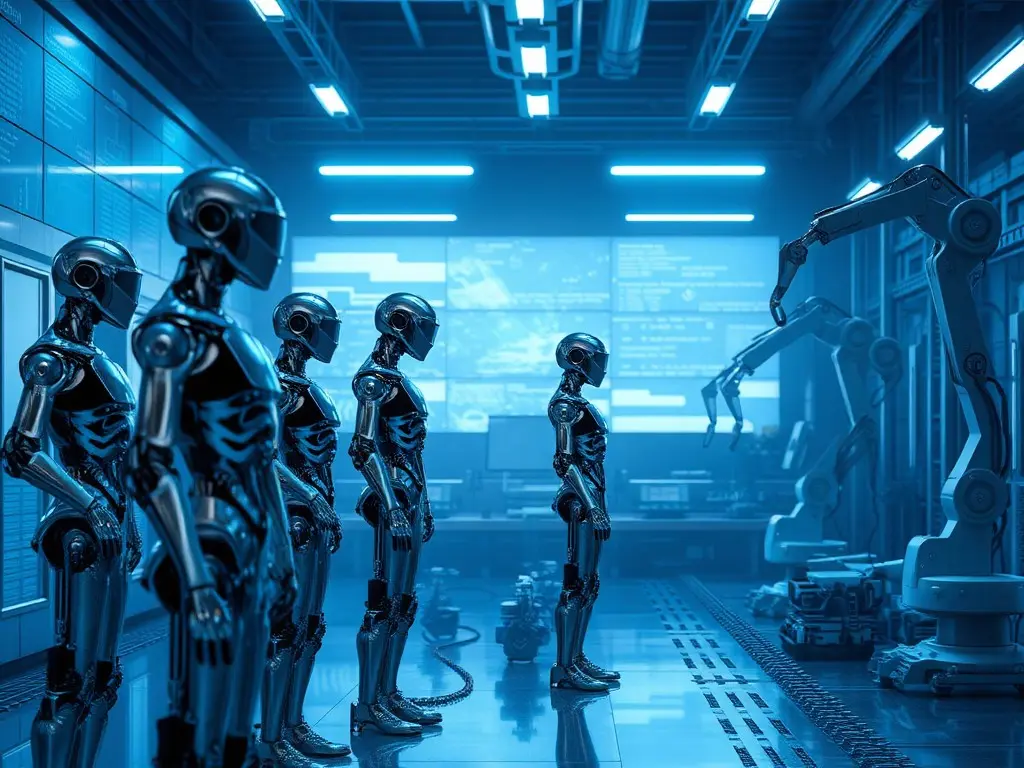
China's BYD, a leader in electric vehicles, has confirmed a secret four-year development of humanoid robots under the codename 'Yao-Shun-Yu,' aiming to bridge gaps in AI and physical capabilities. The company plans to leverage its manufacturing expertise for industrial and retail applications, potentially adopting an open-platform strategy for third-party integration.
China’s BYD, the world’s largest new-energy vehicle manufacturer, has revealed plans to develop humanoid robots under the project name 'Yao-Shun-Yu.' The initiative, running since 2022 under BYD’s 15th Business Unit, focuses on combining AI and physical capabilities to compete with global robotics advancements. Executive Vice President Li Ke highlighted China’s robotics challenges, stating that domestic robots lack AI sophistication while U.S. models struggle with physical dexterity. BYD aims to address this by integrating its expertise in batteries, motors, electronics, and precision manufacturing, supported by its automotive intelligence ecosystem. Headquartered in Shenzhen, a tech hub for robotics and EV supply chains, BYD benefits from local access to sensors, motors, and manufacturing infrastructure. The company plans to prioritize industrial robots initially but will deploy humanoid models in factories and retail stores to address labor shortages. BYD may adopt an open-platform approach, collaborating with third-party developers or established robotics firms to accelerate development. This strategy aligns with industry trends, where automotive companies view humanoid robots as the next phase of embodied AI after autonomous driving. The disclosure positions BYD in a competitive race with rivals like Tesla, which has already mass-produced its Optimus Gen-3 humanoid robot for factory use, and XPeng, which unveiled its 'IRON' humanoid model. BYD’s move signals a shift in the automotive industry toward integrating robotics into core operations.
This content was automatically generated and/or translated by AI. It may contain inaccuracies. Please refer to the original sources for verification.