China’s CATL moves sodium-ion batteries from pilot projects to commercial deployment
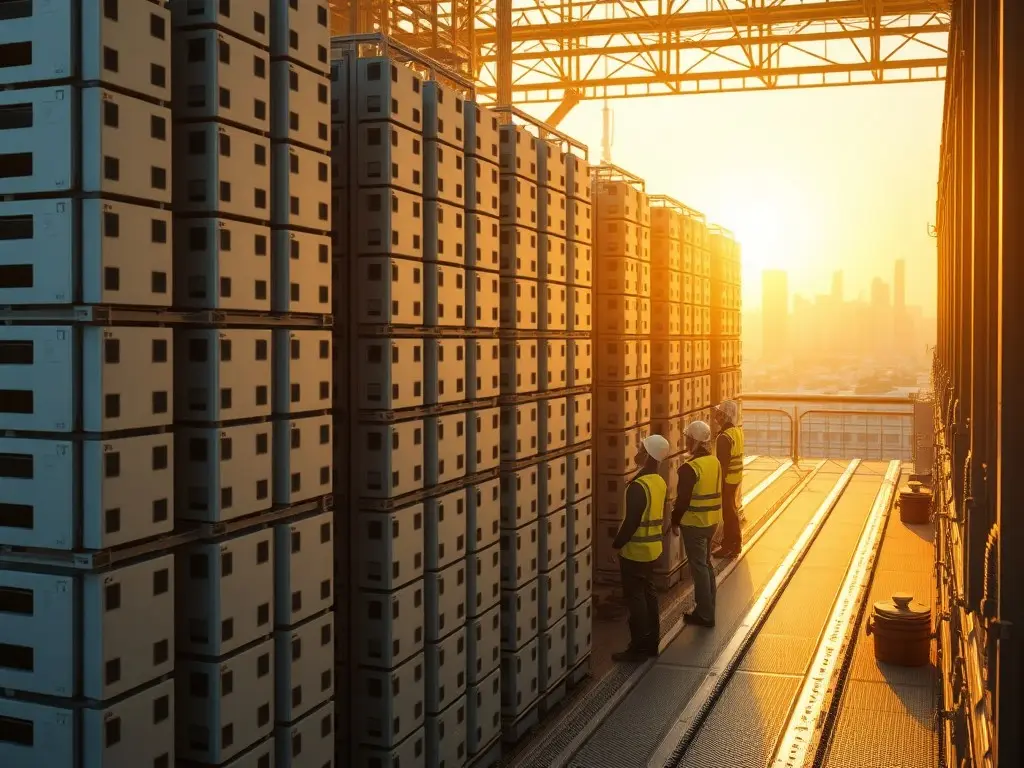
China’s CATL will begin delivering its first sodium-ion energy storage systems to customers in September, with shipments expected to reach gigawatt-hour scale by 2026. The company’s second-generation Naxtra sodium-ion battery, announced in April 2025, targets applications like electric vehicles and stationary energy storage, leveraging cost advantages from abundant sodium resources and improved manufacturing processes.
China’s CATL has announced a roadmap for commercializing sodium-ion battery technology, with customer deliveries of its first sodium-ion energy storage systems set to begin in September. The company expects sodium-ion battery shipments to reach gigawatt-hour scale by 2026, accelerating wider adoption of the technology. CATL’s plans follow the April 2025 launch of its second-generation Naxtra sodium-ion battery, designed for applications including passenger and commercial vehicles, battery-swapping networks, and stationary energy storage. The company first introduced a sodium-ion battery in 2021, marking its entry into the sector. Sodium-ion batteries have long been viewed as a potential alternative to lithium-based technologies, despite earlier challenges with energy density and cycle life. Recent advancements in materials and manufacturing have improved their competitiveness, particularly as production scales and costs decline. One key advantage of sodium-ion technology is its reliance on widely available sodium resources, reducing dependence on constrained lithium supply chains. CATL’s CTO, Lin Jiubiao, highlighted these cost benefits during a sodium-ion battery industry event in China, noting that material costs have halved as manufacturing processes mature. Industry suppliers report that sodium-ion battery materials are now benefiting from economies of scale similar to those that drove the success of lithium iron phosphate (LFP) batteries. Hard-carbon anodes, a critical component, have moved into industrial-scale production, further supporting the technology’s commercial viability. The shift toward sodium-ion batteries aligns with broader industry trends toward more affordable and sustainable energy storage solutions.
This content was automatically generated and/or translated by AI. It may contain inaccuracies. Please refer to the original sources for verification.