China's Embodied AI Firms Unveil New Robots at Beyond Expo, Warn Industry's 'ChatGPT Moment' Is Far Off
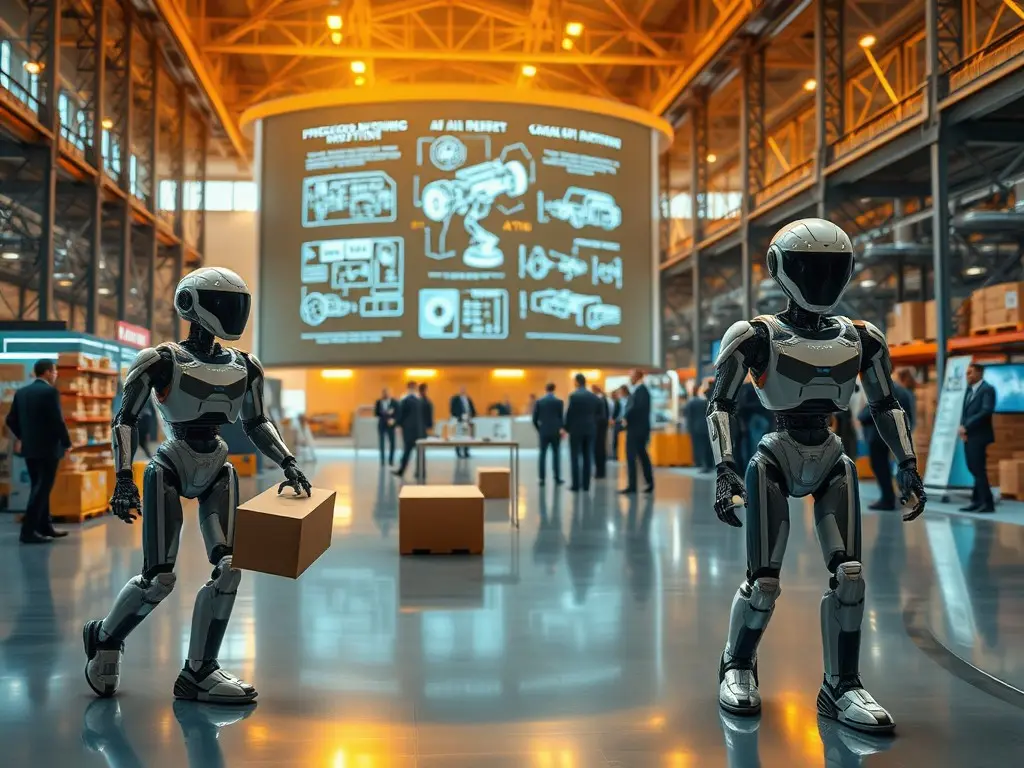
Chinese embodied AI firms like Qingxin Innovation Technology, Pudu Robotics, Matrix Robotics, and Noematrix showcased new robots at the Beyond Expo in Macao, emphasizing global expansion plans while cautioning that a sector-wide breakthrough akin to ChatGPT remains years away. Industry experts, including Steven Hu of Ince Capital and Zhang Haixing of Matrix Robotics, highlighted China’s cost advantages in supply chains and hardware, though overseas markets show higher price acceptance due to labor shortages and automation demand." "article": "Chinese embodied AI companies displayed their latest robotic technologies at the Beyond Expo in Macao from May 27 to 30, signaling ambitions for global expansion. Qingxin Innovation Technology introduced its Amoo robot, while Pudu Robotics, Matrix Robotics, and Noematrix unveiled their product lines. Lenovo Capital and its portfolio firms Lenovo New Vision and VitaDynamics also participated. Industry leaders emphasized China’s dominance in embodied intelligence, with Steven Hu of Ince Capital noting that China and the U.S. lead the field. Hu highlighted China’s cost advantages in supply chains, data collection, and hardware production, asserting that most core components will continue to originate there. Overseas buyers, however, show greater price flexibility, with Matrix Robotics CEO Zhang Haixing reporting unit prices of $50,000 to $100,000—affordable compared to labor costs in developed economies, where skilled manual roles can exceed $100,000 annually. Despite strong demand, Matrix Robotics plans a gradual overseas expansion, focusing first on refining products in China before entering markets via the Belt and Road Initiative, the Middle East, and Southeast Asia. The company aims to produce 5,000 trial units this year and 100,000 units by mid-2025, according to Zhang. Executives cautioned that a sector-wide breakthrough remains distant. Pudu Robotics CEO Zhang Tao compared embodied AI to autonomous driving, noting that robots require tens to hundreds of millions of operational hours for reliable performance—far beyond the 10 million hours needed for self-driving cars. He predicted the consumer market explosion will occur between 2028 and 2030, contingent on cost reductions and improved AI generalization. Zhang Haixing echoed this, stating the ‘ChatGPT moment’ for embodied intelligence is at least three to five years away.
Chinese embodied AI companies displayed their latest robotic technologies at the Beyond Expo in Macao from May 27 to 30, signaling ambitions for global expansion. Qingxin Innovation Technology introduced its Amoo robot, while Pudu Robotics, Matrix Robotics, and Noematrix unveiled their product lines. Lenovo Capital and its portfolio firms Lenovo New Vision and VitaDynamics also participated. Industry leaders emphasized China’s dominance in embodied intelligence, with Steven Hu of Ince Capital noting that China and the U.S. lead the field. Hu highlighted China’s cost advantages in supply chains, data collection, and hardware production, asserting that most core components will continue to originate there. Overseas buyers, however, show greater price flexibility, with Matrix Robotics CEO Zhang Haixing reporting unit prices of $50,000 to $100,000—affordable compared to labor costs in developed economies, where skilled manual roles can exceed $100,000 annually. Despite strong demand, Matrix Robotics plans a gradual overseas expansion, focusing first on refining products in China before entering markets via the Belt and Road Initiative, the Middle East, and Southeast Asia. The company aims to produce 5,000 trial units this year and 100,000 units by mid-2025, according to Zhang. Executives cautioned that a sector-wide breakthrough remains distant. Pudu Robotics CEO Zhang Tao compared embodied AI to autonomous driving, noting that robots require tens to hundreds of millions of operational hours for reliable performance—far beyond the 10 million hours needed for self-driving cars. He predicted the consumer market explosion will occur between 2028 and 2030, contingent on cost reductions and improved AI generalization. Zhang Haixing echoed this, stating the ‘ChatGPT moment’ for embodied intelligence is at least three to five years away.
This content was automatically generated and/or translated by AI. It may contain inaccuracies. Please refer to the original sources for verification.