China's factories undergoing sustained green transformation
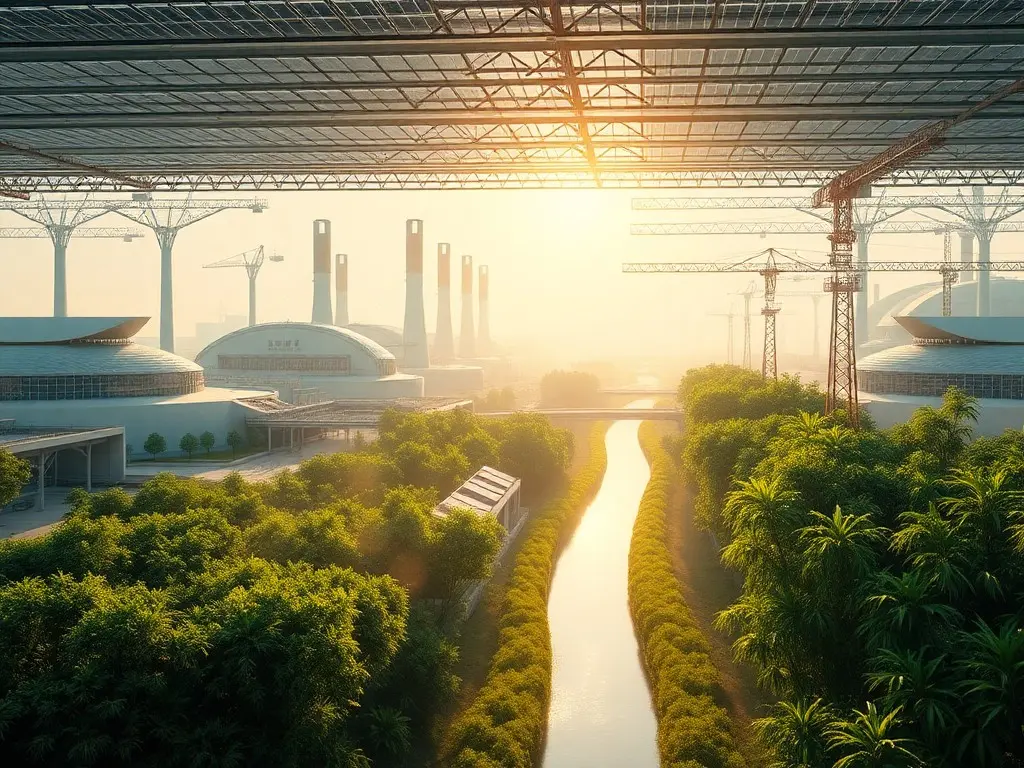
China’s industrial sector is undergoing a green transformation, with factories like CR Jiangzhong Pharmaceutical Valley in Nanchang integrating nature into production sites and treating wastewater for reuse. Nationwide, over 8,000 national-level green factories now contribute 22% of China’s manufacturing output, while sectors like steel and cement adopt ultra-low emission standards and smart technologies to boost efficiency and profitability.
China’s factories are shifting toward sustainable practices as part of a broader green industrial revolution. In Nanchang, Jiangxi Province, the China Resources Jiangzhong Pharmaceutical Valley covers 133 hectares, with forests, lakes, and treated wastewater used for irrigation or firefighting. The site’s wastewater treatment allows for direct reuse, while protected species like Chinese mergansers thrive on-site, reflecting the integration of nature into manufacturing. The transformation extends to heavy industries like steel and cement. Fangda Special Steel in Nanchang, once a polluting industrial zone, now boasts 39% green coverage and 30,000 square meters of landscaped water, earning a national 4A-level tourist attraction rating. The company’s 2009 energy conservation initiatives and 2018 ecological investments turned the site into a model of sustainable production, with efficiency gains placing it among China’s top steel firms. Nationally, China’s manufacturing sector is breaking the ‘industry equals pollution’ stereotype. In December 2025, Baosteel in Zhanjiang launched China’s first million-tonne near-zero-carbon steel production line. Conch Cement in Wuhu, Anhui Province, operates a smart factory combining ultra-low emissions, energy-efficient upgrades, and solar power. According to the Ministry of Ecology and Environment, 95% of coal-fired power capacity and 90% of steel production now meet ultra-low emission standards, with 360 million tonnes of coking and 470 million tonnes of cement clinker capacity retrofitted. Green investments are proving commercially viable. Fangda Special Steel’s eco-upgrades boosted profitability per tonne of steel, while over 8,000 national-level green factories contributed 22% of China’s manufacturing output in 2025—up from 9% in 2021. The State Council’s May 2025 three-year action plan accelerates green tech innovation and low-carbon industrial transformation, aligning with the 15th Five-Year Plan’s (2026–2030) goals for carbon reduction and pollution control. The shift reflects China’s commitment to sustainable industrial growth, blending environmental responsibility with economic competitiveness. From pharmaceutical hubs to steel plants, the green transformation is reshaping China’s manufacturing landscape, setting a global example for balancing production and ecological preservation.
This content was automatically generated and/or translated by AI. It may contain inaccuracies. Please refer to the original sources for verification.