China's New Breakthrough Could Power Drones Mid-Air With Microwaves
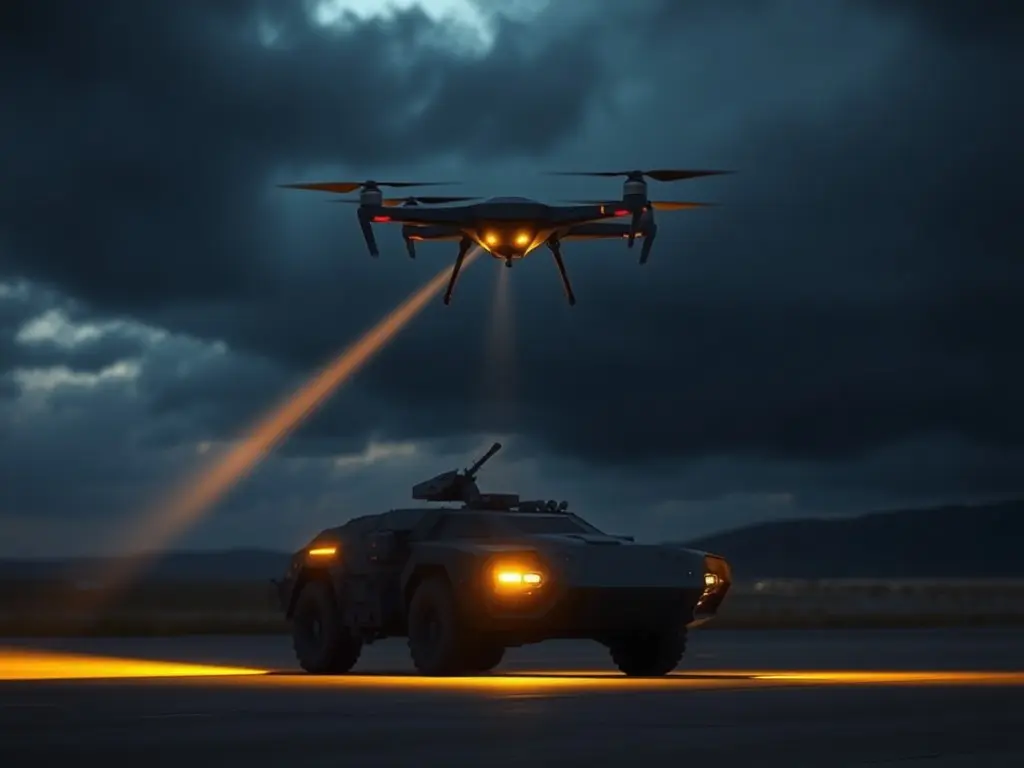
Researchers at China’s Xidian University developed a car-mounted microwave power transmission system to charge drones mid-flight, though efficiency remains low at 3-5% energy absorption. The technology aims to extend drone patrol durations and reduce reliance on lithium-ion batteries, addressing logistical challenges in military operations like reconnaissance and defense missions.
Researchers at China’s Xidian University have created a prototype microwave power transmission system mounted on a vehicle, capable of beaming energy to drones in flight. The technology, linked to China’s People’s Liberation Army through the State Administration of Science, Technology and Industry for National Defense (SASTIND), could sustain fixed-wing drones for over three hours during missions. However, only 3% to 5% of the emitted energy was absorbed by the drones, and environmental factors like wind posed challenges. The system targets a key limitation in drone operations: lithium-ion batteries, which restrict flight time and require costly logistical support. Military drones often rely on these batteries, forcing operators to retrieve them before they fail, adding risk and complexity to missions. The microwave approach could eliminate this need by enabling in-air recharging, particularly for long-endurance reconnaissance and defense drones. China’s development follows similar efforts by the U.S. Defense Advanced Research Projects Agency (DARPA), which achieved a record 800-watt power transmission over 5 miles. While both systems face efficiency hurdles, they signal a shift toward wireless energy solutions for drones, potentially revolutionizing military operations. Such advancements could extend drone patrol ranges and reduce dependence on traditional fuel or battery logistics. The technology’s implications extend beyond charging—microwaves could also be repurposed as drone defense weapons, disrupting enemy systems. In conflicts like the Russia-Ukraine war, long-distance drone strikes (exceeding 1,000 miles) have already reshaped battlefield dynamics by bypassing costly missile systems. China’s breakthrough, though preliminary, aligns with broader trends in drone warfare, where autonomy and energy sustainability are critical priorities. Despite its promise, the system’s low efficiency and environmental vulnerabilities remain obstacles. Scientists acknowledge the need for further refinement, but the project marks a step toward indefinite drone operations. As microwave and AI-driven technologies integrate into military drones, their role in global conflicts—particularly in regions like the Middle East, Africa, and Eurasia—is likely to expand significantly.
This content was automatically generated and/or translated by AI. It may contain inaccuracies. Please refer to the original sources for verification.