Chinese breakthrough turns polluted wastewater into ammonia for fertilizer production
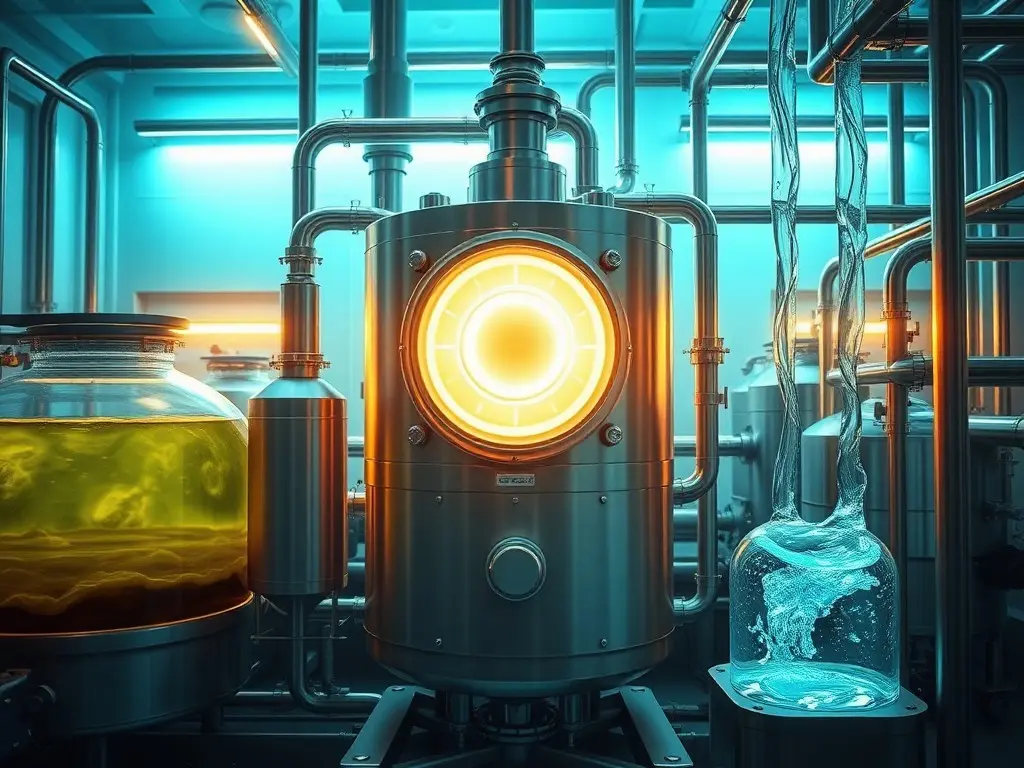
Chinese researchers developed a dual-atom catalyst and AI-assisted method to convert nitrate in polluted wastewater into ammonia for fertilizer, tripling efficiency compared to existing catalysts. The breakthrough could reduce energy consumption and pollution while creating a circular fertilizer production system, though it remains in lab-stage testing.
Chinese researchers have created a new method to transform nitrate in agricultural and industrial wastewater into ammonia, a key fertilizer ingredient. The process uses a dual-atom catalyst (DAC) and artificial intelligence to optimize chemical reactions, achieving nearly three times the efficiency of traditional catalysts. Nitrate pollution, often from fertilizer runoff and sewage, damages ecosystems and contaminates groundwater, but current removal methods are costly and energy-intensive. The breakthrough addresses this by repurposing nitrate—a nitrogen-rich waste—into ammonia, reducing pollution while cutting energy use. Traditional ammonia production via the Haber-Bosch process relies on high-pressure, natural gas-powered reactions, consuming 1-2% of global energy. The new catalyst, developed by a Chinese team, accelerates electron transfers and molecular bonding, making the conversion faster and more sustainable. AI played a critical role in identifying the most effective atom pairs for the catalyst, reducing trial-and-error experiments. Under lab conditions, the DAC demonstrated superior performance, potentially enabling higher ammonia yields with less waste. However, the technology remains experimental, with tests limited to small-scale batches. If scaled, the method could revolutionize fertilizer production by creating a closed-loop system, where wastewater becomes a resource rather than a pollutant. The team’s work highlights the intersection of AI, chemistry, and environmental sustainability, offering a promising solution to both agricultural and industrial waste challenges.
This content was automatically generated and/or translated by AI. It may contain inaccuracies. Please refer to the original sources for verification.