Church, Anthropic to ‘find the way for humanity’ in AI age: What the partnership may include
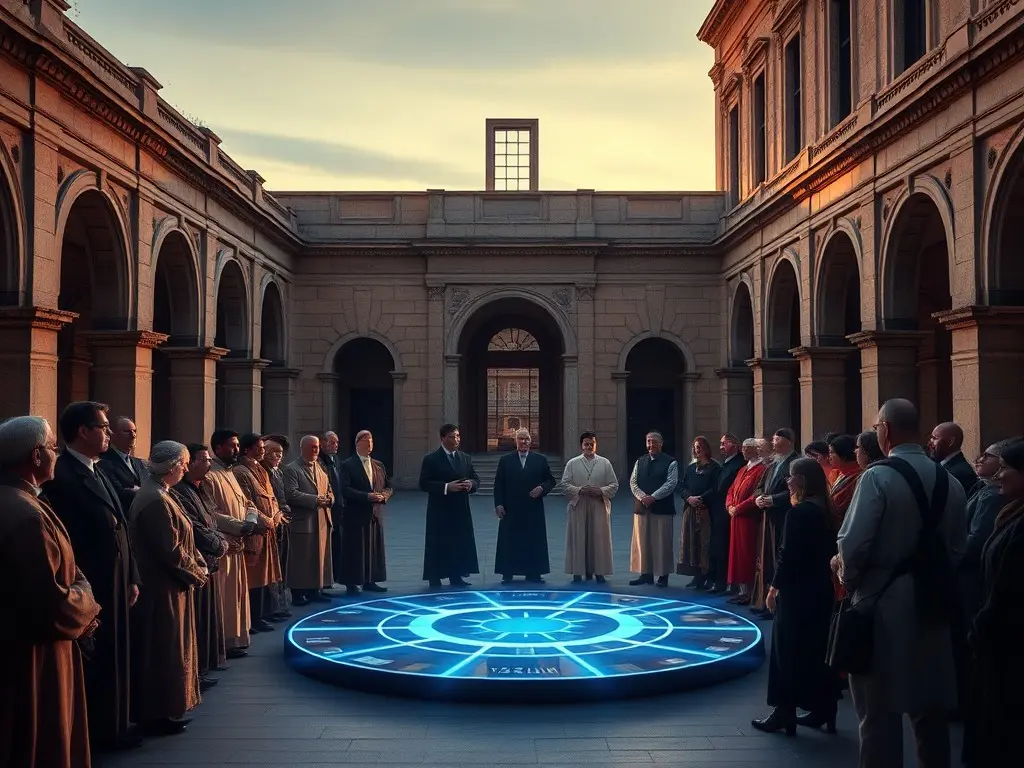
Pope Leo XIV and Anthropic co-founder Christopher Olah announced a partnership to address AI’s ethical, social, and labor impacts, framing it as a moral imperative requiring global cooperation. The Vatican will collaborate with tech leaders, clergy, and experts to explore AI governance, job displacement risks, and model accountability, while emphasizing AI’s role as a tool for human flourishing rather than degradation.
Pope Leo XIV and Anthropic co-founder Christopher Olah launched a collaborative initiative at the Vatican to guide humanity through the AI era, marking the Church’s shift from broad warnings to structured engagement. The partnership focuses on ethics, safety, labor disruption, education, and model accountability, avoiding commercial or product-based ties. A Vatican commission of senior officials will lead discussions involving clergy, theologians, ethicists, and tech experts to address AI’s societal consequences. Olah highlighted three urgent issues: widespread job losses, equitable global AI benefits, and the need for interpretable AI systems. He warned that AI-driven automation could displace labor on an unprecedented scale, demanding a ‘moral imperative’ to support affected workers. The Pope emphasized that work is essential for human development, cautioning that AI could devalue labor in sectors where routine tasks are automated without proper reskilling. The Vatican’s recent encyclical, *Magnifica Humanitas*, frames AI governance around three pillars: responsibility, cooperation, and education. It stresses that AI should remain a tool enhancing human function rather than diminishing it. The partnership signals a broader push for international regulations, involving political leaders, labor organizations, businesses, and scientists to mitigate AI’s risks. Anthropic’s involvement reflects Vatican interest in mechanistic interpretability—the study of AI decision-making processes—to improve transparency and accountability. Olah’s presence underscores the need for religious, governmental, and civil society oversight in AI development. The dialogue aims to prioritize human welfare, ensuring AI’s benefits are shared equitably while addressing its disruptive potential.
This content was automatically generated and/or translated by AI. It may contain inaccuracies. Please refer to the original sources for verification.