Climate change scuppers efforts to end malaria in SADC
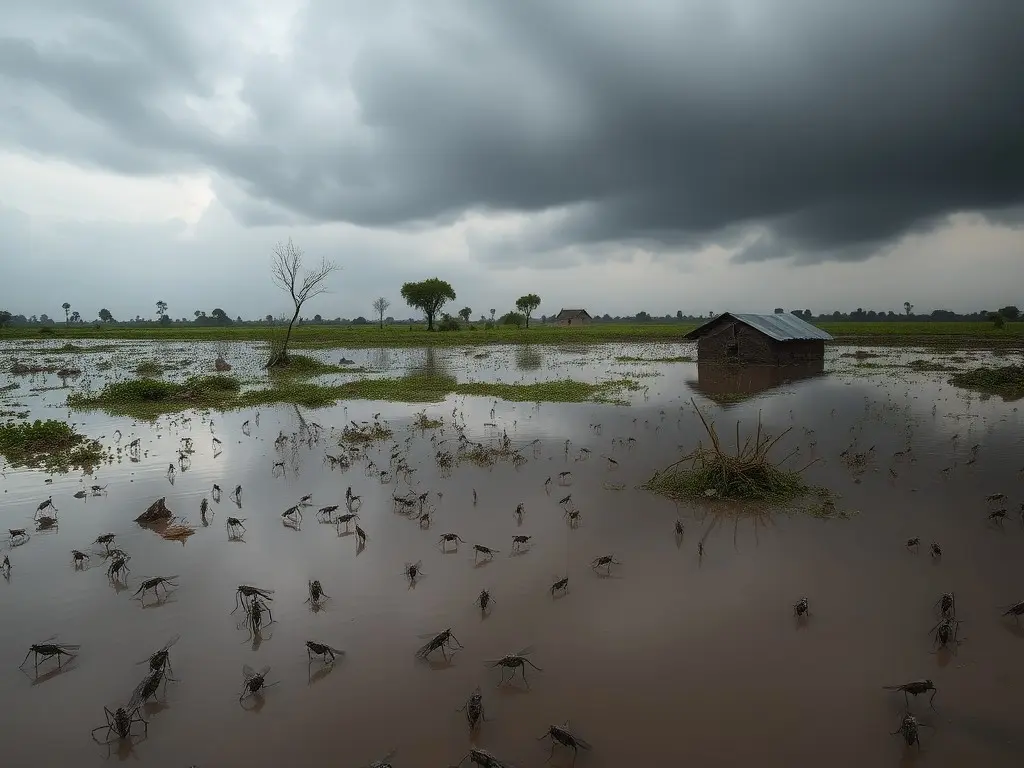
Climate change and extreme weather events have hindered efforts to eliminate malaria in the Southern African Development Community (SADC) region. Heavy rainfall and flooding have led to a surge in malaria cases, threatening the region's progress towards malaria elimination.
The SADC region is experiencing a surge in malaria cases due to climate change and extreme weather events. Heavy rainfall and flooding in early 2026 ruined infrastructure, displaced communities, and put pressure on fragile health systems. Before the floods, SADC's malaria elimination efforts were already under threat due to significant malaria upsurges and cuts to international donor funding. Namibia, Zimbabwe, and Mozambique reported a significant increase in malaria cases in the first few weeks of 2026. South Africa's Mpumalanga province experienced a fourfold increase in cases, putting the country's elimination target at risk. Urgent steps are needed to get malaria control efforts back on track in the region.
This content was automatically generated and/or translated by AI. It may contain inaccuracies. Please refer to the original sources for verification.