Closing the latency gap: Why physical AI requires edge-first architectures
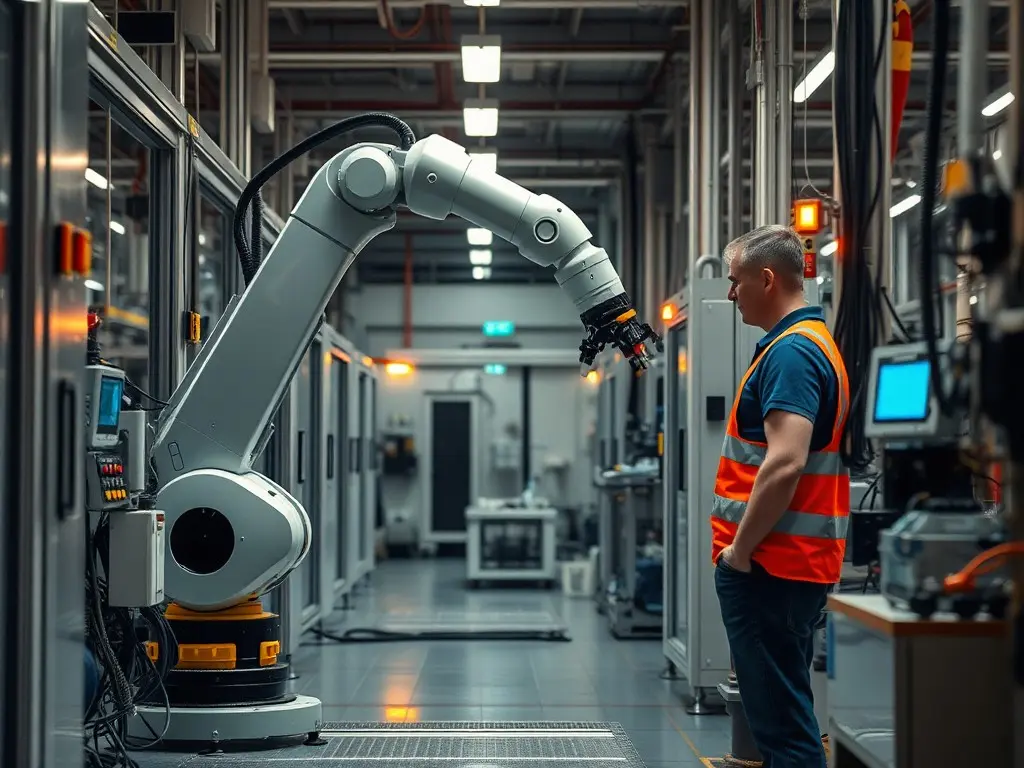
Cloud-based vision systems are insufficient for real-time safety in human-robot collaboration due to network latency. Moving AI inference to the edge and establishing a direct bridge to the robot controller can reduce latency and improve safety.
Cloud-based vision systems fall short in high-mix collaborative assembly cells where real-time safety and throughput are crucial. Even modest network latency can turn a promising human-robot collaboration setup into a bottleneck. The industry's shift toward more collaborative robots demands architectures that dynamically adapt to human movement and fatigue. ISO/TS 15066 defines speed and separation monitoring as a core safety method for collaborative robots, requiring a protective separation distance and reduced speed or stop if breached. To achieve true real-time safety, deterministic end-to-end latency below 30 ms is necessary, possible only with edge processing and a direct connection to the motion controller. A localized real-time safety processor can ingest multi-modal sensor data, run low-latency AI inference, and inject updated commands into the robot's motion planner via high-speed industrial protocols.
This content was automatically generated and/or translated by AI. It may contain inaccuracies. Please refer to the original sources for verification.