Cobots on the Beam: How Collaborative Robots Are Reshaping Mid-Sized Fabrication Shops
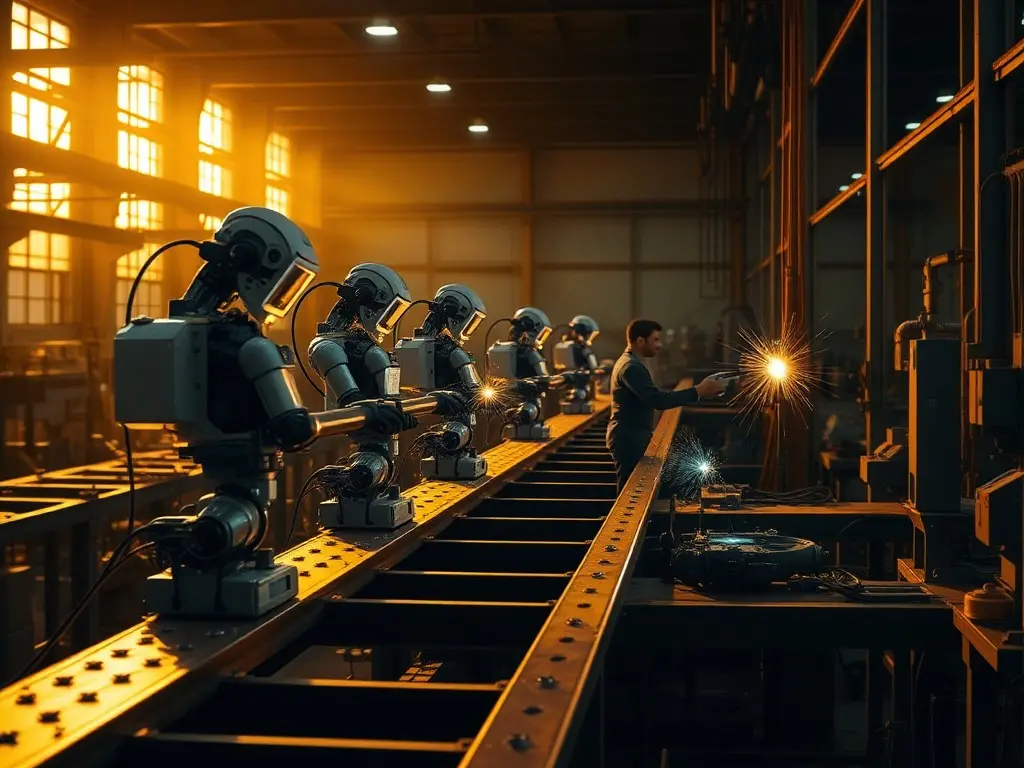
Collaborative robots (cobots) are transforming mid-sized fabrication shops globally by enabling cost-effective automation without requiring safety cages or dedicated engineers. The global cobot market grew to USD 3.74 billion in 2026, with small and medium-sized businesses now accounting for over 42% of new deployments, driven by labor shortages and declining unit prices.
Mid-sized fabrication shops are increasingly adopting collaborative robots (cobots) to address labor shortages and improve efficiency. Unlike traditional industrial robots, cobots operate alongside human workers without needing safety cages, dedicated engineers, or expensive infrastructure. The global cobot market reached USD 3.06 billion in 2025 and is projected to hit USD 3.74 billion in 2026, growing at a 22% annual rate through 2035. Small and medium-sized businesses now account for over 42% of new cobot deployments, a shift enabled by declining prices and easier programming. Metal fabrication, alongside automotive and electronics, is one of the fastest-growing sectors for cobot adoption, with cobot welding alone growing over 40% in 2025. These robots are making automation accessible to smaller operations, allowing them to integrate robotics without a full-scale overhaul. The labor crisis is a key driver, with the American Welding Society projecting a shortfall of 400,000 welders in the U.S. by 2029. The average welder’s age is now 55, while the broader workforce averages 42, creating a demographic gap. Cobots offer a solution by augmenting existing workers rather than competing for scarce labor. An entry-level cobot welding setup costs USD 35,000 to 65,000, compared to USD 80,000 to 150,000 for traditional industrial welding cells, with payback periods as short as eight to ten months in high-volume applications. While cobots provide significant advantages, they are not a universal fix. They excel in repetitive tasks but require human oversight for complex or variable work. Fabricators must carefully assess which bottlenecks cobots can address most effectively. Despite limitations, the trend is clear: cobots are democratizing automation, allowing mid-sized shops to stay competitive in a tightening labor market.
This content was automatically generated and/or translated by AI. It may contain inaccuracies. Please refer to the original sources for verification.