Communist-run Vietnam eyes influencers, AI to spruce up propaganda, documents show
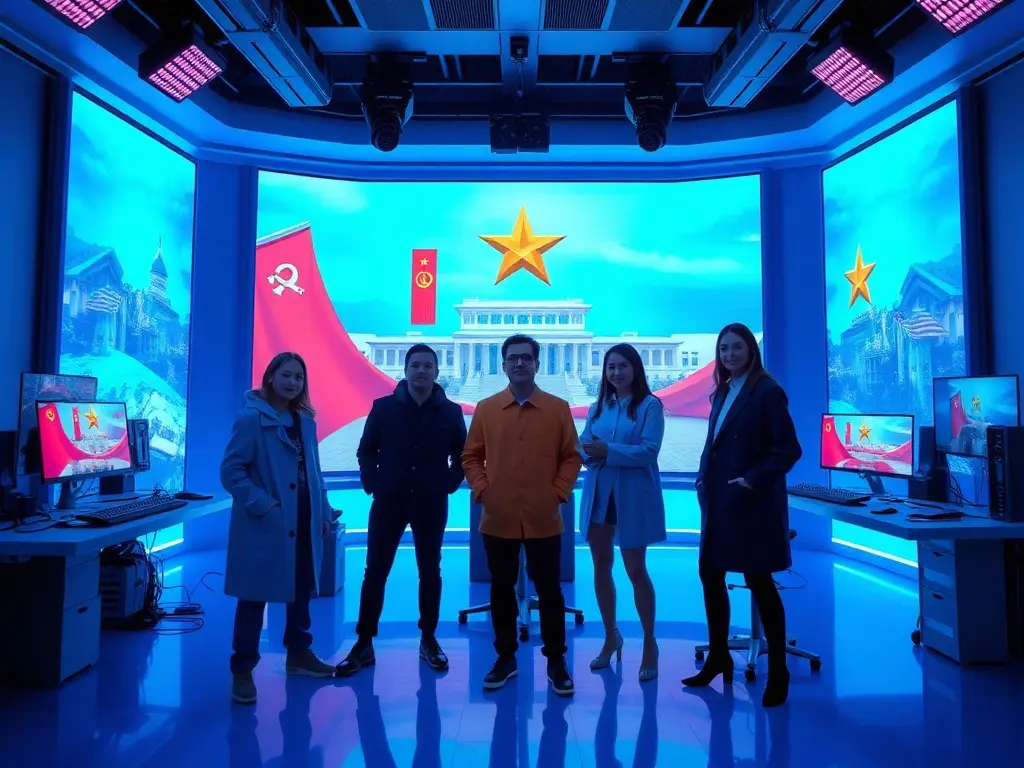
Vietnam’s ruling Communist Party plans to recruit 1,000 influencers and 5,000 AI experts by 2030 to promote state ideology and counter 'harmful' online content, according to internal documents. The strategy aims to control 80% of Vietnamese-language online narratives and use AI to remove 90% of non-compliant posts within 24 hours, while expanding state media creativity and leveraging influencers for propaganda.
Vietnam’s Communist Party is overhauling its propaganda strategy to include social media influencers and artificial intelligence, targeting a 2030 goal of 1,000 influencers and 5,000 AI experts to spread 'positive' content. Internal drafts from April reveal plans to dominate 80% of Vietnamese-language online discussions and deploy AI to delete 90% of guideline-violating posts within 24 hours, ensuring ideological control amid rising digital engagement. The initiative reflects broader efforts to strengthen the party’s grip under President and Party Chief To Lam, a former public security chief now Vietnam’s most powerful leader in decades. With media freedom ranked among the world’s worst, authorities already censor dissent and deploy military units to combat 'harmful' online content, while the draft emphasizes adapting to technological shifts to reach younger generations. AI tools from Vietnamese tech firms will shape social discussions, while state media is urged to adopt creative formats like podcasts and short videos to simplify policy explanations. External influencers and officials trained in digital skills will engage audiences, particularly those preferring visual content on platforms like Facebook and TikTok, where Vietnam has 79 million active users—nearly 80% of the population. Additional party guidance from May encourages state media to emulate influencers in covering senior leaders, while the public security ministry has proposed using them to counter economic downturns. Some influencers have already been recruited, though one anonymous source declined participation to preserve autonomy, noting typical demands include publishing approved content or promoting official activities without financial compensation. The strategy risks backfiring, as seen with 'My Uncle,' a April song praising To Lam as Vietnam’s 'Uncle Ho' (a nod to founder Ho Chi Minh), which triggered party unease. Despite these challenges, the push for digital propaganda underscores Vietnam’s determination to align online narratives with state priorities amid growing global scrutiny of its media restrictions.
This content was automatically generated and/or translated by AI. It may contain inaccuracies. Please refer to the original sources for verification.