Cops Are Spying on People Who Criticize AI Data Centers Online
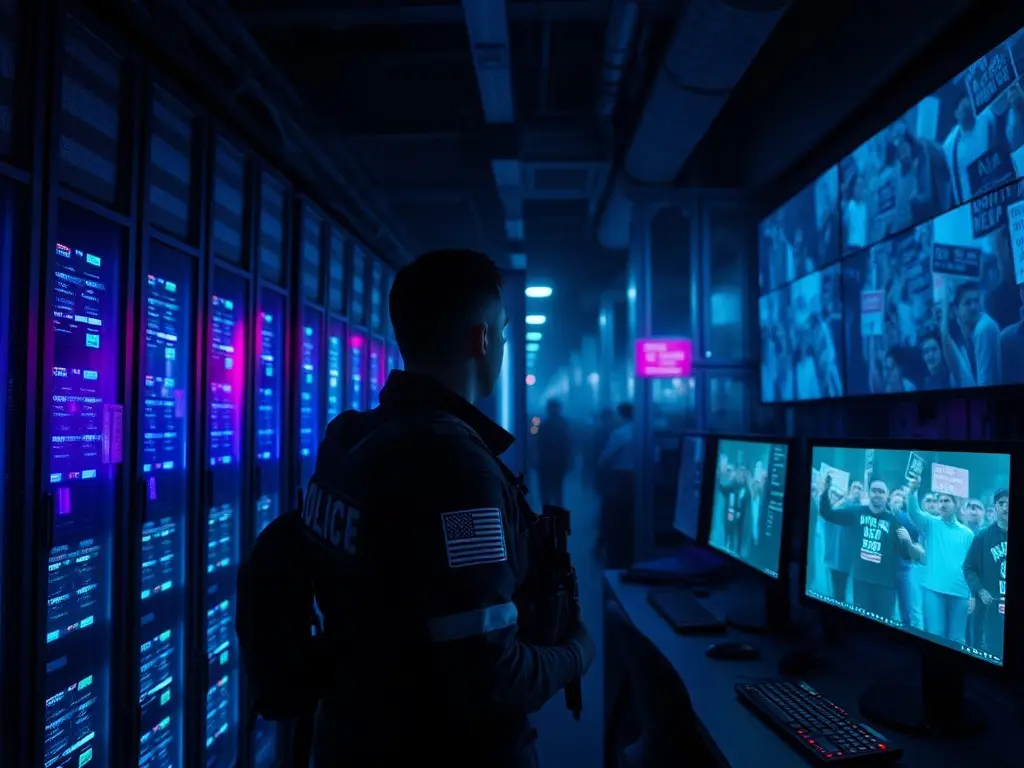
A confidential December law enforcement bulletin from the Delaware Valley Intelligence Center in Philadelphia warns that critics of AI data centers on social media may pose a physical and cyber threat, despite a lack of specific evidence. The alert, distributed to police agencies nationwide, labels anti-AI rhetoric—including fictional references and hyperbolic statements—as potential indicators of 'domestic violent extremism.'
A confidential law enforcement bulletin from the Delaware Valley Intelligence Center, a fusion center based in the Philadelphia Police Department, has flagged online criticism of AI data centers as a potential security threat. The December alert, marked 'for official use only,' claims 'domestic violent extremists'—ranging from white supremacists to anarchists—could target AI infrastructure in the Philadelphia region, citing vague social media posts and news reports. The bulletin acknowledges no concrete plans to attack AI data centers but warns three planned facilities in the area may become future protest targets. Examples of 'potentially terroristic' posts include a user expressing a desire to 'burn down' data centers and references to fictional anti-robot movements like those in *Dune*. The center also highlights 'disruptive First Amendment activity' as an 'indicator' of extremist risk, a term frequently used by the FBI. Fusion centers, established after 9/11, have faced criticism for overreach, including surveillance of lawful protesters like Black Lives Matter and pipeline opponents. Pennsylvania’s history includes targeting advocacy groups, such as anti-fracking activists, under counterterrorism programs. Civil rights lawyer Paul Hetznecker criticized the report, calling it a 'dangerous' attempt to equate legitimate political concerns with terrorism. The alert was distributed through the national fusion center network, reaching state, local, and federal law enforcement agencies. While the bulletin cites no direct threats, it frames anti-AI rhetoric as a growing concern, raising questions about First Amendment protections and law enforcement priorities.
This content was automatically generated and/or translated by AI. It may contain inaccuracies. Please refer to the original sources for verification.