Could The Next War Be Fought By Humanoid Robots? The Race To Build AI Soldiers Is On
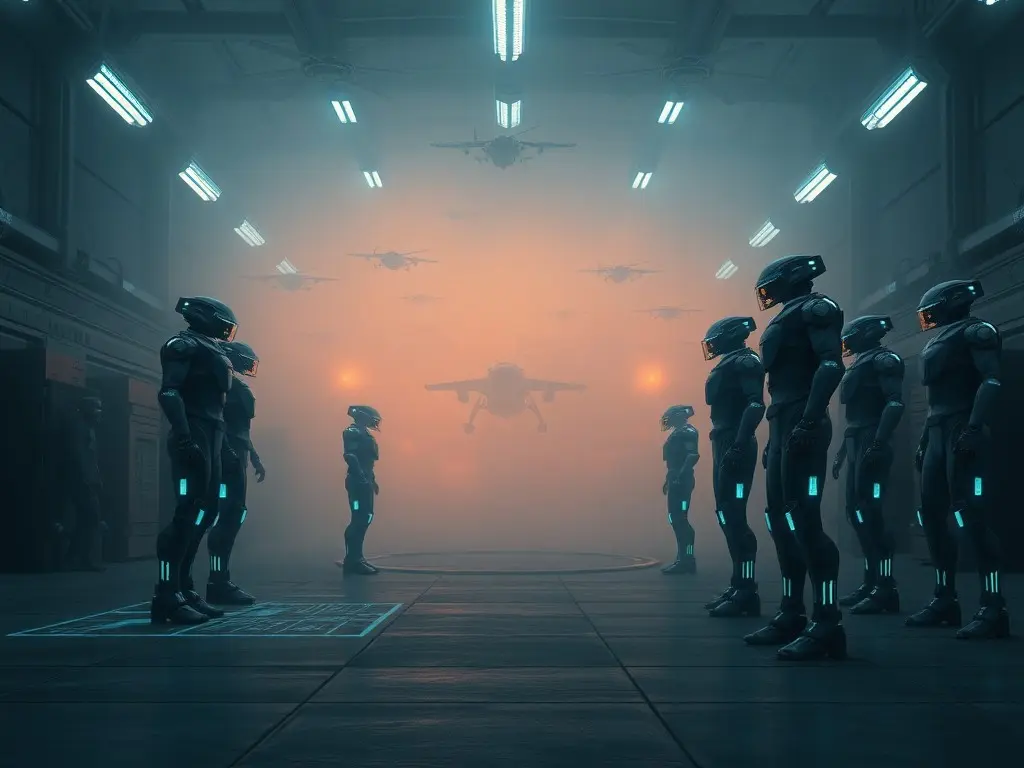
Militaries globally are accelerating development of AI-powered humanoid robots and autonomous systems for defense, driven by geopolitical tensions and advances in military technology. The war in Ukraine has demonstrated the rapid evolution of drones and ground robots, while companies like Foundation Robotics and governments in the US, China, and Europe invest billions in expanding their military robotic capabilities.
Militaries worldwide are investing billions in artificial intelligence and autonomous systems to develop humanoid robots and military robotics, bringing once-fictional concepts closer to reality. The war in Ukraine has already shown how quickly military technology evolves, with drones now used for surveillance, targeting, logistics, and direct attacks. Foundation Robotics, a San Francisco-based startup, is developing autonomous humanoid robots for both industrial and military applications, reflecting a global push to build machines capable of complex tasks. Unlike traditional industrial robots, humanoid robots are designed to navigate human environments, climb stairs, and carry equipment, making them suitable for battlefield use. Around 229,000 robotic systems were sold globally in 2025, with 70% of sales coming from Japan, China, the US, Germany, and South Korea, according to the International Federation of Robotics. These countries support robotics development through government programs, though the US relies more on private capital. Ukraine has deployed ground-based robots for mine-clearing, casualty evacuation, and logistics, alongside producing 4 million drones in 2025. The US Pentagon has increased procurement of drones, unmanned ground vehicles, and autonomous surface vessels through rapid-fielding initiatives. The global military robotics market is now valued at over $20 billion, with rapid growth expected as AI and autonomy advance. While fully autonomous 'robot soldiers' remain distant, the focus is shifting from *if* robots will play a larger role in warfare to *how far* that role will extend. Advances in AI and geopolitical competition are driving this acceleration, with the potential for humanoid robots to eventually operate alongside human soldiers on the battlefield.
This content was automatically generated and/or translated by AI. It may contain inaccuracies. Please refer to the original sources for verification.