‘Dancing girl’s’ bare torso restored in Indian textbook after backlash
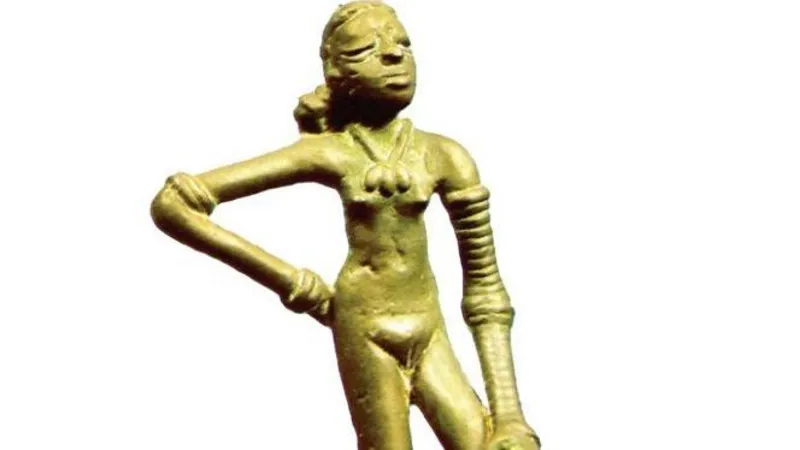
The National Council of Educational Research and Training (NCERT) restored the unaltered image of the 'Dancing girl from Mohenjo-daro' sculpture in its grade nine textbook after public backlash, reversing a decision to censor its anatomical features. The bronze figurine, a key symbol of the Indus Valley civilisation, was originally modified in a newly released textbook but will now appear in its original form in both digital and print editions.
India’s National Council of Educational Research and Training (NCERT) has withdrawn a censored version of the 'Dancing girl from Mohenjo-daro' sculpture from its grade nine textbook following widespread criticism. The bronze figurine, discovered at the ancient Indus Valley site of Mohenjo-daro and housed in Delhi’s National Museum, depicts a girl with exposed anatomical features and is considered a significant cultural artefact. The controversy arose when a newly released textbook included a modified image with dark shading covering the sculpture’s torso. Historians and educationists condemned the alteration as disfiguring an iconic representation of the Indus Valley civilisation, which has appeared uncensored in NCERT textbooks for decades. After public outcry, NCERT director Dinesh Saklani announced the original image would be restored in both digital and print editions. The decision came after consultations with experts, though NCERT has not provided a reason for the initial modification. Media reports suggest concerns over nudity may have prompted the change. The 'Dancing girl' sculpture, adorned with ornaments and depicted in a dynamic pose, is celebrated for its artistic value and evidence of advanced metallurgy in ancient India. The textbook is part of NCERT’s new Arts Education Series, introduced under the National Education Policy (NEP) to integrate visual arts into mainstream schooling. The incident highlights ongoing debates about cultural representation and education standards in India, where historical artefacts often carry deep symbolic significance.
This content was automatically generated and/or translated by AI. It may contain inaccuracies. Please refer to the original sources for verification.