'De-Extinction Company' Announces Method to Hatch Chicks Without Eggs
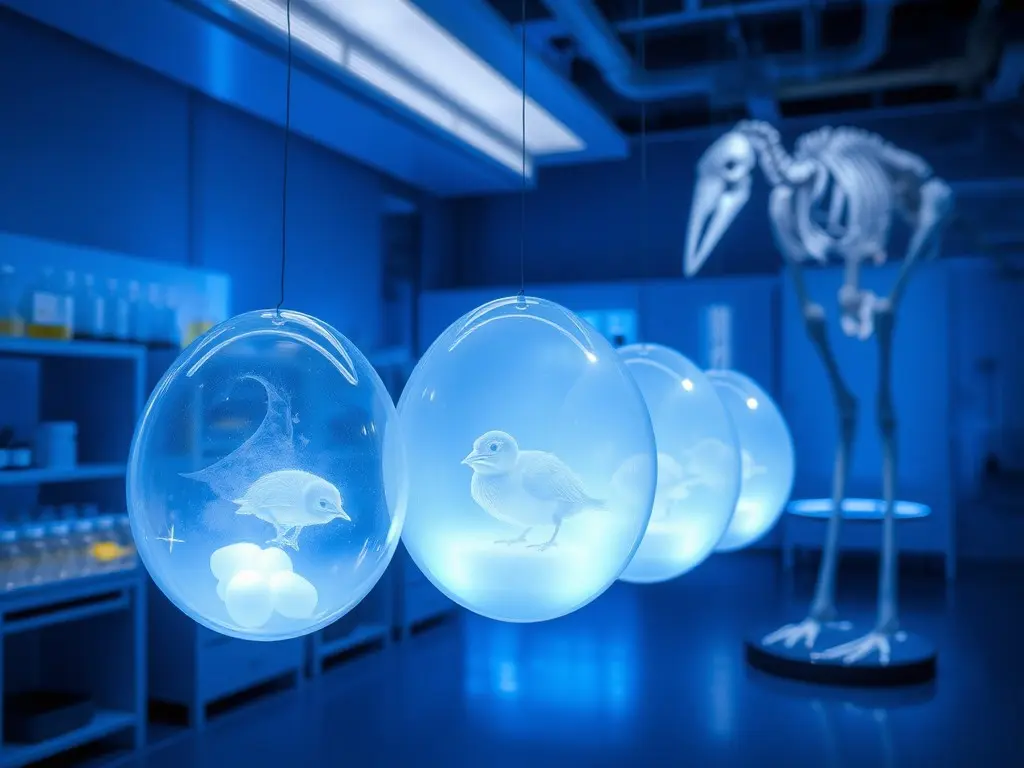
Colossal Biosciences announced a breakthrough in artificial egg technology capable of hatching chicks without biological eggshells, marking a first-of-its-kind platform for avian embryo development. The innovation supports the company’s de-extinction efforts, including reviving the South Island Giant Moa, and offers scalable applications for conservation and genome editing in birds.
Colossal Biosciences, a Dallas-based company focused on de-extinction, has developed an artificial egg system that allows chicks to hatch without a biological eggshell. The technology, announced on May 19, enables complete avian embryo development under normal atmospheric conditions, eliminating the need for supplemental oxygen that previously damaged DNA and long-term health. The artificial egg uses a bioengineered silicone-based membrane lattice that mimics the oxygen transfer capacity of a natural chicken eggshell. This innovation enables real-time observation of embryo development and is scalable to different egg sizes, making it compatible with commercial incubators. The company claims the chicks hatched using this method are healthy and viable. This breakthrough is part of Colossal’s broader mission to revive extinct species, including the South Island Giant Moa, the tallest bird species ever recorded, which went extinct in New Zealand in the 15th century. The technology also aims to support avian conservation efforts, including rescuing compromised embryos and utilizing biobanked genetic material for endangered species. Colossal’s CEO, Ben Lamm, stated the system is designed to address gaps in incubation where no surrogate exists, while co-founder Dr. George Church emphasized its potential as a platform technology beyond a single species. The company’s previous projects include efforts to revive dodo birds, dire wolves, and mammoths, with the artificial egg system now expanding its applications in genome editing and conservation. The transparent design of the artificial egg allows researchers to monitor development in real time, offering new opportunities for studying avian biology. Matt James, Colossal’s chief animal officer, noted the system could rescue embryos that would otherwise fail and enable genetic rescue platforms for critically endangered species. The technology is adaptable and intended to support broader conservation initiatives in the avian world.
This content was automatically generated and/or translated by AI. It may contain inaccuracies. Please refer to the original sources for verification.