Defense ministry summer program applications open
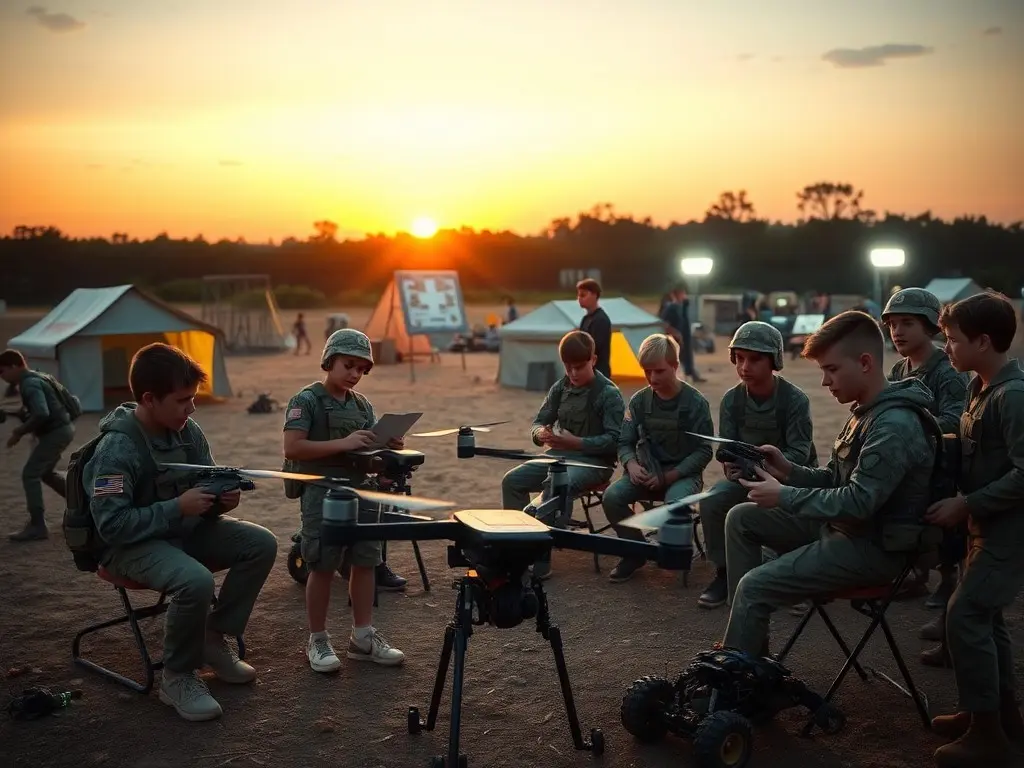
Taiwan’s Ministry of National Defense (MND) opened applications for its 2024 national defense education summer camp, featuring drone training and MILES combat simulations across four tracks, with 5% of slots reserved for disadvantaged students. The program, running from June 16, targets high-school and vocational students aged 15+, excluding those born before January 1, 1995, and includes specialized tracks in national defense sciences, battlefield first aid, and science immersion.
Taiwan’s Ministry of National Defense (MND) announced the opening of applications for its 2024 national defense education summer camp, which will include hands-on training in drone operations and the Multiple Integrated Laser Engagement System (MILES) gear. The program, designed to expose young people to simulated combat scenarios, is divided into four tracks: standard, national defense sciences, science immersion, and medicine and battlefield first aid. Applications for the standard program began accepting submissions at 6 PM on May 23 and will close on June 15, with results announced at noon on June 16 via the MND’s Political Warfare Bureau website." "The MILES gear, used by the U.S. and other militaries, creates realistic combat training scenarios with lasers and blank cartridges, while drone piloting will also be part of the curriculum. The national defense sciences camp, managed by the National Defense University, offers 40 slots with an additional 20 on a waiting list, requiring applicants to be high-school or vocational high-school students aged 15 or older. Those born before January 1, 1995, are ineligible for all tracks." "The Science Immersion Camp, evaluated by the Chung Cheng Armed Forces Preparatory School, is open to middle-school students, while the battlefield first aid camp, run by the National Defense Medical University, accepts high-school-aged students or older with 120 slots available. The MND encourages social welfare departments, local governments, schools, and organizations to recommend students from mid to low-income families, reserving 5% of the total 1,310 slots for disadvantaged children. All expenses for these applicants will be covered by the ministry.
This content was automatically generated and/or translated by AI. It may contain inaccuracies. Please refer to the original sources for verification.