Did you know? An Indian visitor signed Egypt's royal tombs 2,000 years ago
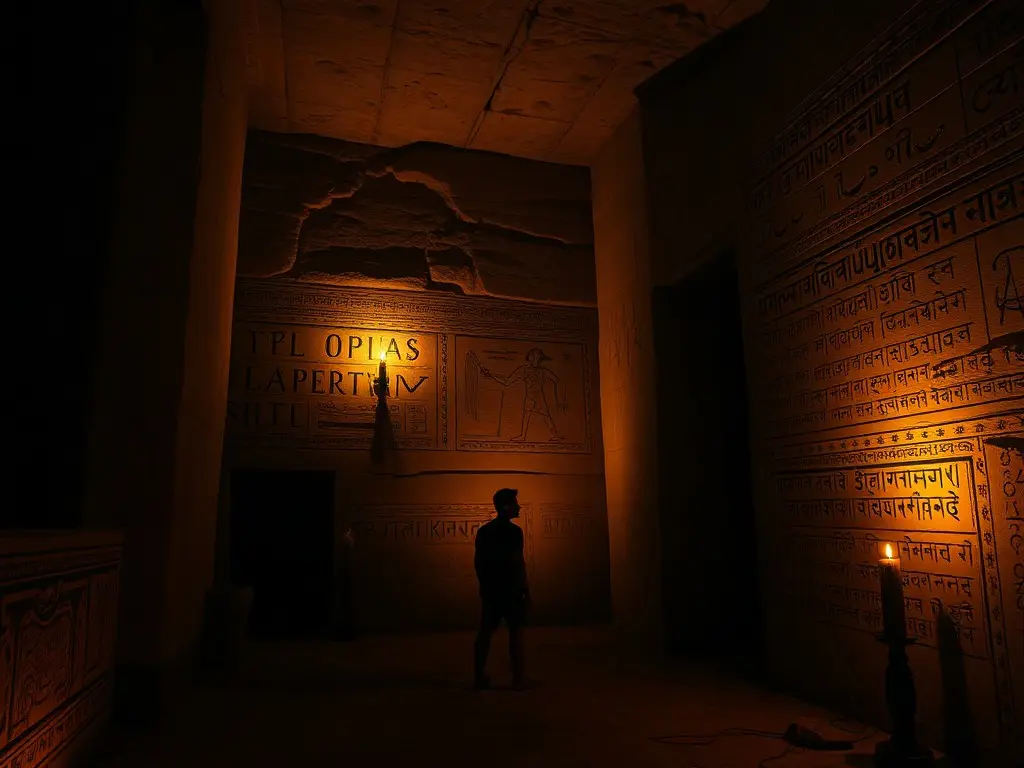
Researchers discovered nearly 30 inscriptions in Indian languages, including Old Tamil, Sanskrit, and Gandhari-Kharosthi, in Egypt’s Valley of the Kings, proving Indian travelers visited the site nearly 2,000 years ago. Among them, an Indian man named Cikai Korran inscribed his name eight times across five tombs, marking the first documented evidence of early Indo-Egyptian cultural contact.
A team of researchers has uncovered nearly 30 inscriptions in Indian languages—Old Tamil, Sanskrit, Prakrit, and Gandhari-Kharosthi—within Egypt’s Valley of the Kings, confirming that Indian travelers visited the sacred site around the 1st to 3rd centuries CE. The discovery includes eight inscriptions of an Indian man named Cikai Korran, whose name appears repeatedly across five tombs, offering rare evidence of early connections between India and Egypt. The inscriptions were found in challenging locations, such as high above tomb entrances, including one in the tomb of Ramses IX. Researchers Ingo Strauch of the University of Lausanne and Charlotte Schmid of the French School of the Far East identified the markings after Strauch noticed them in January 2024. Schmid confirmed one inscription read: 'Cikai Korran came here and saw,' matching older records from a 1926 catalogue by French scholar Jules Baillet. This is the first clear evidence that Indian travelers ventured inland to Egypt’s royal tombs, leaving behind graffiti alongside existing Greek and Latin inscriptions. The findings were presented at a February 2026 conference on Tamil epigraphy in Chennai, suggesting a deeper historical interaction between the two civilizations than previously documented. The discovery highlights how ancient travelers from distant lands left traces of their journeys in unexpected places. Cikai Korran’s repeated inscriptions stand out as the most prominent, reinforcing the idea of a cultural exchange that predates modern tourism by centuries.
This content was automatically generated and/or translated by AI. It may contain inaccuracies. Please refer to the original sources for verification.