Digital Twins Streamline Auto Manufacturing
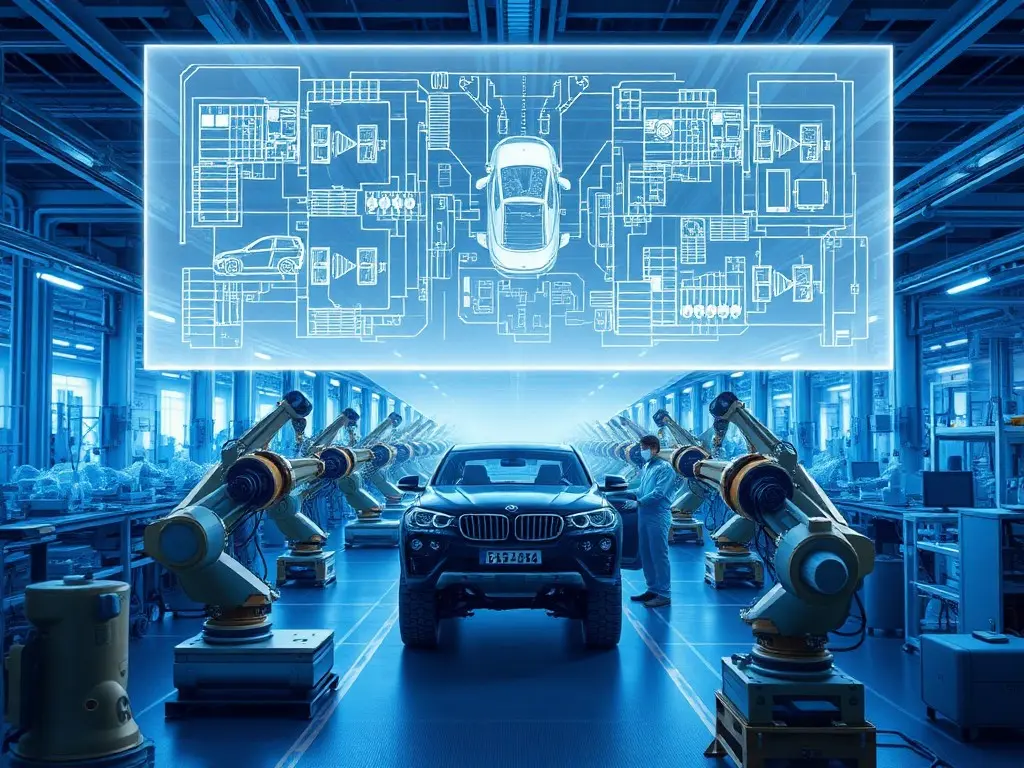
Oakland University’s research reveals how digital twin technology reduces delays and errors in automotive manufacturing by simulating production systems virtually before physical implementation. A study funded by Festo Corp. demonstrated its effectiveness in human-robot assembly systems at a Danish facility, cutting reconfiguration time and costs for new vehicle models.
Digital twin technology is transforming automotive manufacturing by allowing engineers to simulate and validate production systems virtually before physical implementation. This approach addresses critical challenges in reconfiguring assembly lines for new vehicle models, where delays can cost thousands per minute due to errors in robot paths or control logic. Ali Ahmad Malik, an assistant professor at Oakland University, highlights that digital twins—virtual replicas of physical systems—enable real-time adjustments, reducing weeks of downtime and troubleshooting. Malik’s research, funded by Festo Corp., focused on a Danish manufacturing facility where a digital twin model of human-robot assembly systems was created. The virtual system mirrored physical components, including robots and operators, allowing dynamic simulations to optimize resource allocation and system integration. This method shifts from manual data syncing to automated, real-time updates, enhancing efficiency and adaptability. The technology is particularly valuable for modern vehicle concepts, such as lightweight materials, autonomous driving systems, and software-defined cars. These innovations demand faster reconfiguration of production lines, and digital twins help manufacturers meet deadlines without costly on-site errors. Oakland University’s new Master of Science in Smart Manufacturing program also emphasizes digital twins alongside AI, augmented reality, and collaborative robotics to train engineers for Industry 4.0 challenges. By validating control logic and robot paths in a virtual environment, manufacturers can avoid production halts and reduce expenses linked to commissioning delays. The adoption of digital twins aligns with broader trends like lights-out production and smart factories, where real-time data and automation are reshaping industrial processes.
This content was automatically generated and/or translated by AI. It may contain inaccuracies. Please refer to the original sources for verification.