Do Electric Cars Actually Hold Their Value Or Are You Buying To Lose Out?
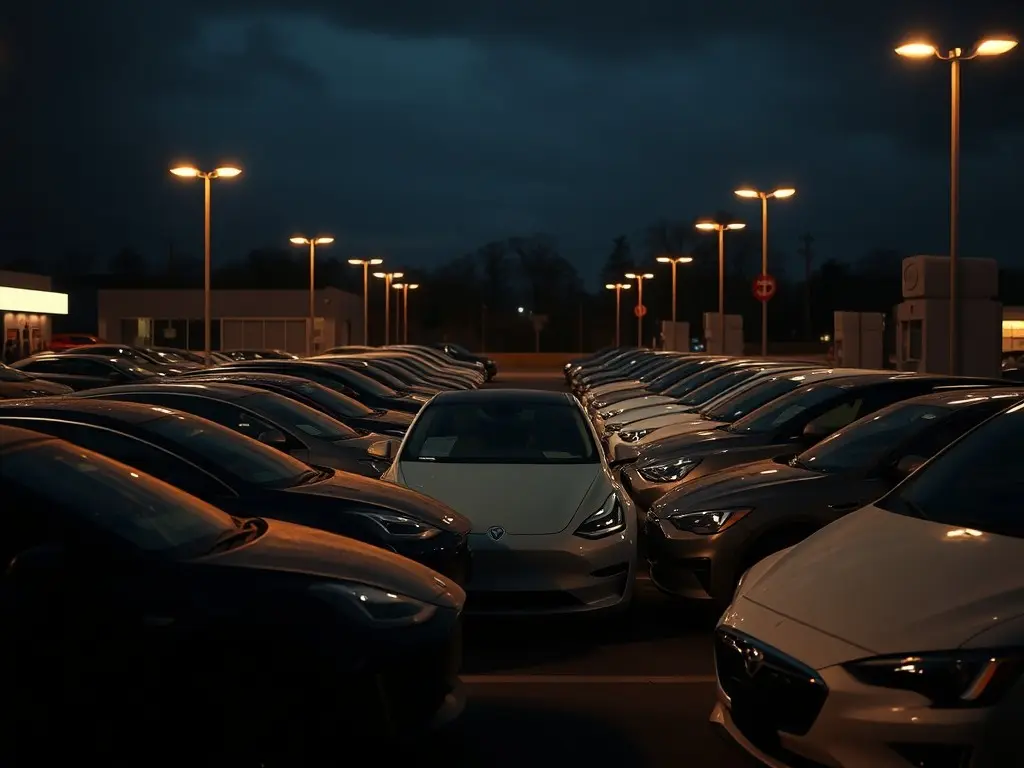
Electric vehicles like the Tesla Model Y and Nissan Leaf are losing value far faster than traditional gas-powered cars in the U.S. market, with owners often facing significant equity loss by year three due to policy-driven depreciation and supply-demand imbalances. The $7,500 federal tax credit, now defunct, exacerbated the issue by distorting used EV valuations, leaving buyers with steep financial gaps compared to combustion engine vehicles.
Owners of electric vehicles (EVs) in the U.S. are discovering a harsh reality: their cars depreciate far more quickly than traditional gas-powered vehicles, eroding equity at an alarming rate. A Tesla Model Y or Nissan Leaf, priced similarly to a gas-powered SUV at $50,000, may retain little to no value by year three, leaving buyers underwater on financing. While gas cars typically lose 40-50% of their value over five years in a predictable pattern, EVs face a volatile secondary market influenced by federal policy and shifting consumer demand. The gap in resale value stems from structural differences in the automotive and consumer electronics sectors. Gas-powered vehicles follow a century-old depreciation model, with steady declines supported by vast data sets. EVs, however, are subject to external economic stimuli, such as the now-defunct $7,500 federal tax credit, which artificially inflated new EV prices and distorted used market valuations. This policy-driven distortion, combined with limited supply of used EVs, has created a sharp correction in resale values, leaving owners with far less equity than expected. By the critical three-year mark, when many buyers seek to trade in or upgrade, EVs often retain minimal value compared to gas models. Owners risk being deeply underwater on loans, a scenario rarely seen with combustion engine vehicles. The financial impact is compounded by the lack of a mature used EV market, where pricing remains unpredictable due to supply constraints and evolving consumer preferences. Experts warn that failing to account for EV depreciation can make the initial purchase price irrelevant over time. The invisible cost of ownership becomes apparent only when selling, where the equity gap between EVs and gas cars widens into a chasm. This reality forces buyers to adopt defensive strategies, such as longer ownership periods or accepting lower trade-in values, to mitigate financial losses. The depreciation crisis for EVs is not just a consumer issue but a reflection of broader market challenges. While automakers and policymakers push for zero-emission vehicles, the secondary market struggles to adapt, leaving early adopters to bear the brunt of economic adjustments. Without intervention, the trend could discourage future EV purchases, creating a cycle of reduced demand and further depreciation.
This content was automatically generated and/or translated by AI. It may contain inaccuracies. Please refer to the original sources for verification.