Education for liberation, dignity and empowerment: A call to action
South Africa reflects on three anniversaries—70 years since the 1956 women’s march, 50 years since the 1976 Soweto uprising, and 30 years since the Constitution—to highlight education’s role in liberation, noting persistent poverty and inequality despite policy commitments. Over 23 million South Africans (38% of the population) live below the poverty line, with education gaps and spatial disparities in provinces like KwaZulu-Natal and Gauteng deepening systemic exclusion, while the legacy of apartheid-era Bantu Education remains a barrier to progress.
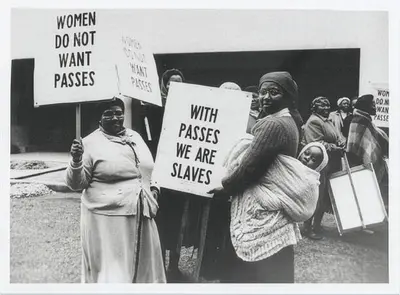
South Africa marks three pivotal anniversaries this year, each underscoring the enduring link between education, power, and freedom. The 70th anniversary of the 1956 women’s march against pass laws, the 50th anniversary of the 1976 Soweto uprising, and the 30th anniversary of the post-apartheid Constitution frame a narrative of unfinished struggles. June 16, recognized as the Day of the African Child since 1991, also serves as a reminder of the continent’s ongoing battle for equitable education, particularly in sub-Saharan Africa, where millions of children remain excluded from schools. Statistics South Africa reports that 23 million citizens—nearly 38% of the population—live below the lower-bound poverty line, a crisis disproportionately affecting those with little or no education. More than half of adults without formal schooling are trapped in poverty, with regional disparities exacerbating the issue. Provinces like KwaZulu-Natal and the Eastern Cape bear the heaviest burden, though Gauteng’s poverty rate is also rising, reflecting urbanization without economic opportunity. The country’s Gini coefficient of 0.64 underscores persistent inequality, far from the equitable society envisioned after apartheid. Despite decades of policy efforts, poverty, unemployment, and exclusion remain entrenched, with education identified as central to the contradiction. The legacy of apartheid’s Bantu Education Act of 1953—designed to limit Black students to vocational training and exclude them from higher education—continues to shape systemic barriers. Then-Minister of Native Affairs Hendrik Verwoerd justified the system by arguing that Black children had no need for advanced education, framing their role as confined to labor. The Extension of University Education Act of 1959 criminalized Black student enrollment at white universities without government approval, instead establishing segregated institutions like Turfloop, Fort Hare, and the University of Durban-Westville. These policies institutionalized cognitive and social exclusion, reinforcing cycles of poverty and inequality that persist today. The anniversaries serve as a call to action, emphasizing that education remains a cornerstone of liberation, dignity, and empowerment. Yet, without addressing historical inequities and investing in equitable access, South Africa risks perpetuating the same structural failures that have defined its past.
This content was automatically generated and/or translated by AI. It may contain inaccuracies. Please refer to the original sources for verification.