Embodied AI Fuels Record Robotics Funding In China As IPO Momentum Builds
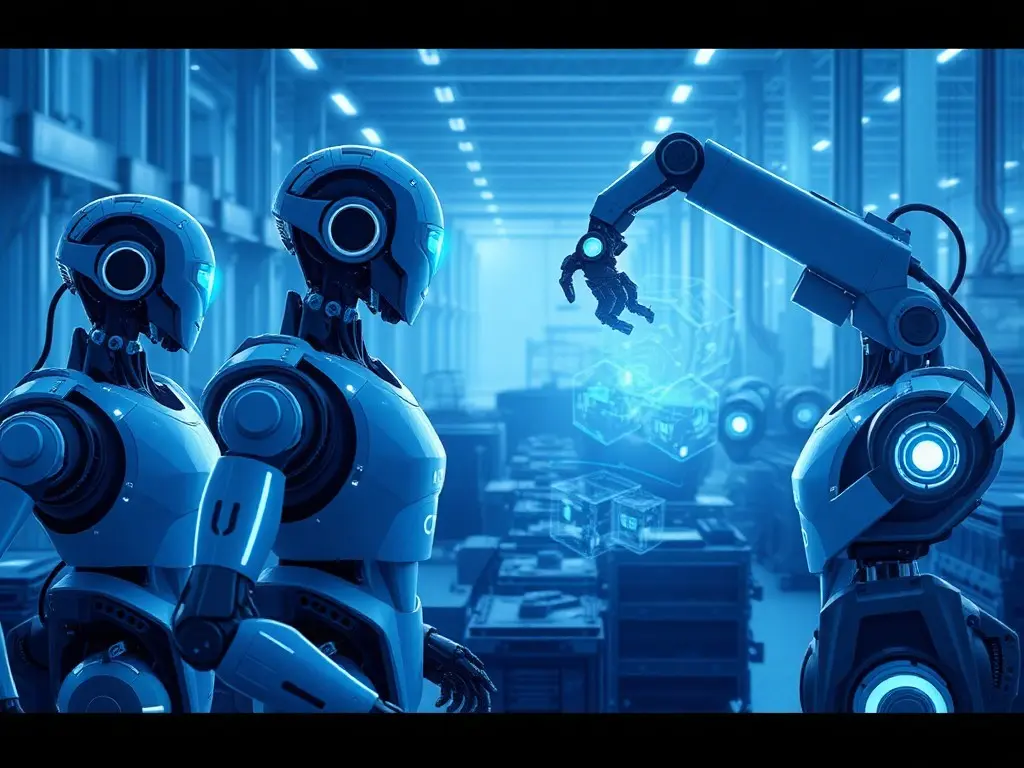
China’s robotics sector has seen record funding this year, with $5.6 billion raised across 176 deals by mid-May, surpassing the total investment from 2021 and 2025 combined. Investors are increasingly backing embodied AI startups, such as TARS Robotics, Spirit AI, and Galaxea AI, which integrate advanced AI models like Vision-Language-Action systems into physical robotics hardware.
China’s robotics industry has reached unprecedented funding levels in 2026, with $5.6 billion invested across 176 deals by mid-May, according to Crunchbase data. This surpasses the total investment for all of 2021 and 2025 combined, signaling a surge in investor confidence. The sector contributed significantly to Asia’s overall startup funding, which hit $27.4 billion in Q1 2026, with China capturing 60% of that total at $16.5 billion. A key driver behind this growth is the shift toward embodied AI—robots equipped with artificial intelligence that interact with the real world in real time. Startups are moving away from traditional line-by-line programming toward advanced models like Vision-Language-Action systems, enabling robots to observe, reason, and execute tasks autonomously. Several Chinese robotics firms have secured massive funding rounds this year. TARS Robotics, a Shanghai-based humanoid robotics company founded in 2025, raised $513 million in a seed round led by Hillhouse Capital and HSG, achieving a $1.9 billion valuation. Spirit AI, a Beijing-based startup developing a ‘universal brain’ for robots, secured $435 million in Series A financing, including a $290 million round in February and a $145 million extension in April, with a $1.5 billion valuation. Other notable firms include Galaxea AI, which raised $435 million in Series B funding, including a $290 million extension in April, and EngineAI, a Shenzhen-based developer of humanoid and quadruped robots, which secured $200 million in a Series B round. These companies represent a broader trend of integrating AI-driven software with hardware, attracting substantial investor interest and positioning China as a leader in next-generation robotics.
This content was automatically generated and/or translated by AI. It may contain inaccuracies. Please refer to the original sources for verification.