Even after a Strait of Hormuz deal, moving 1,500 ships won’t be easy
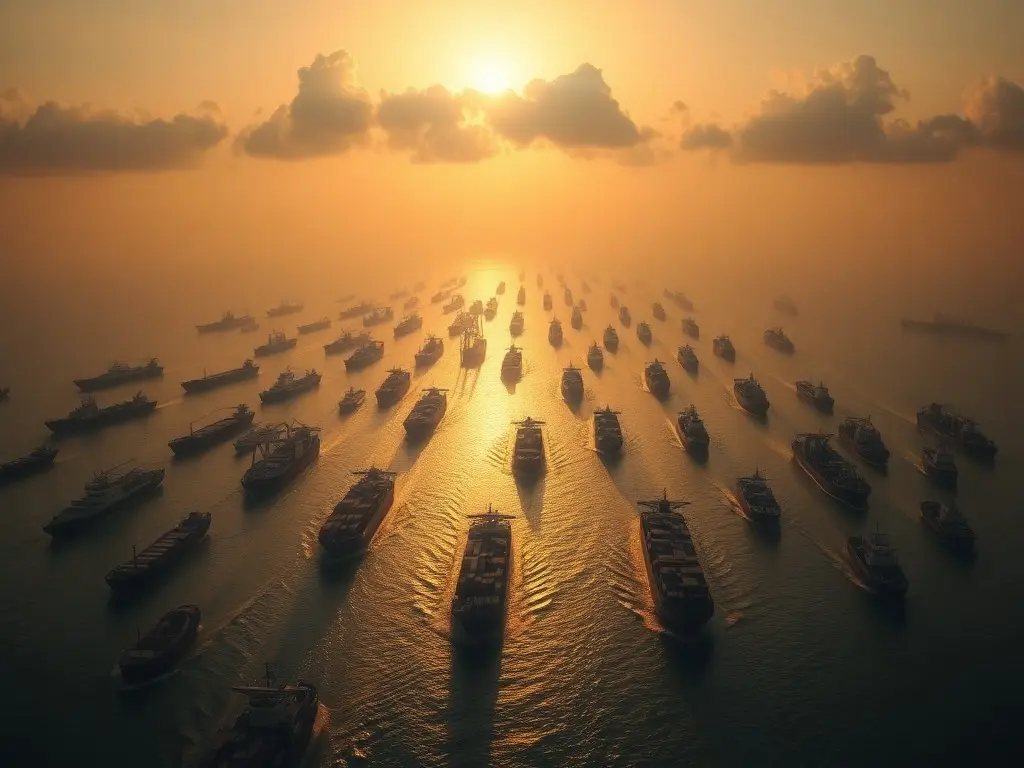
The U.S. and Iran are nearing a deal to reopen the Strait of Hormuz, but 1,500 stranded ships face delays due to prioritization, mine risks, and logistical hurdles. Energy prices are unlikely to drop quickly, and shipping companies like Hapag-Lloyd and Wallenius Wilhelmsen warn recovery could take weeks or months even after the strait reopens.
The Strait of Hormuz, a critical route carrying one-fifth of the world’s oil and gas, remains closed to 1,500 ships stranded in the Persian Gulf for nearly three months. While the U.S. and Iran are close to finalizing a deal to reopen the narrow 21-nautical-mile strait, logistical challenges—including mine threats, route coordination, and permit requirements—could delay full operations for weeks or months. Shipping companies must first determine how vessels will be prioritized and which authorities to contact for clearance. Jakob P. Larsen, chief safety and security officer at the Baltic and International Maritime Council, emphasized the need for speed limits to prevent collisions or grounding in shallow waters. The risk of striking sea mines, potentially planted by Iran, remains a major concern, with British military officials warning of advanced mines that damage hulls. Navies from the U.S., Britain, France, and Germany would need weeks to deploy minesweepers, according to the International Energy Agency, keeping maritime insurance rates elevated. Iran has also established a regulatory agency to oversee strait operations, signaling continued control over the waterway. Meanwhile, ships maintained by skeleton crews of about 20,000 seafarers have accumulated barnacles and algae, further complicating navigation. Hapag-Lloyd, the world’s fifth-largest container shipping group, managed to move one vessel after extensive cleaning, but its CEO, Rolf Habben Jansen, reported reduced speed due to fouling. Lasse Kristoffersen of Wallenius Wilhelmsen, a logistics giant with a stranded vessel, estimated normal operations could take 30 to 45 days if all goes smoothly. Energy prices, which have risen globally, are not expected to fall quickly due to the prolonged disruption. The Houthis, an Iranian-backed militant group, have also disrupted shipping by targeting vessels in the Red Sea, adding another layer of risk. Until companies confirm safety and stability in the region, stranded ships will remain in the Persian Gulf, delaying the return to prewar shipping levels of up to 130 vessels transiting daily.
This content was automatically generated and/or translated by AI. It may contain inaccuracies. Please refer to the original sources for verification.