Everything you need to know about the SpaceX trading debut
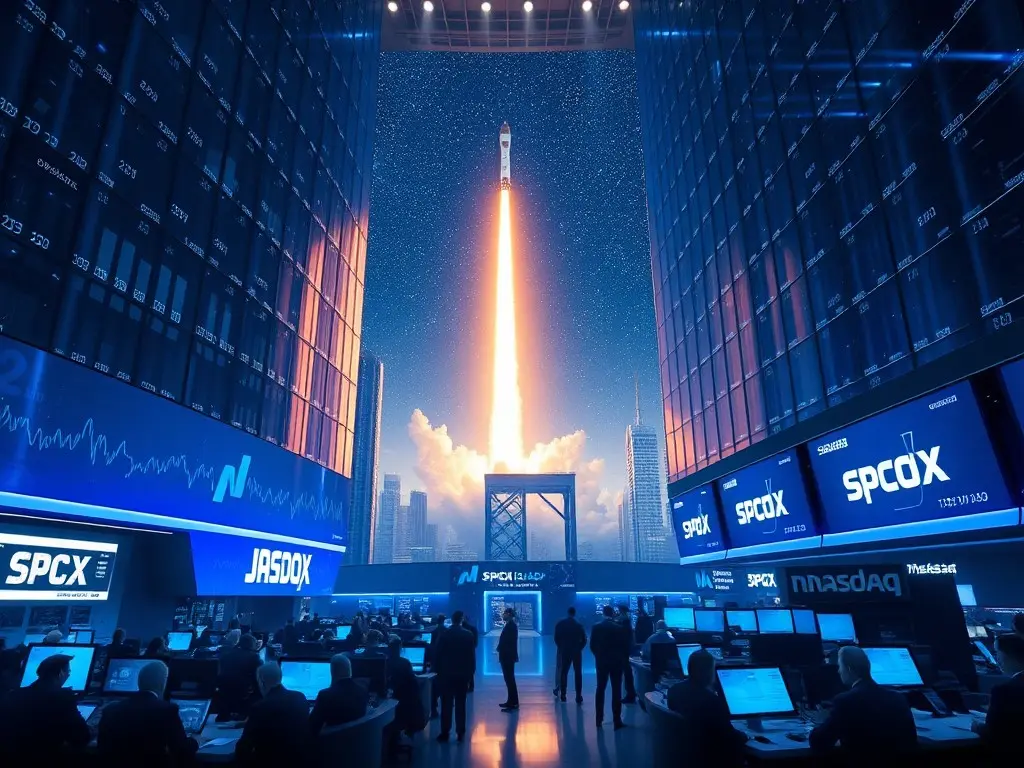
SpaceX will debut on the stock market Friday with the largest IPO ever, selling 555.6 million shares at $135 each to raise $75 billion and valuing the company at $1.77 trillion. Trading will begin later in the day after bankers match buyers and sellers for about 10% of shares to reduce volatility, with individual investors holding a significant portion of the offering." "article": "SpaceX, Elon Musk’s rocket maker, will begin trading on the Nasdaq under the ticker “SPCX” on Friday, marking the largest initial public offering (IPO) ever. The company sold 555.6 million shares at $135 each, raising approximately $75 billion and valuing SpaceX at roughly $1.77 trillion. Most of its revenue comes from its satellite internet unit, Starlink, while its artificial intelligence business remains in early development. Trading will not start immediately after the opening bell. Bankers typically match buyers and sellers for about 10% of shares—around 55 million shares worth $7.5 billion—to reduce volatility before trading begins. Pre-IPO investors face restrictions on selling shares, which may delay finding sellers. The IPO includes a ‘green-shoe’ option, where underwriters sold about 15% more shares than the stated offering size. If the stock price drops, Morgan Stanley, the stabilization agent, will buy back excess shares to support the price. This mechanism helps prevent sharp declines in newly listed stocks. Analysts expect volatility due to the high proportion of shares sold to individual investors, who may rush in or out quickly. A 10% price swing in either direction could trigger a five-minute trading halt, as seen with past IPOs like Figma and Cerebras Systems. The Nasdaq imposed these circuit breakers after the 2010 flash crash to prevent extreme market disruptions. SpaceX’s debut will set a benchmark for future mega-IPOs, including those from OpenAI and Anthropic later this year. Its performance will signal investor appetite for high-profile tech offerings in a shifting market environment.
SpaceX, Elon Musk’s rocket maker, will begin trading on the Nasdaq under the ticker “SPCX” on Friday, marking the largest initial public offering (IPO) ever. The company sold 555.6 million shares at $135 each, raising approximately $75 billion and valuing SpaceX at roughly $1.77 trillion. Most of its revenue comes from its satellite internet unit, Starlink, while its artificial intelligence business remains in early development. Trading will not start immediately after the opening bell. Bankers typically match buyers and sellers for about 10% of shares—around 55 million shares worth $7.5 billion—to reduce volatility before trading begins. Pre-IPO investors face restrictions on selling shares, which may delay finding sellers. The IPO includes a ‘green-shoe’ option, where underwriters sold about 15% more shares than the stated offering size. If the stock price drops, Morgan Stanley, the stabilization agent, will buy back excess shares to support the price. This mechanism helps prevent sharp declines in newly listed stocks. Analysts expect volatility due to the high proportion of shares sold to individual investors, who may rush in or out quickly. A 10% price swing in either direction could trigger a five-minute trading halt, as seen with past IPOs like Figma and Cerebras Systems. The Nasdaq imposed these circuit breakers after the 2010 flash crash to prevent extreme market disruptions. SpaceX’s debut will set a benchmark for future mega-IPOs, including those from OpenAI and Anthropic later this year. Its performance will signal investor appetite for high-profile tech offerings in a shifting market environment.
This content was automatically generated and/or translated by AI. It may contain inaccuracies. Please refer to the original sources for verification.