Ex-ADF general rails against Labor’s ‘insular’ Defence Strategy as geostrategic threats to Australia multiply in 2026
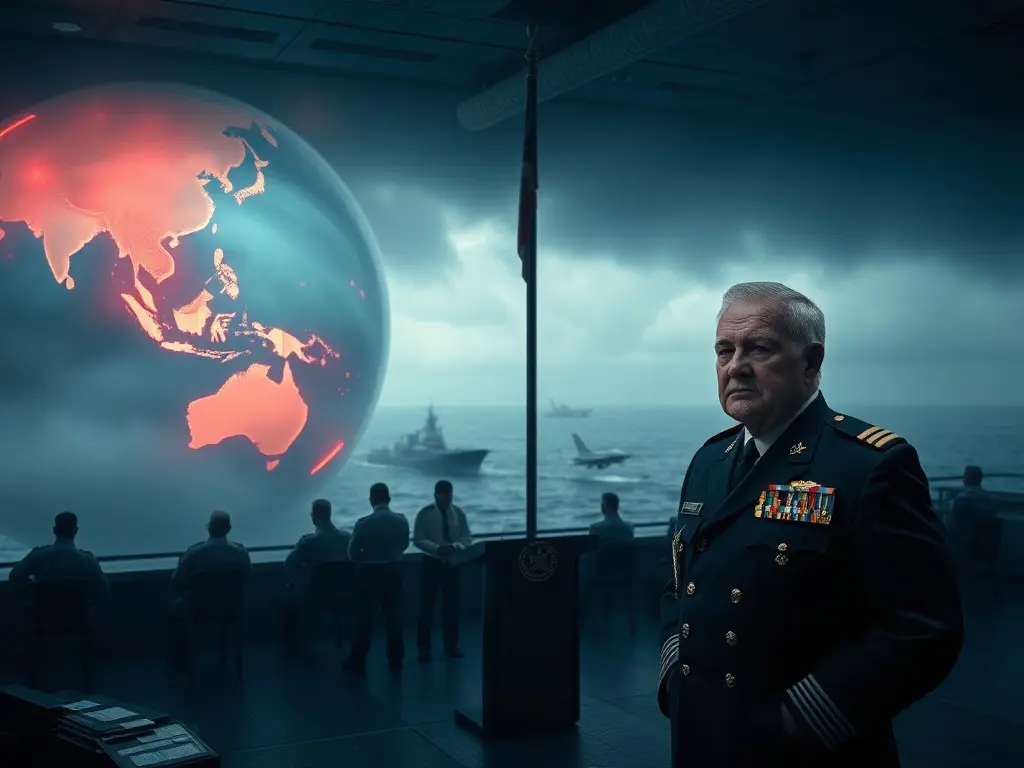
Retired Australian Defence Force (ADF) general criticizes the Albanese government’s 2026 National Defence Strategy as 'insular' amid rising geostrategic threats, while global defence spending hits a record USD$2.88 trillion. Key appointments include Vice Admiral Mark Hammond as Chief of the ADF, Lieutenant General Susan Coyle as Chief of Army, and Rear Admiral Matthew Buckley as Chief of Navy, alongside new Defence Secretary Meghan Quinn.
The Albanese government faces sharp criticism from a retired Australian Defence Force (ADF) general over its 2026 National Defence Strategy, described as 'insular' and inadequate for escalating geostrategic risks. As the government prepares for a potential third term in 2028, recent defence leadership changes include Vice Admiral Mark Hammond as the next Chief of the ADF, Lieutenant General Susan Coyle as Chief of Army, and Rear Admiral Matthew Buckley as Chief of Navy. Additionally, Meghan Quinn, former Secretary of the Industry Department, was appointed as the new Defence Secretary. Global defence spending reached USD$2.88 trillion in 2024, marking an 11th consecutive annual increase, according to the Stockholm International Peace Research Institute (SIPRI). Excluding the top three spenders—the US, China, and Russia—rising budgets across Europe, Asia, and Oceania reflect heightened tensions and a fragile geopolitical environment. Germany and Japan, traditionally restrained post-WWII, are now rapidly militarizing, signaling a shift in strategic priorities. Recent geopolitical tensions, including US-Europe disputes over Greenland and the Gulf War, have strained Western alliances, raising questions about Washington’s reliability as a security guarantor. Meanwhile, China and Russia have strengthened defence ties, with recent consultations in St Petersburg involving Iran, further complicating the global security landscape. These developments coincide with high-profile visits, including Japan’s Prime Minister Sanae Takaichi’s trip to Australia and US President Donald Trump’s upcoming visit to China. The new defence leadership in Australia must address urgent threats, as global realignments and military buildups create an increasingly contested Indo-Pacific region. The 2026 National Defence Strategy and its Integrated Investment Program (IIP) aim to position Australia more effectively in this environment, but critics argue the strategy lacks urgency and fails to match rising regional challenges. With global conflicts escalating—even if indirectly—the ADF’s leadership faces pressure to adapt to a world where traditional alliances are fracturing and adversaries are consolidating. The strategy’s success hinges on whether Australia can balance its defence investments with the rapidly evolving threats in its immediate region and beyond.
This content was automatically generated and/or translated by AI. It may contain inaccuracies. Please refer to the original sources for verification.