Experts raise concerns over effectiveness and risks of Tk 500bn Padma Barrage project
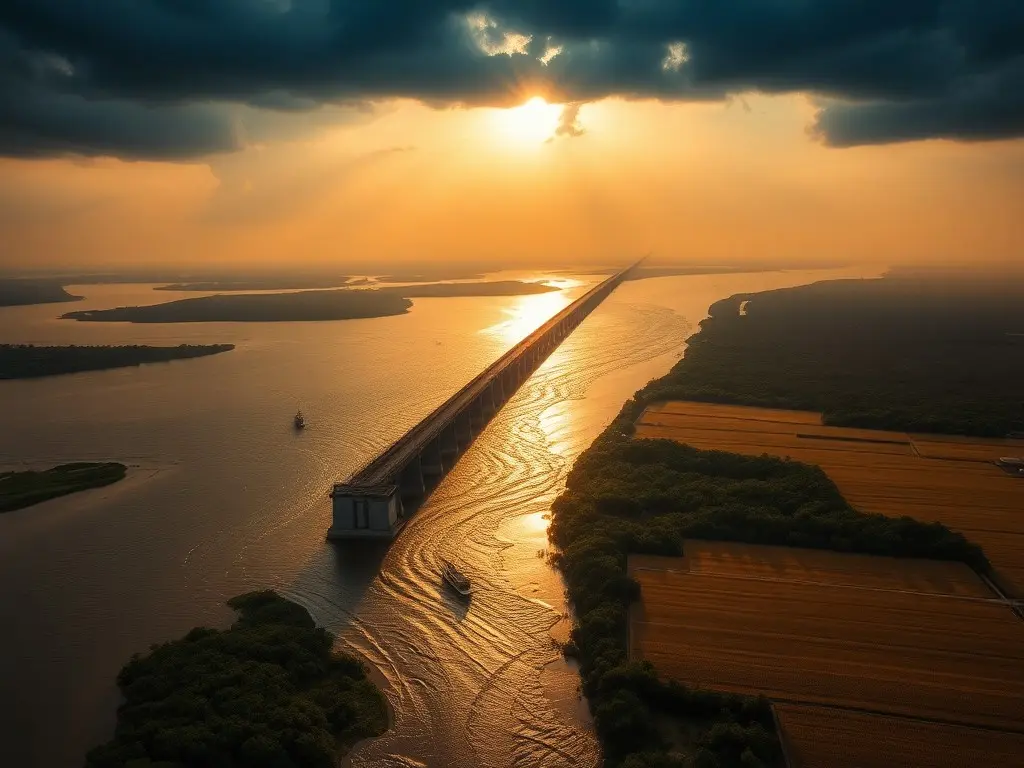
Bangladesh’s Executive Committee of the National Economic Council (ECNEC) approved the Tk 500 billion Padma Barrage project, aiming to store 29 billion cubic meters of water and boost agriculture across 2.88 million hectares, but experts warn its success depends on India’s water flow under the Ganges treaty. Critics, including environmental groups like Bangladesh Poribesh Andolon (BAPA), highlight risks of environmental damage and insufficient impact assessments, while the government emphasizes benefits like salinity reduction and ecosystem restoration in the Sundarbans.
Bangladesh’s Executive Committee of the National Economic Council (ECNEC) approved the Tk 500 billion Padma Barrage project after over 60 years of planning, marking one of the country’s most ambitious river initiatives. The project, led by the Bangladesh Water Development Board (BWDB), aims to store 29 billion cubic meters of water, expand irrigation across 2.88 million hectares, and generate 113 megawatts of hydropower. Implementation will begin in July 2027 and run until June 2033, with the first phase costing Tk 334.74 billion, fully funded by the government. The barrage’s success hinges on India’s compliance with the Ganges water-sharing treaty, as reduced flows from the Farakka Barrage in West Bengal have already dried up critical river systems like the Hishna-Mathabhanga and Gorai-Madhumati. Experts argue the treaty’s expiration risks further disrupting water supply, threatening agriculture, fisheries, and the Sundarbans ecosystem. The project also seeks to address salinity in southwestern regions, reduce waterlogging in areas like Bhabodah, and improve drainage in Padma-dependent districts. Environmental activists, including Bangladesh Poribesh Andolon (BAPA), criticize the project for lacking transparency on potential ecological harm, warning of adverse upstream and downstream effects. The government counters that the barrage is essential for sustainable water management, supporting productivity in sectors like agriculture, forestry, and fisheries across Rajshahi, Khulna, and Barishal districts. Officials emphasize the Padma River as the sole potable water source for millions, stressing the need for balanced economic and environmental growth. Planning for the barrage began in the 1960s, with feasibility studies conducted by local and international consultancies between 2005 and 2013. The project’s design includes roads, pipelines, and riverworks alongside the barrage, aiming to revive five river systems and mitigate climate-related waterlogging. However, critics argue the lack of detailed environmental assessments could exacerbate existing challenges, including biodiversity loss in the Sundarbans and rising salinity in southern regions.
This content was automatically generated and/or translated by AI. It may contain inaccuracies. Please refer to the original sources for verification.