ExxonMobil Program Teaches Middle Schoolers About Carbon Capture
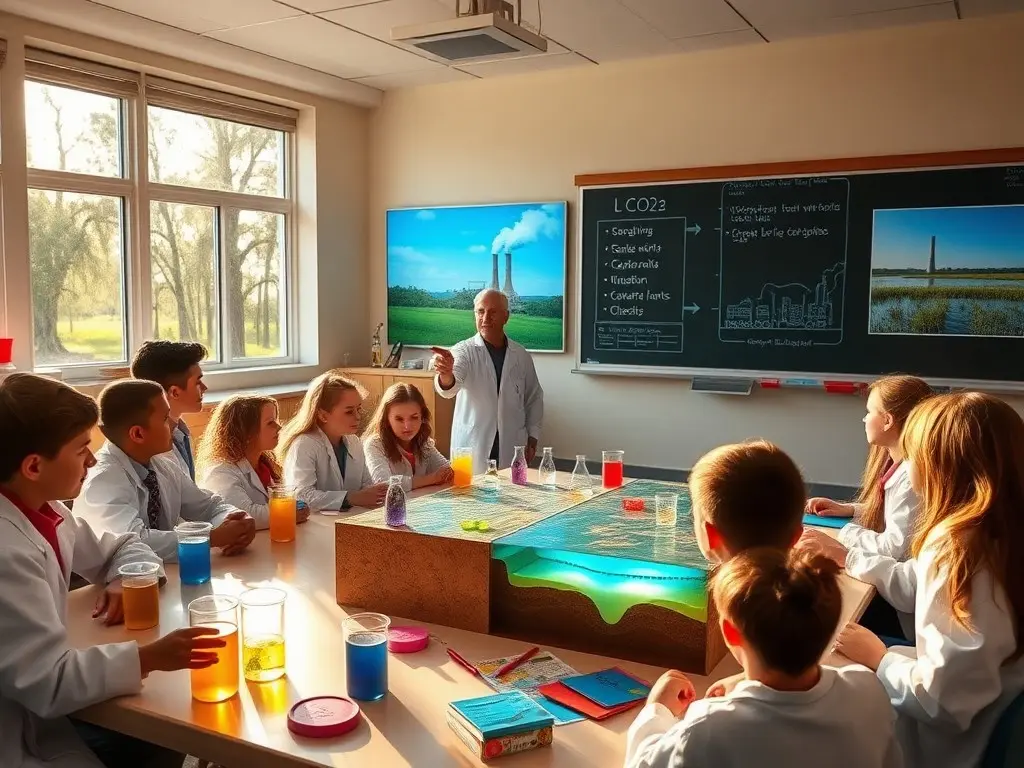
ExxonMobil funded a climate change education program for 1,700 eighth graders in Ascension Parish, Louisiana, teaching carbon capture and sequestration through hands-on lessons developed by Rice University’s Tapia Center. Critics argue the initiative may promote industry bias, while supporters see it as essential for Louisiana’s economic future and reducing CO2 emissions via underground storage technology." "article": "ExxonMobil’s carbon capture and sequestration (CCS) curriculum reached 1,700 eighth graders across nine Ascension Parish middle schools in Louisiana during the final days of the school year. Developed by Rice University’s Tapia Center, the four-day lesson used hands-on activities—like sealing leaks with Play-Doh—to teach students about CO2 storage, a technology ExxonMobil advocates for as critical to reducing emissions in oil and gas operations. The program, funded by a $51,000 grant from the ExxonMobil Foundation, builds on four years of similar lessons in Texas, Mississippi, and Tennessee. ExxonMobil also supports the Tapia Center’s STEM summer camps, donating $100,000 annually in scholarships. Paul Hand, the center’s executive director, emphasized the curriculum’s independence, stating it avoids taking a stance on CCS debates while aligning with Louisiana’s academic standards. CCS involves injecting CO2 underground in a near-liquid state to cut climate-warming emissions, a method backed by federal tax credits and industry pressure to lower carbon intensity. ExxonMobil operates a key CO2 pipeline in southern Louisiana, Mississippi, and Texas, which other companies use to transport emissions for storage. Critics, including environmental groups and some conservatives, question the technology’s necessity and safety, despite assurances from LSU scientists and industry advocates. The Tapia Center spent a year refining demonstration materials to make CCS relatable, using items like vegetable oil to simulate CO2 leaks. Hand noted the program connects STEM lessons to students’ lives, preparing them for future careers in science and technology. ExxonMobil frames its support as a collaboration between education, industry, and communities, aiming to inspire interest in scientific fields. Opposition persists, with some arguing the program downplays controversies surrounding CCS while promoting ExxonMobil’s interests. Despite this, the initiative marks another effort by energy companies to educate young students on technologies central to their operations, positioning CCS as a vital tool for Louisiana’s economic and environmental future.
ExxonMobil’s carbon capture and sequestration (CCS) curriculum reached 1,700 eighth graders across nine Ascension Parish middle schools in Louisiana during the final days of the school year. Developed by Rice University’s Tapia Center, the four-day lesson used hands-on activities—like sealing leaks with Play-Doh—to teach students about CO2 storage, a technology ExxonMobil advocates for as critical to reducing emissions in oil and gas operations. The program, funded by a $51,000 grant from the ExxonMobil Foundation, builds on four years of similar lessons in Texas, Mississippi, and Tennessee. ExxonMobil also supports the Tapia Center’s STEM summer camps, donating $100,000 annually in scholarships. Paul Hand, the center’s executive director, emphasized the curriculum’s independence, stating it avoids taking a stance on CCS debates while aligning with Louisiana’s academic standards. CCS involves injecting CO2 underground in a near-liquid state to cut climate-warming emissions, a method backed by federal tax credits and industry pressure to lower carbon intensity. ExxonMobil operates a key CO2 pipeline in southern Louisiana, Mississippi, and Texas, which other companies use to transport emissions for storage. Critics, including environmental groups and some conservatives, question the technology’s necessity and safety, despite assurances from LSU scientists and industry advocates. The Tapia Center spent a year refining demonstration materials to make CCS relatable, using items like vegetable oil to simulate CO2 leaks. Hand noted the program connects STEM lessons to students’ lives, preparing them for future careers in science and technology. ExxonMobil frames its support as a collaboration between education, industry, and communities, aiming to inspire interest in scientific fields. Opposition persists, with some arguing the program downplays controversies surrounding CCS while promoting ExxonMobil’s interests. Despite this, the initiative marks another effort by energy companies to educate young students on technologies central to their operations, positioning CCS as a vital tool for Louisiana’s economic and environmental future.
This content was automatically generated and/or translated by AI. It may contain inaccuracies. Please refer to the original sources for verification.