Faraday Future’s Super One Minivan Is Already In Trouble
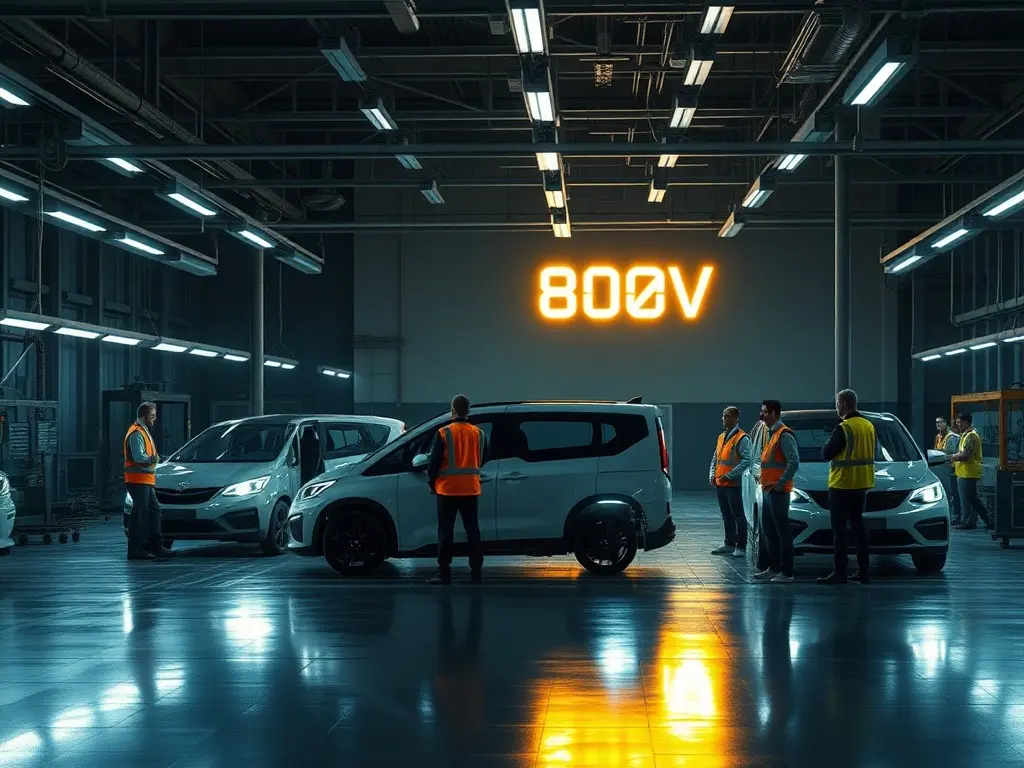
Faraday Future has paused production of its FX Super One minivan, citing its 400V architecture as uncompetitive, and is considering a shift to 800V architecture or a range-extended powertrain. The company now depends on securing financing before resuming mass production, with delivery timelines ranging from 6 to 28 months depending on the chosen approach.
Faraday Future has halted production of its FX Super One minivan, attributing the decision to the vehicle’s 400V architecture, which the company deems insufficiently competitive. The automaker is now evaluating a transition to an 800V architecture or a range-extended powertrain to enhance performance, range, and efficiency. An 800V system would offer longer range, faster charging, and improved powertrain efficiency, while range-extended models would better suit cold climates like the U.S. East Coast. The shift comes as Faraday Future, a struggling automaker often compared to a penny stock, faces financial uncertainty. The company has not yet secured funding, and mass production of the updated FX Super One remains contingent on securing investments from strategic or long-term investors. Delivery timelines vary: an 800V version could enter production in 6 to 24 months, while a range-extended model would take 9 to 28 months, though past projections have been unreliable. Faraday Future claims the pause allows it to focus on its robotics division during a critical growth phase, having shipped 68 robots by April. The company also framed the delay as a strategic move to concentrate on its broader AI ecosystem ambitions, though financial instability and shifting priorities continue to cast doubt on its long-term viability. The FX Super One was introduced less than a year ago, featuring AI-driven features and a futuristic design, but its 400V platform now appears outdated compared to competitors like Mercedes EQS, Polestar 3, and Volvo EX90, which have already adopted 800V systems. Faraday Future’s pivot reflects broader industry trends toward high-voltage architectures, though its ability to execute remains uncertain without stable funding.
This content was automatically generated and/or translated by AI. It may contain inaccuracies. Please refer to the original sources for verification.