Federal court hears arguments over efforts to halt Trump’s mail-in executive order
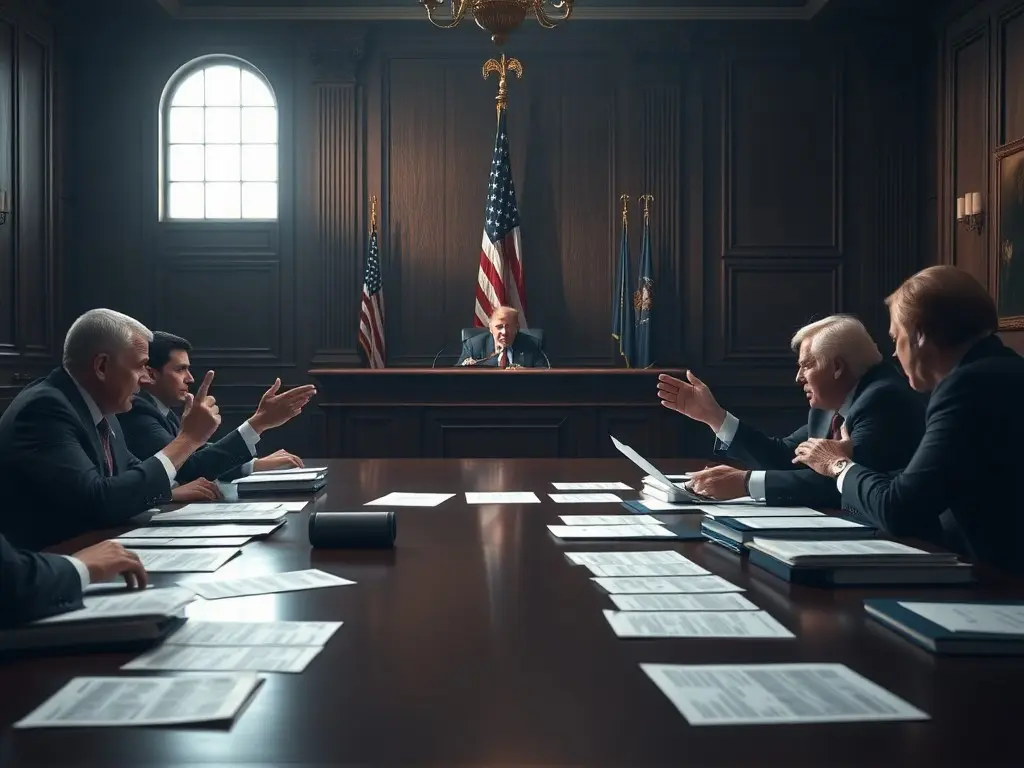
A federal judge in Boston heard arguments from voting rights groups and 24 states seeking to block President Donald Trump’s executive order creating a federal voter list and restricting mail voting, arguing it oversteps presidential authority and risks disenfranchising eligible voters. The Trump administration countered that the lawsuits are premature and lack legal standing, while Judge Indira Talwani expressed concerns about election readiness and potential voter confusion due to conflicting state and federal lists.
A federal judge in Boston heard arguments Tuesday from voting rights groups and a coalition of 24 states challenging President Donald Trump’s March executive order to create a federal voter list and limit mail voting. The plaintiffs, including the American Civil Liberties Union and the League of Women Voters, argued the order violates constitutional separation of powers by allowing the president—not states or Congress—to dictate election rules. They also claimed it imposes costly burdens on state officials and risks prosecuting election workers for noncompliance, potentially disrupting ballot administration. The Trump administration filed motions to dismiss the lawsuits, arguing they are premature and lack legal basis under the Administrative Procedure Act. Lawyers for the administration, including Stephen Pezzi, stated the harms described by plaintiffs are speculative, as the voter list remains unfinished. Missouri Solicitor General Lou Capozzi, representing the states, acknowledged uncertainty over how the list would be used but said it was unlikely to remove voters this year. Judge Indira Talwani questioned whether the federal system could handle elections with conflicting state and federal voter lists, citing risks like voters missing ballots due to name changes or moves. She also raised concerns about election workers relying on inconsistent records. The judge took both the requests to halt the order and motions to dismiss under advisement, delaying a decision. The hearing follows a recent ruling by U.S. District Judge Carl Nichols, a Trump appointee, who refused to block the order, citing its preliminary status. Trump issued the order after a voting reform bill he supported stalled in Congress, aiming to ensure only citizens vote while shifting oversight of mail ballots to the federal government. Critics argue the order transforms the U.S. Postal Service into an election arbiter, potentially disenfranchising eligible voters. The ACLU called it an ‘abusive assertion of executive power,’ while supporters maintain it reinforces voter integrity. The outcome of Talwani’s decision could shape election administration ahead of upcoming ballots.
This content was automatically generated and/or translated by AI. It may contain inaccuracies. Please refer to the original sources for verification.