FedEx Freight (FDXF) Drops 7% on First Trading Day as Independent Company
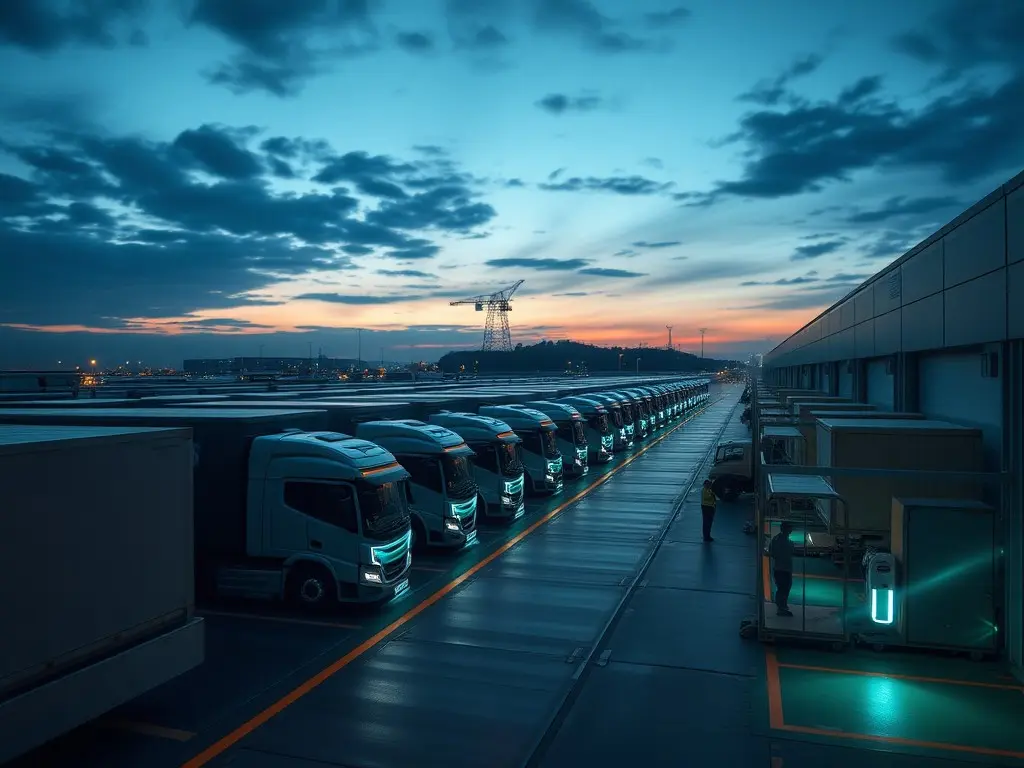
FedEx Freight (FDXF) debuted as an independent public company on Monday, opening 6.76% lower, with CEO John Smith emphasizing autonomy to drive growth and a 15% operating margin target by 2029. The company’s autonomous vehicle trials on Dallas-Houston and Dallas-El Paso routes show readiness for deployment, though regulatory approval remains the main hurdle.
FedEx Freight launched as a standalone publicly traded company on Monday under the ticker symbol FDXF, marking its separation from FedEx after generating $8.7 billion in annual revenue—about 10% of FedEx’s total $90 billion in sales. CEO John Smith rang the opening bell at the New York Stock Exchange, where shares fell 6.76% on their first trading day. Smith stated the independence allows for more focused capital allocation, particularly in expanding the less-than-truckload (LTL) market, and aims to achieve a 15% operating margin by 2029, up from the current 12%. The company plans to invest in digital platforms, expand its direct sales team, and improve operational efficiency to meet its financial targets. Smith expressed confidence in capturing market share even during economic downturns, citing strategic positioning as a key advantage. Competitors like Old Dominion Freight Line, XPO, and ArcBest saw mixed trading results, with XPO down 2.02% and ArcBest up 0.70%. A major focus for FedEx Freight is its autonomous vehicle technology, tested over two years on Dallas-Houston and Dallas-El Paso routes. Smith reported human intervention occurs less than 0.1% of the time, calling the tech deployment-ready but hindered by regulatory and public acceptance challenges. He noted that broader adoption of autonomous trucks requires overcoming concerns about unmanned vehicles operating at highway speeds. On electric vehicles, Smith took a cautious approach, stating current battery technology cannot support 600-mile journeys for Class 8 tractors. The company is prioritizing compressed natural gas for long-haul operations while adopting electric forklifts and yard tractors where feasible. The autonomous testing initiative has also improved safety features across the fleet, including collision mitigation and lane departure alerts.
This content was automatically generated and/or translated by AI. It may contain inaccuracies. Please refer to the original sources for verification.