Feeding 10 billion people will require new technology
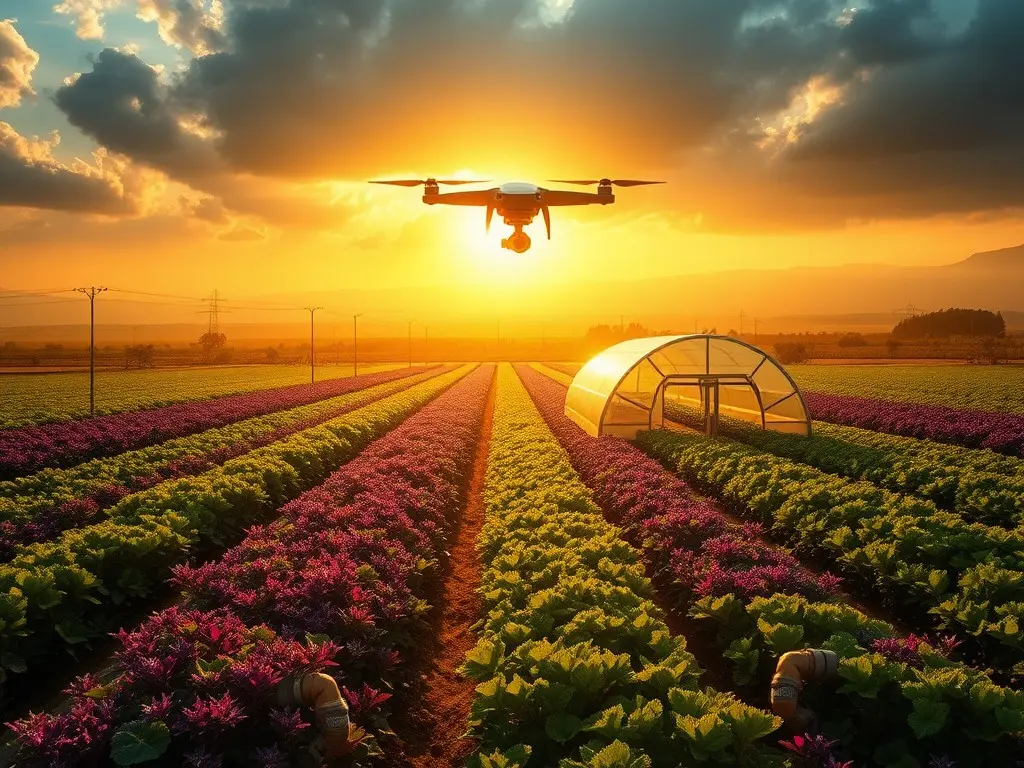
Global investments in agrifood innovation reached $16 billion in 2025, with $9 billion dedicated to boosting farm yields, as climate volatility and geopolitical conflicts disrupt food markets. Startups are leveraging AI and genetic engineering to develop precision agriculture solutions, such as bio-based pesticides and tailored fertilizers, to enhance crop resilience and productivity.
Global investment in agricultural innovation surged to $16 billion in 2025, with $9 billion allocated to research aimed at increasing farm yields, up from $2.5 billion in 2016, according to Agfunder. The rise comes amid food market volatility caused by the pandemic, the Ukraine war, and a new conflict in the Middle East, compounded by climate-related challenges like droughts and erratic weather. At F&A Next, a recent conference in the Netherlands hosted by Wageningen University & Research, over 600 ag-tech innovators and investors discussed new solutions. Startups are developing natural pesticides inspired by plant defense mechanisms and creating personalized fertilizers and crop treatments based on soil genetics and environmental conditions. Cindy Gerhardt of Planet-B.io noted that sustainability efforts now focus on adapting to climate change to prevent price spikes. B-COS, a spin-off from Ghent University, is genetically engineering bacteria to produce molecules that trigger plants’ natural defenses, improving growth, drought tolerance, and reducing disease by 40-50%. Meanwhile, AI is being integrated into precision agriculture to analyze field data—including moisture, UV levels, and soil pathogens—and optimize crop yields and quality. Italian startup EVJA uses field sensors and AI to predict disease risks like mildew and forecast crop yields, helping farmers make data-driven decisions. Adam Anders of Anterra Capital highlighted AI’s potential to connect field conditions with weather forecasts, carbon capture, and consumer demand, accelerating disruption in a historically slow-moving sector. The shift reflects a broader trend: from environmental stewardship to climate adaptation, with technology seen as essential to feeding a growing global population sustainably.
This content was automatically generated and/or translated by AI. It may contain inaccuracies. Please refer to the original sources for verification.