Fibre optic FPV drones: Hezbollah's 'unjammable' weapon
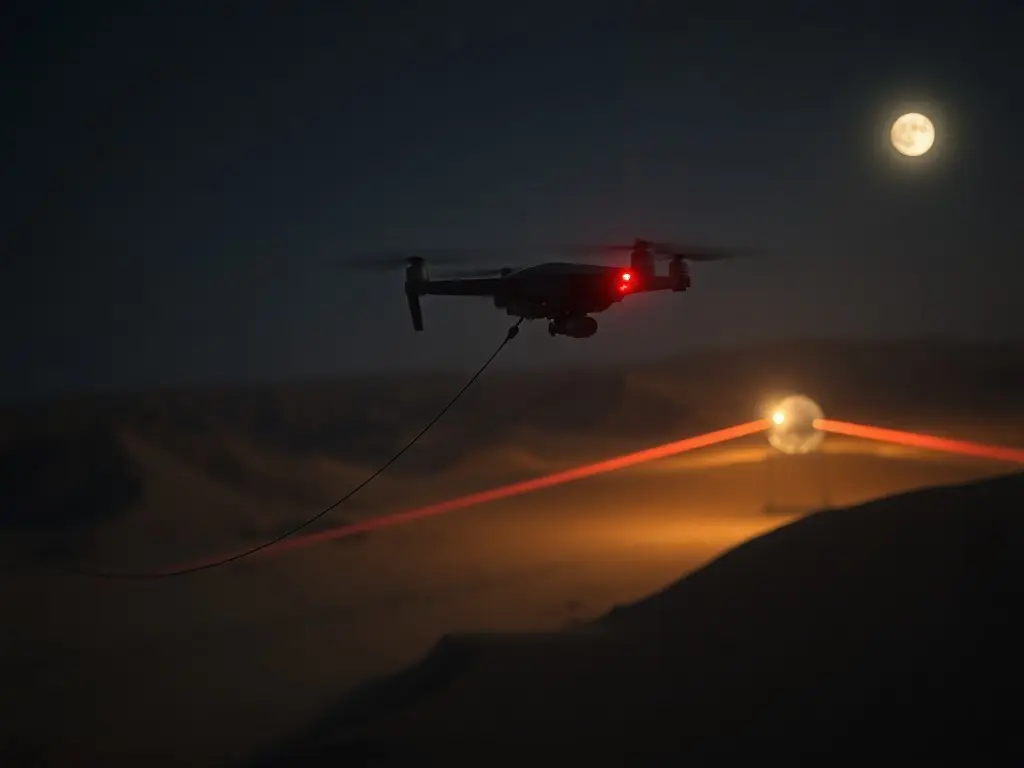
Hezbollah has deployed fibre optic FPV drones to bypass Israel’s advanced air defense systems, including a successful strike on an Iron Dome battery on May 10, leveraging jamming-resistant technology. The drones, guided by physical fibre optic cables, pose a significant challenge to Israel’s military, as traditional radar and electronic warfare measures fail to detect them effectively.
Hezbollah has introduced fibre optic-guided first-person view (FPV) drones to the battlefield, enabling the group to evade Israel’s sophisticated air defense systems like the Iron Dome. On May 10, Hezbollah released footage of one such drone striking an Iron Dome battery in northern Israel, a feat that highlights the vulnerability of electronic jamming-dependent defenses. The drones operate using physical fibre optic cables, eliminating reliance on radio frequencies or satellite signals, which makes them immune to Israel’s electronic warfare tactics. These drones are constructed from lightweight fibreglass, reducing thermal and radar signatures to avoid early detection. Operators control them via high-resolution optical cameras transmitting uncompressed video through the cable, allowing precise targeting of weak points like radar components or tank turrets. The fibre optic spools can extend up to 30 kilometers, enabling deep incursions into enemy territory without emitting detectable signals. Hezbollah has documented over 45 FPV attacks, including 28 since a May 6 Israeli strike on a Hezbollah commander in Lebanon, which reignited tensions. Military analysts compare the tactic to Russia’s use of tethered drones in Ukraine, where jamming-resistant technology proved effective in contested environments. However, the drones remain vulnerable to weather conditions like heavy rain or high winds, and their thin cables can snap if obstructed. The Israeli Defense Forces (IDF) has struggled to counter this threat, as radar systems often fail to detect the drones. Frontline commanders have resorted to improvised defenses, such as hanging nets over military positions or manually shooting down drones with rifles. While the IDF is testing new detection methods, officials admit they are currently reacting in real time to a rapidly evolving asymmetric threat. Former Israeli air defense chief Ran Kochav has warned that disabling systems like Iron Dome, David’s Sling, and Arrow could collapse Israel’s broader defense capabilities. Hezbollah’s workshops in southern Lebanon modify these drones with anti-armour charges, offering a low-cost alternative to conventional anti-tank missiles. The IDF’s challenge lies in adapting to a tactic that exploits both technological and tactical innovations.
This content was automatically generated and/or translated by AI. It may contain inaccuracies. Please refer to the original sources for verification.