Floods and compounding hazards drive rising losses across Europe
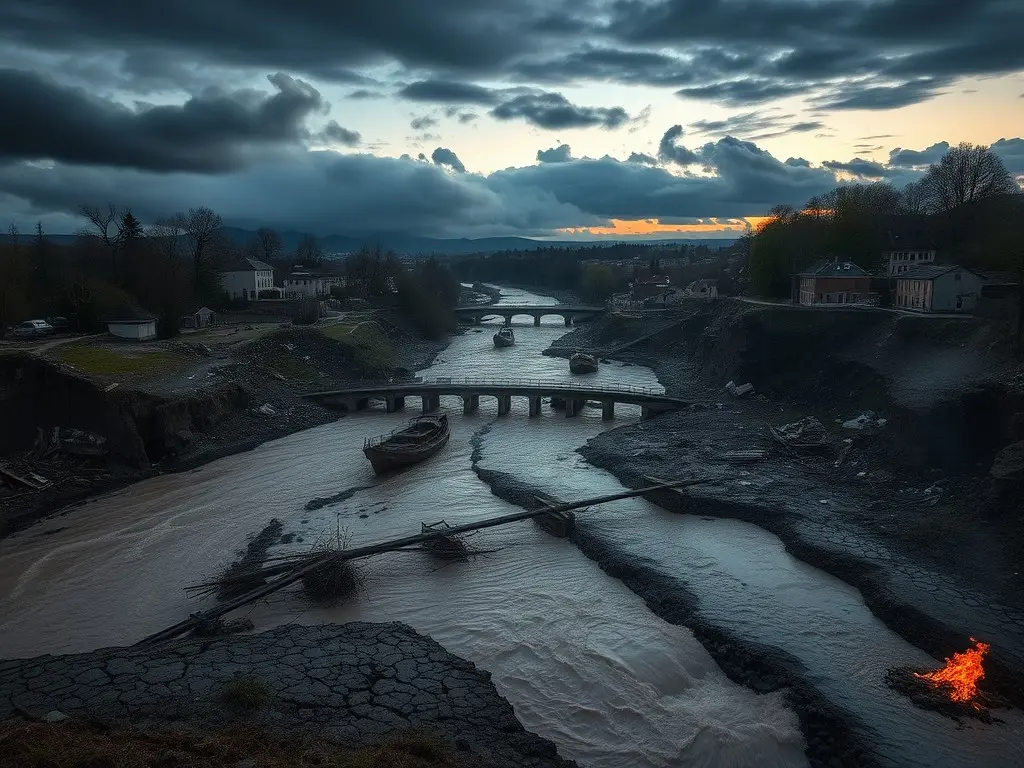
A study led by the European Commission’s Joint Research Centre found that over 70% of European floods between 1981 and 2020 were compound events involving droughts, heatwaves, or windstorms, causing nearly three times more economic damage than standalone floods. The research highlights an 186% increase in multi-hazard floods since the 1980s, driven by climate change, and urges improved disaster planning across the EU.
Scientists from the European Commission’s Joint Research Centre (JRC) led a study analyzing 1,349 flood events across Europe between 1981 and 2020. They discovered that over 70% of these floods were compound events, involving additional hazards like droughts, heatwaves, cold spells, or windstorms. These combined events caused economic losses nearly three times higher than standalone floods, with every top 1% most damaging flood involving multiple hazards. The study revealed a dramatic shift in flood patterns over the past four decades. While floods alone increased modestly by 16%, compound events surged by 186%, reflecting Europe’s worsening climate instability. Researchers cited the 2023 Emilia-Romagna floods in Italy as an example, where prolonged drought followed by extreme rainfall intensified destruction. Using machine learning and AI, the team found that regions facing multiple hazards suffered disproportionately higher losses, even after accounting for flood severity and local conditions. This underscores how climate risks and social vulnerabilities amplify disasters, making them harder to predict and manage. The findings align with the EU’s push for multi-hazard disaster planning and improved early warning systems. The upcoming 2028 European Climate Risk Assessment will prioritize compound flood risks, while insurers and policymakers may recalibrate risk models based on these insights. The research suggests that Europe’s disaster resilience strategies must evolve to address increasingly complex weather patterns. Governments are urged to better identify high-risk areas and strengthen emergency preparedness to mitigate future economic and human impacts.
This content was automatically generated and/or translated by AI. It may contain inaccuracies. Please refer to the original sources for verification.