Following the flowers for honey
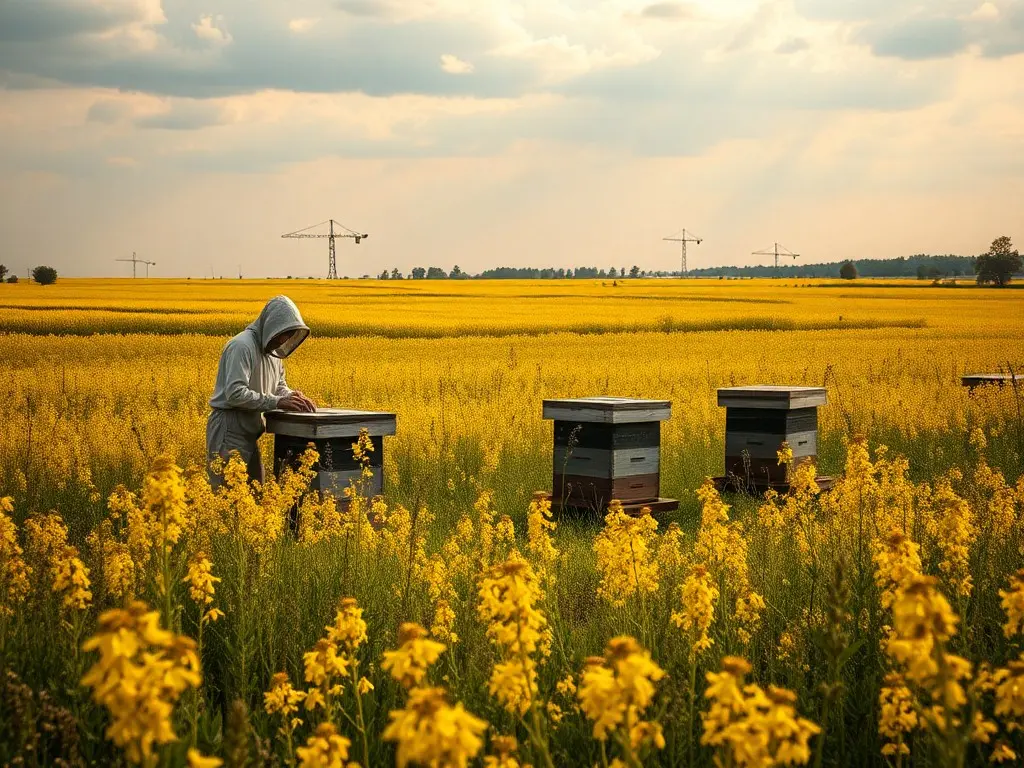
Migratory beekeepers in Assam’s mustard fields face growing challenges from climate change, including erratic rainfall and rising temperatures, which disrupt honey production and threaten local bee species. Researchers and farmers report declining honey yields and habitat loss due to extreme weather and development projects like highways, while programs aim to support small-scale beekeepers with training and indigenous species conservation.
Migratory beekeepers in Assam’s electric yellow mustard fields rely on early mornings and long days to harvest honey, a practice that supports both their livelihoods and local farmers through pollination. Workers like Karan Raj from Bihar travel months at a time to follow flower blooms, collecting honeycombs for overseas sales while enduring stings and harsh conditions. However, climate change is disrupting their work, with floods, stronger monsoons, and extreme heat reducing honey production and forcing bees to stay in hives. The region has seen over 20 additional heatwave days in the past decade, with temperatures rising by about 2°C, according to 2025 research from Madhya Kamrup College. Mukul Kumar Deka, a pollinator researcher at Assam Agricultural University, notes that erratic rainfall patterns—too dry or too wet—directly impact nectar availability and bee activity. Beekeepers like Ranjeet Kumar emphasize that stable weather is essential for production, but climate instability is increasingly common. While many beekeepers use Western honeybees, which are fed sugar to survive, local species face greater threats from habitat destruction, including highways cutting through forests. Karan Raj observes that indigenous bees have drastically declined, and Deka warns that over-reliance on commercial bees could further endanger native populations. Small farmers, often living below the poverty line, depend on beekeeping for income and improved crop yields through pollination. Programs like the Under the Mango Tree Society, led by Sujana Krishnamoorthy, train farmers in sustainable beekeeping and climate resilience. The non-profit helps small-scale growers manage extreme weather while promoting indigenous bee species to maintain biodiversity. Despite challenges, beekeeping remains a vital tool for farmers to adapt to climate change, providing extra income and better crop outcomes. Assam’s 2024 floods and landslides, linked to intensified rainfall, killed over 100 people and destroyed crops, highlighting the region’s vulnerability. As climate pressures mount, balancing commercial beekeeping with conservation efforts becomes critical to preserving both livelihoods and ecosystems.
This content was automatically generated and/or translated by AI. It may contain inaccuracies. Please refer to the original sources for verification.