For residents of Virginia’s ‘data center alley,’ the industry underpins economy — but with costs
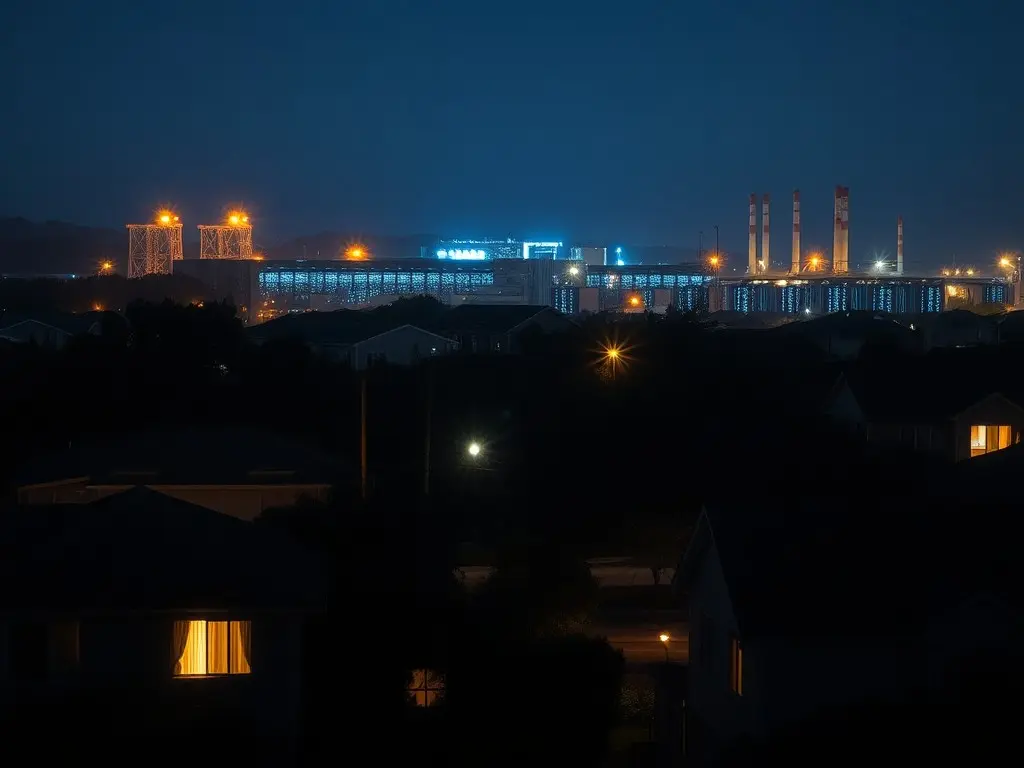
Residents in Northern Virginia, particularly Prince William and Loudoun counties, face growing noise and environmental concerns as massive data centers—like the 800,000-square-foot Vantage facility—expand near homes, driven by AI demand. While the industry boosts the local economy, locals like Greg Pirio and Tammy Taylor report constant drone from generators and worry about fossil fuel use, contrasting with developers like Link Logistics and Vantage Data Centers, which argue the projects are inevitable in a tech-driven economy.
Northern Virginia’s data center boom has transformed suburban neighborhoods into industrial hubs, sparking debates over economic growth and quality of life. Greg Pirio, a resident of Sterling, Virginia, lives adjacent to an 800,000-square-foot Vantage Data Centers facility, which operates on natural gas turbines. He describes constant noise and environmental concerns, noting the area’s shift from suburban tranquility to industrial activity. ‘We bought into this place knowing it was zoned for a suburban feel, but we’ve lost that,’ Pirio said, highlighting the tension between development and livability. The surge in data centers—accelerated by AI demand—has reshaped Prince William and Loudoun counties, where multiple projects are under construction. Residents in Gainesville’s Village Place complex now face four nearby data centers, with one operational since November. Tammy Taylor, a 20-year local, expressed shock at the proximity, though she acknowledges the inevitability of growth near Washington, D.C. ‘You see them driving by, but having one built next door is a different experience,’ she said. Companies like Vantage Data Centers and Link Logistics, owned by Blackstone, are leading the expansion, often relying on on-site natural gas generators to meet power demands. While these alternatives ease grid strain, critics argue they worsen pollution and noise. Allison Bradley, another neighbor, views the data centers as a preferable alternative to other forms of development, though she acknowledges the trade-offs. The industry’s rapid growth has economic benefits, supporting jobs and infrastructure, but residents question the long-term costs. Pirio’s observation—‘There are no birds to use my birdbath’—underscores the environmental impact, as fossil fuel use clashes with sustainability goals. Meanwhile, Western Pennsylvania prepares for similar developments, with projects planned in Allegheny, Indiana, Beaver, and Westmoreland counties, raising concerns about repeating Virginia’s challenges. Data centers now dominate Virginia’s landscape, reshaping communities and economies. The balance between technological progress and livability remains unresolved, with residents and developers at odds over the future of these industrial giants.
This content was automatically generated and/or translated by AI. It may contain inaccuracies. Please refer to the original sources for verification.