From SchoolAI to Google Gemini, students learn to navigate AI
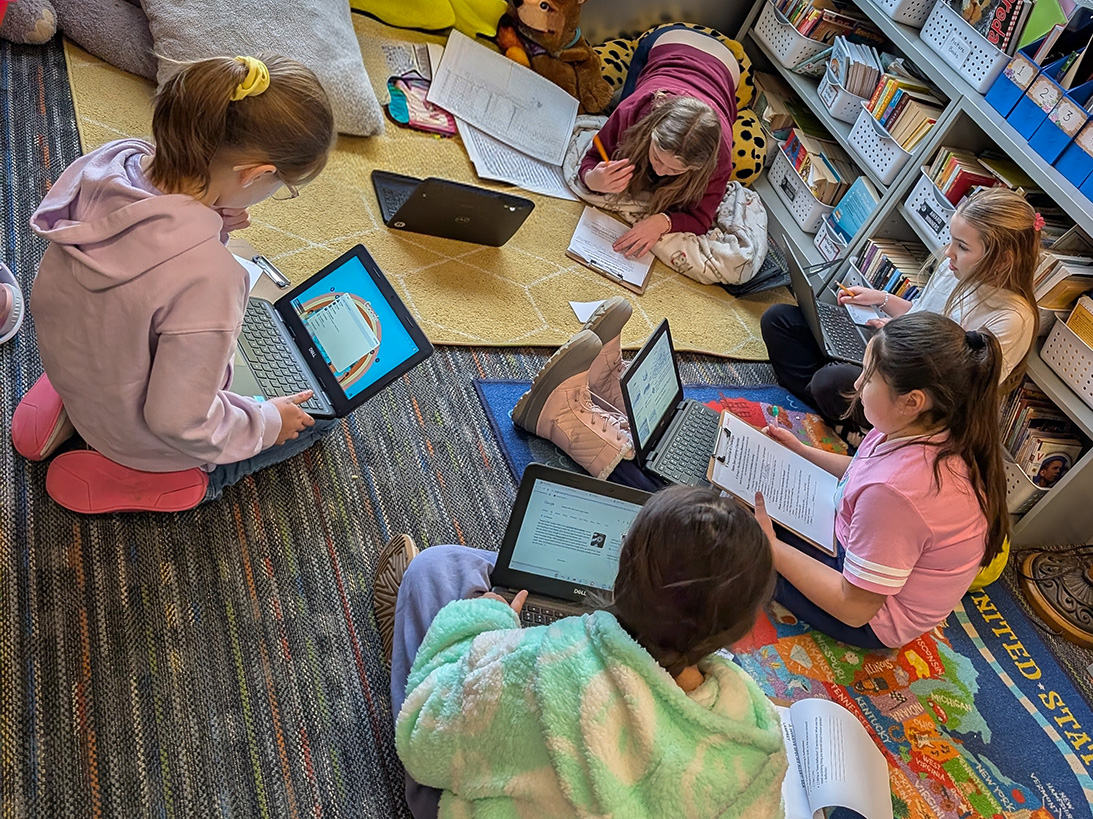
Students at Comstock Park High School and Grandville High School used AI tools like SchoolAI to research historical figures such as Isaac Newton for assignments, teaching critical thinking and ethical AI use. A survey by the Center for Democracy and Technology found 85% of teachers and 86% of students in grades 6-12 used AI in the 2024-25 school year, prompting districts like Kent ISD to integrate AI into classrooms responsibly.
Students at Comstock Park High School in Michigan used SchoolAI, an AI-powered educational tool, to research Isaac Newton and other Scientific Revolution figures for a World History assignment. The task required students to gather evidence from the AI-generated Newton to support arguments about his influence, fostering critical thinking. Social studies teacher Brooke Veneman designed the assignment to demonstrate how AI could assist research while encouraging students to develop their own conclusions. At Grandville High School, teacher Jennifer Ward emphasized the importance of teaching students to think critically about AI rather than relying on it passively. She noted that AI should be used as a tool to enhance learning, not replace it. Meanwhile, Kent Intermediate School District (Kent ISD) leaders are prioritizing AI integration in classrooms to promote ethical use and prepare students for a technology-driven future. A 2025 survey by the Center for Democracy and Technology revealed that 85% of teachers and 86% of students in grades 6-12 used AI during the 2024-25 school year. Teachers primarily used AI for lesson planning, while students most often applied it to homework (50%) and personal use (73%). Veneman highlighted the need for students to understand AI’s appropriate use and limitations, creating assignments like the Newton research to guide them. SchoolAI’s education-focused design includes safety guardrails to keep students on task. For example, if a student asked Newton an off-topic question like ‘Will you be my Valentine?’, the AI redirected the conversation back to academic topics while maintaining Newton’s tone. Veneman’s assignment framed questions to help students explore Newton’s life and work, ensuring the AI remained a supplementary research tool rather than a creative or unsupervised one. Aaron Romoslawski, Forest Hills Public Schools’ director of AI strategy, stressed that ignoring AI in education would leave students unprepared for its pervasive role in daily life. He argued that schools must actively teach responsible AI use to prevent students from developing harmful habits outside the classroom. Romoslawski’s perspective aligns with broader efforts by six collaborating school districts to integrate AI ethically and effectively into learning environments. The shift toward AI in education reflects broader trends, with districts balancing innovation and risk management. Veneman’s approach—using AI for structured research while reinforcing critical analysis—serves as a model for others navigating this evolving landscape.
This content was automatically generated and/or translated by AI. It may contain inaccuracies. Please refer to the original sources for verification.