G7 finance chiefs seek to look through bond volatility
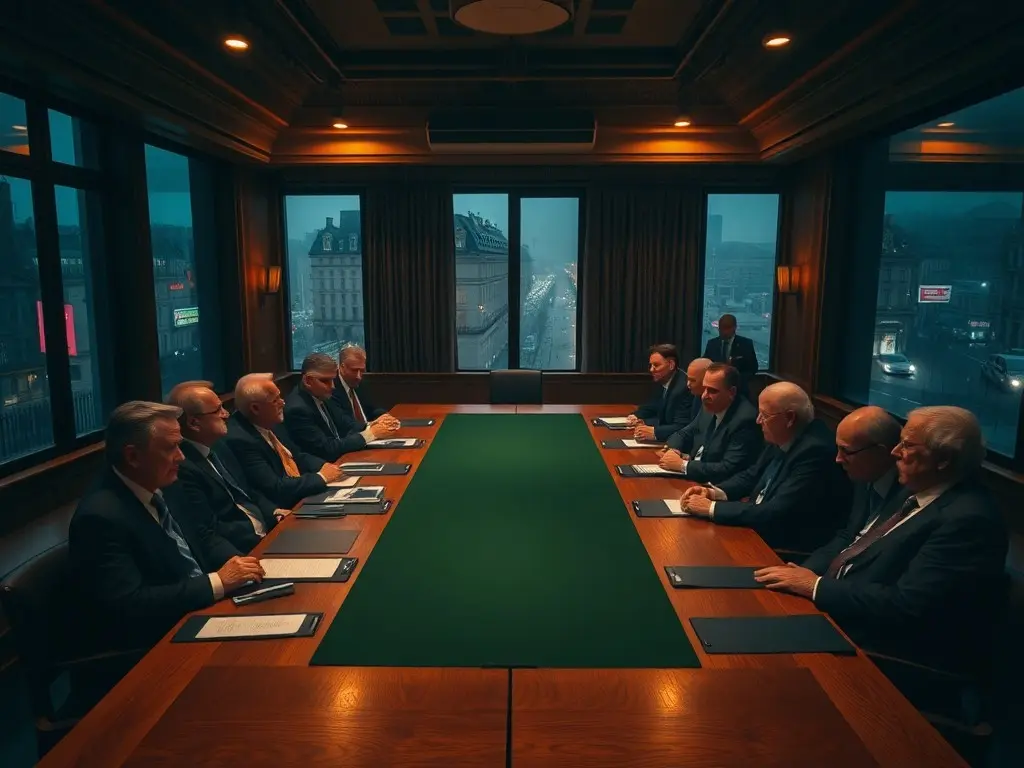
G7 finance ministers met in Paris on May 18 to address rising bond market volatility and public debt concerns amid inflation fears linked to the Iran war, with divisions over coordinated responses complicating efforts to stabilize global markets. Discussions also focused on economic imbalances, critical mineral supply chains, and updates on U.S.-China tensions following a Trump-Xi summit that yielded no major economic breakthroughs.
G7 finance ministers gathered in Paris on May 18 to discuss escalating bond market volatility and public debt concerns triggered by inflation risks tied to the Iran war. Japanese Finance Minister Satsuki Katayama emphasized that individual countries must manage volatility independently, while French Finance Minister Roland Lescure dismissed talk of a market collapse, calling it a correction. Bond losses were reported globally, with investors anticipating central bank rate hikes amid rising energy prices. The meeting highlighted deep divisions within the G7 as ministers prepare for a June 15-17 leaders' summit in Evian, complicating efforts to project unity on economic tensions. International Monetary Fund chief Kristalina Georgieva warned against measures that could worsen the situation, while Lescure described global economic imbalances—such as China’s under-consumption, the U.S.’s over-consumption, and Europe’s under-investment—as unsustainable. Discussions also included an update on U.S.-China relations following a Trump-Xi summit in Beijing, which produced no concrete economic progress despite diplomatic cordiality. U.S. Treasury Secretary Scott Bessent called the China trip successful but urged the G7 to enforce sanctions targeting Iran’s ‘war machine.’ Meanwhile, tensions over Taiwan and trade persisted. A key focus was reducing reliance on China for critical minerals like rare earths, essential for electric vehicles, renewable energy, and defense systems. Lescure proposed stronger coordination to monitor disruptions and develop alternative supplies, including joint projects and potential tariffs. German Finance Minister Lars Klingbeil stressed the urgency of implementing these measures to stabilize markets and encourage domestic investment.
This content was automatically generated and/or translated by AI. It may contain inaccuracies. Please refer to the original sources for verification.