German car plants at half‑speed look to Beijing or battlefields for fresh funding
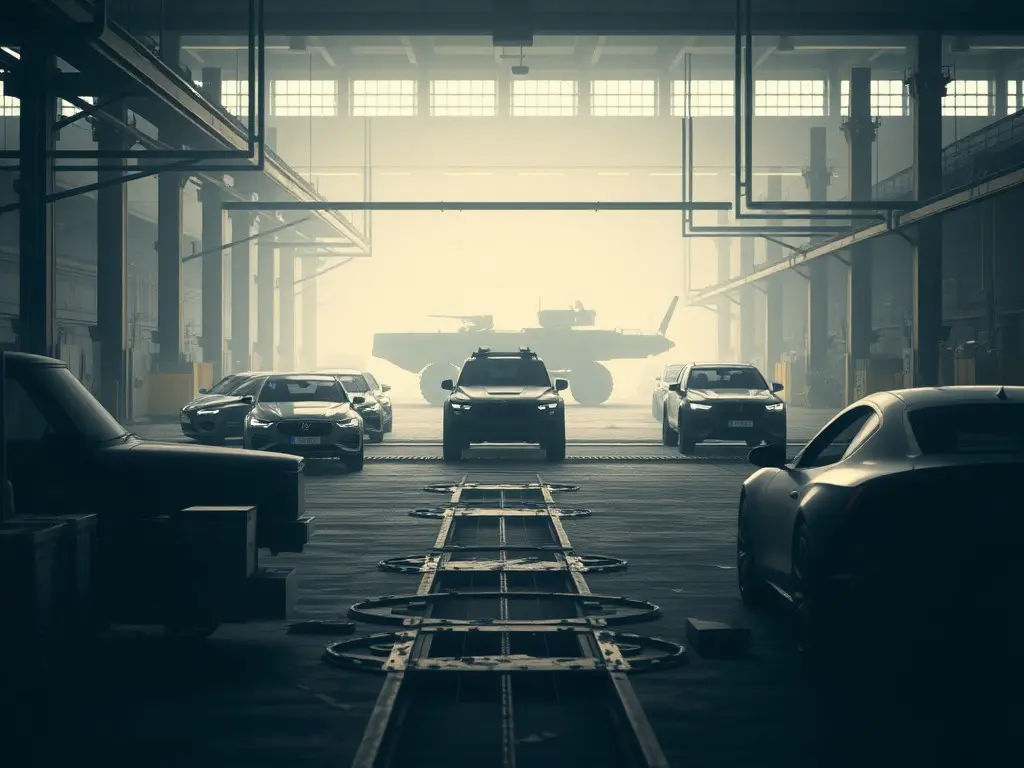
Germany’s carmakers, including Volkswagen, are exploring partnerships with Chinese automakers to utilize underused factories amid weak demand and EV transition challenges, while also considering defence sector conversions due to Europe’s rearmament push. Volkswagen has reportedly discussed joint ventures with Chinese firms and defence companies like KNDS and Rafael Advanced Defence Systems for repurposing idle plants in Saxony and Osnabrueck.
Germany’s car industry is facing severe underutilization of production capacity, prompting automakers to seek alternative uses for their factories. Volkswagen, Europe’s largest automaker, plans to cut global production by one million vehicles, half of which will be reduced in Europe. The company has hinted at potential partnerships with Chinese manufacturers to produce vehicles in German plants, though no concrete deals have been finalized. Stellantis has already taken steps to collaborate with Chinese brands in Spain and France, where costs are lower, to bypass EU tariffs on electric vehicles. Chinese automakers like BYD, MG, and Chery now account for around 9% of Europe’s car sales, intensifying competition. Volkswagen’s spokesman denied immediate plans for Chinese production in German plants, but regional officials, such as Saxony’s economy minister Dirk Panter, have urged embracing such partnerships to secure the industry’s future. Beyond automotive collaborations, German carmakers are exploring defence sector conversions. Reports suggest KNDS, a French-German defence company, is in talks to repurpose a Mercedes-Benz plant in Ludwigsfelde for producing armoured personnel carriers. Volkswagen has also discussed taking over a smaller plant in Osnabrueck for defence-related production, including components for Israel’s Iron Dome air defence system, though details remain unclear. Analysts suggest Chinese automakers may hesitate due to high operational costs in Germany, while Volkswagen’s shift toward defence could face public scrutiny. The company’s cost-cutting measures, including job reductions, reflect broader struggles in the sector as demand weakens and the transition to electric vehicles disrupts traditional models.
This content was automatically generated and/or translated by AI. It may contain inaccuracies. Please refer to the original sources for verification.