Giant rocket Starship: SpaceX postpones next test flight again
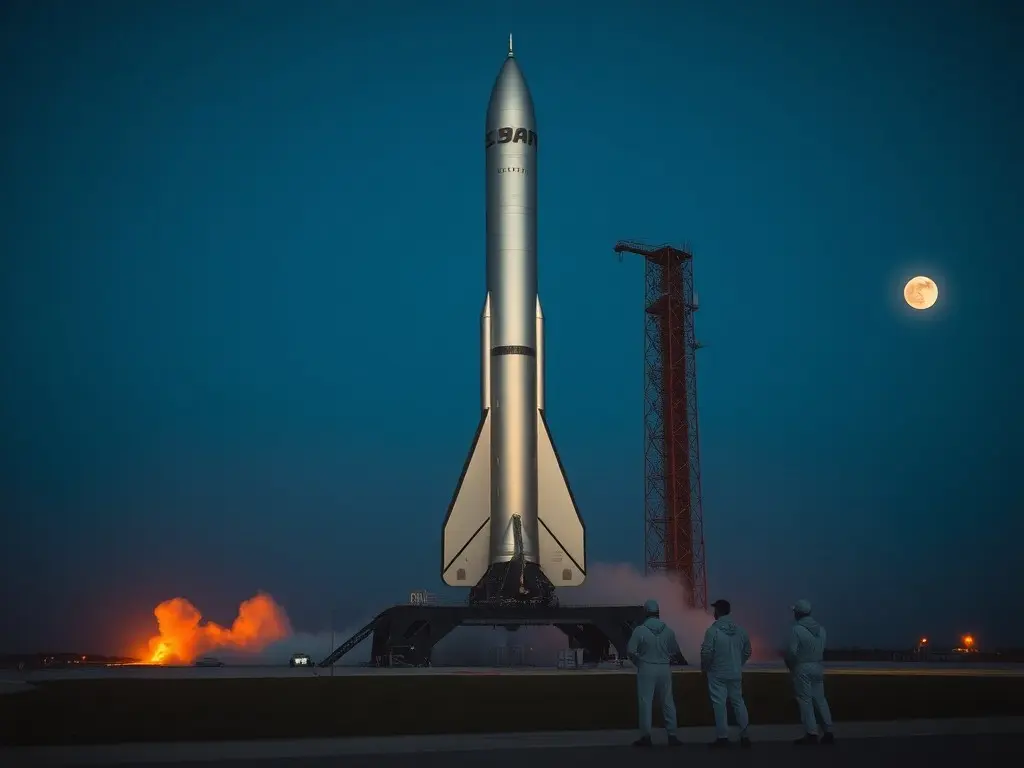
SpaceX postponed the launch of its Starship V3 rocket again due to a hydraulic bolt issue, now targeting Saturday night. The 124-meter-tall rocket, designed for NASA moon missions and Mars flights, has faced multiple explosions and partial successes in prior tests, with this attempt closely watched ahead of SpaceX’s upcoming IPO.
SpaceX has postponed the launch of its Starship V3 rocket for the second time, now aiming for Saturday night if a hydraulic bolt problem is resolved. The launch was originally scheduled for Thursday night but was delayed after an issue was detected. This test flight is particularly significant as it occurs weeks before SpaceX’s highly anticipated initial public offering (IPO), heightening scrutiny on its success. The Starship V3 stands at 124 meters tall, one meter taller than its predecessor, and features a revised propulsion system for increased power. It is also designed for in-space refueling, a critical requirement for NASA’s upcoming Artemis moon missions. SpaceX has constructed a new launch pad to simplify recovery of the rocket’s first stage, though this maneuver is not planned for this test. The Starship consists of two main components: the 72-meter-long Super Heavy booster and the 52-meter-long upper stage. Both are intended to be reusable after returning to Earth. The rocket’s development has been marked by mixed results, including three explosions in 2023 and two successful tests, followed by four more in 2024 with three successes. The first full Starship launch in April 2023 lasted only minutes before disintegrating, while the second attempt in October 2023 ended in an explosion after partial success. SpaceX CEO Elon Musk announced the updated launch timeline via social media, suggesting the company may be exercising extra caution ahead of the IPO. The rocket’s design aims to support NASA’s lunar missions while ultimately enabling crewed flights to Mars. However, the path to full operational capability remains uncertain, with ongoing technical challenges and the need for further testing.
This content was automatically generated and/or translated by AI. It may contain inaccuracies. Please refer to the original sources for verification.