Global temperatures set to stay near record levels: UN weather agency
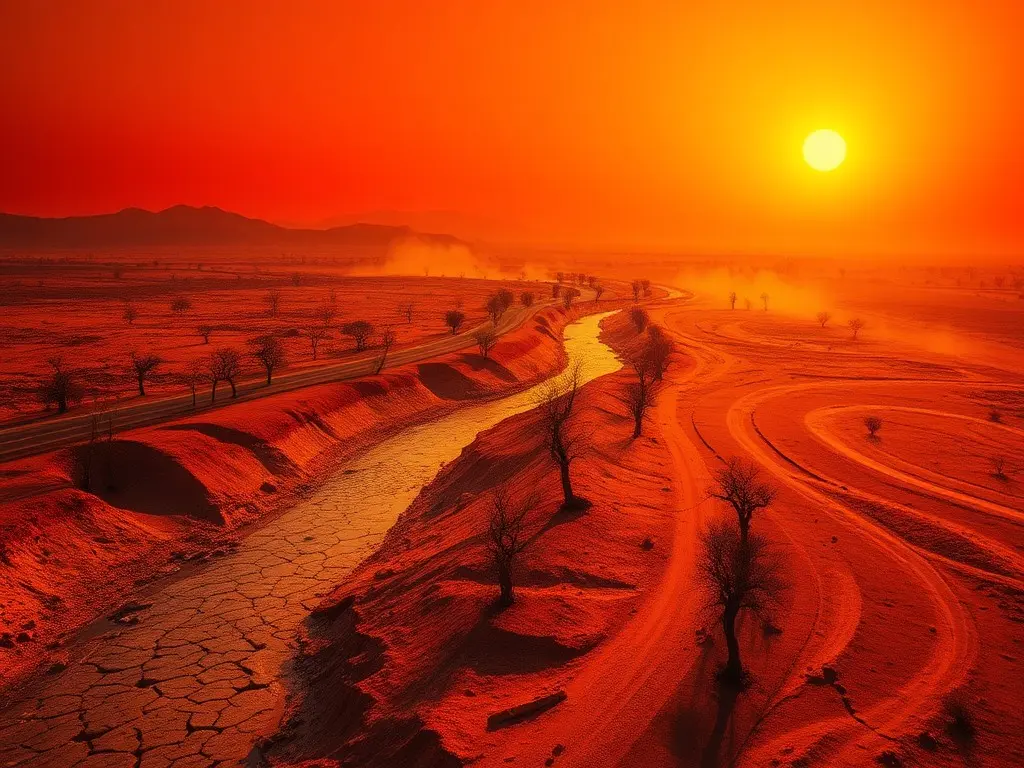
The World Meteorological Organization (WMO) warns global temperatures will likely stay at or near record levels between 2026 and 2030, with an 86% chance at least one year surpasses 2024 as the hottest ever recorded. There is also a 91% likelihood that average temperatures will temporarily exceed the critical 1.5°C threshold above pre-industrial levels during this period, driven by accelerating climate change and an El Niño event predicted for late 2026.
The World Meteorological Organization (WMO) released a report on Thursday, produced by the UK Met Office, indicating global temperatures will likely remain at or near record levels between 2026 and 2030. There is an 86% chance that at least one year in this period will surpass 2024 as the hottest year ever recorded, while a 91% likelihood exists that average global temperatures will temporarily exceed the 1.5°C threshold above pre-industrial levels. The Paris Agreement’s long-term goals remain attainable, as the accord focuses on sustained warming over decades rather than individual years. The report highlights the accelerating pace of global warming, with annual temperatures expected to range between 1.3°C and 1.9°C above the 1850-1900 average. There is also a 75% chance that the five-year average will exceed 1.5°C. Leon Hermanson, the report’s lead author, noted that an El Niño event predicted for late 2026 increases the likelihood of 2027 becoming the next record-breaking year. The Arctic is projected to warm significantly faster than the global average, with temperatures during the next five northern hemisphere winters expected to average 2.8°C above the 1991-2020 baseline. This is more than three-and-a-half times the projected global increase, accelerating sea ice loss in regions like the Barents Sea, Bering Sea, and Sea of Okhotsk. Shifts in global rainfall patterns are also anticipated, with higher-than-average rainfall expected in parts of the Sahel, northern Europe, Alaska, and Siberia, while drier conditions are forecast for the Amazon region and subtropical areas. Wet conditions are likely at higher northern latitudes during winter seasons. The forecasts aim to assist governments and weather agencies in preparing for near-term climate risks, as extreme heat events become more frequent.
This content was automatically generated and/or translated by AI. It may contain inaccuracies. Please refer to the original sources for verification.