GM Thinks AI Can Slash Vehicle Development Time To Just Two Years
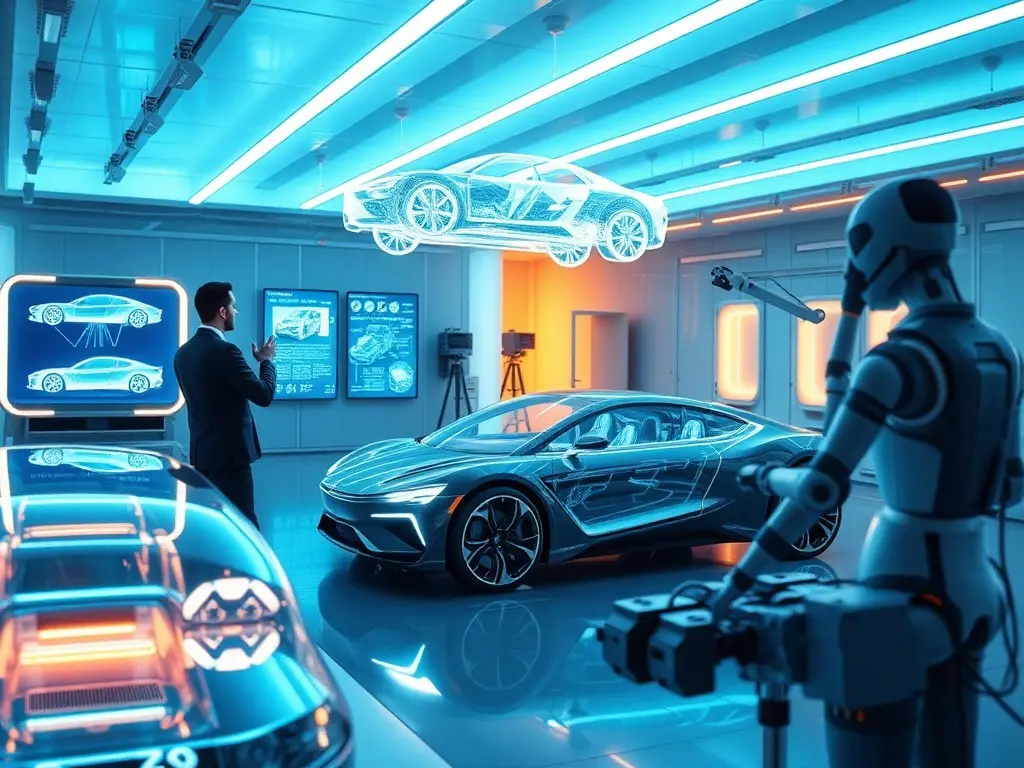
General Motors claims AI and virtual engineering could reduce vehicle development time from four to six years to just two years, citing the GMC Hummer EV’s 20-month production cycle as proof. The company is shifting from physical prototypes to AI-powered simulations for testing crash performance, weather conditions, and system interactions, while also optimizing physical components like the Corvette’s rear hood bracket for durability and weight savings.
General Motors (GM) says artificial intelligence and virtual engineering could cut vehicle development time from the industry standard of four to six years down to just two years. The automaker points to the GMC Hummer EV, which went from concept to production in 20 months, as evidence that this accelerated process is achievable. GM aims to make this speed a standard practice rather than an exception, especially as competition from Chinese automakers, shifting EV demand, and rising development costs pressure the industry. Traditionally, automakers relied on expensive physical prototypes to test handling, aerodynamics, and crash performance before production. GM now uses AI-powered simulation tools and decades of engineering data to test vehicle systems digitally, reducing reliance on physical builds. Jason Fischer, GM’s executive director of virtual integration engineering, noted that physical prototypes are now mostly used for confirmation rather than initial issue detection. The company demonstrated its virtual testing capabilities by simulating a Cadillac Lyriq performing Consumer Reports-style avoidance maneuvers while analyzing hardware and software behavior in real time. Engineers can also recreate extreme weather conditions like rain, snow, and ice without physical testing, evaluating airflow, cooling, and energy efficiency in days instead of months. This approach helps identify potential problems earlier, avoiding costly redesigns later in development. AI is already influencing physical components in GM vehicles. For example, a redesigned rear hood bracket for the Chevrolet Corvette was optimized using topology software and AI-assisted modeling, resulting in a part that is 30% stiffer, 20% lighter, and 95% more durable than the original. GM customizes many of its AI and simulation tools internally rather than relying solely on off-the-shelf software, working closely with suppliers and developing proprietary techniques for its vehicle programs. The shift to AI-driven development allows engineers to test hardware-software interactions far earlier than traditional methods. By reducing physical prototypes and leveraging virtual environments, GM aims to maintain a competitive edge in an industry facing rapid technological and regulatory changes.
This content was automatically generated and/or translated by AI. It may contain inaccuracies. Please refer to the original sources for verification.