Helion Energy wants to build fusion power on a start-up timeline
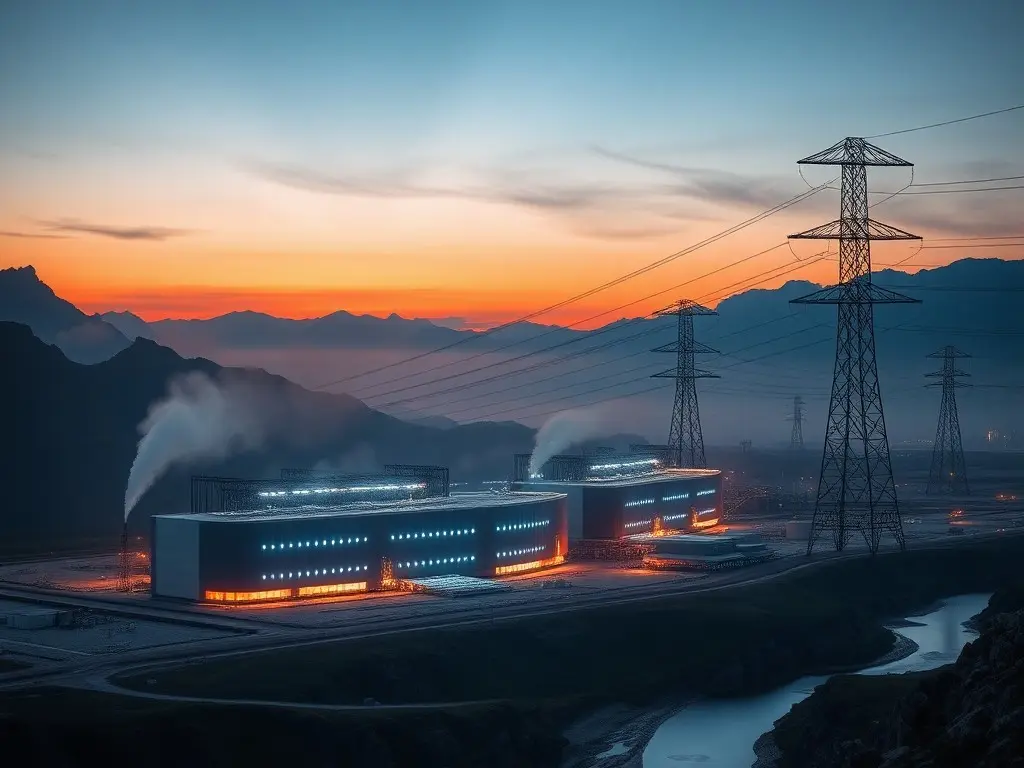
Helion Energy, a privately funded fusion startup backed by Sam Altman, aims to deliver 50 megawatts of electricity to Microsoft data centers by 2029 using its Orion fusion power plant near Malaga, Washington. The company’s linear reactor design, based on a field-reversed configuration, faces challenges in plasma stability and tritium fuel supply, despite its potential for lower-cost magnet systems compared to traditional tokamaks.
Helion Energy, a private fusion company backed by investors including OpenAI CEO Sam Altman, is constructing Orion, a 50-megawatt fusion power plant near Malaga, Washington. The facility, targeting commercial operation by 2029, will supply electricity to Microsoft data centers, marking the first commercial fusion promise in an industry historically reliant on lab milestones. Unlike traditional tokamak or stellarator designs, Helion’s reactor uses a field-reversed configuration (FRC), a plasma shape resembling a spinning smoke ring that requires fewer external magnets, reducing complexity and cost. The project reflects a surge in private investment in fusion, driven partly by AI’s demand for reliable, carbon-free power. Data centers require vast, uninterrupted electricity, and fusion startups position themselves as a solution. However, challenges remain, including plasma stability and the need for tritium fuel, a radioactive hydrogen isotope with a 12-year half-life that must be bred on-site. Oak Ridge National Laboratory’s Troy Carter notes these hurdles are yet to be fully addressed by the industry. Helion’s FRC design, developed over decades by physicist John Slough, relies on self-organizing plasma that stabilizes like a spinning top. While this reduces magnet complexity, maintaining stability as energy input increases remains difficult. Critics, including a Helion co-founder, question the company’s bold timeline amid unproven scalability. Fusion requires heating light nuclei into plasma at over 100 million degrees Celsius while sustaining reactions long enough for energy production. Traditional deuterium-tritium fuel poses risks, as fast neutrons degrade reactor materials, and tritium’s scarcity necessitates on-site breeding. Helion’s approach avoids the high-field magnets of tokamaks but trades off confinement challenges, leaving its commercial viability uncertain. The rush to commercialize fusion reflects broader tech-sector urgency, with AI and data centers accelerating demand for clean energy. Yet physics constraints persist, and Helion’s 2029 deadline hinges on overcoming decades-old engineering obstacles. If successful, Orion could redefine energy infrastructure, but skeptics warn the path remains fraught with technical and logistical risks.
This content was automatically generated and/or translated by AI. It may contain inaccuracies. Please refer to the original sources for verification.