Here’s why the failure of Blue Origin’s New Glenn rocket is so catastrophic
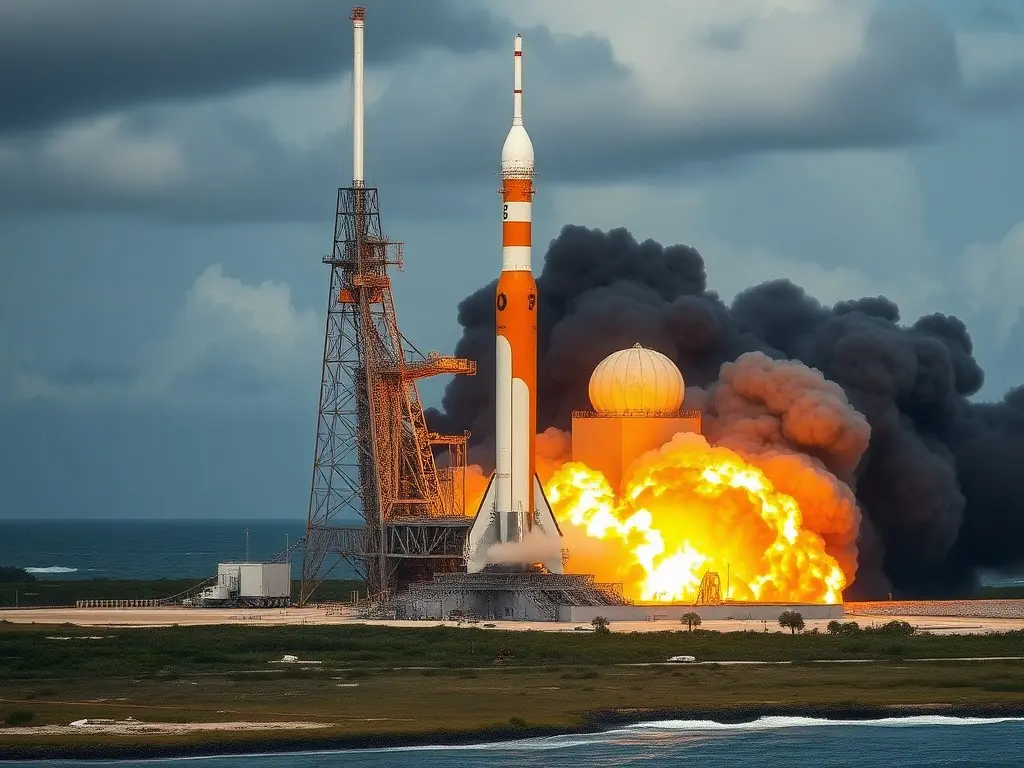
Blue Origin’s New Glenn rocket exploded during a static-fire test at Launch Complex 36A in Florida, causing significant damage to the facility and surrounding area. The incident threatens Blue Origin’s launch capabilities, NASA missions, and the broader U.S. space industry, as the company lacks an operational backup launch site for New Glenn." "article": "Blue Origin’s New Glenn rocket detonated during a static-fire test at Launch Complex 36A in Florida on May 28, 2026, producing a massive fireball that scattered debris across coastal scrubland and into the sea. The explosion caused extensive damage to the launch facility, which Blue Origin had spent years and hundreds of millions of dollars developing, including its towering lightning protection infrastructure. The incident has left Blue Origin without an operational launch pad for New Glenn, as the company’s only other planned site, LC-36B, is still under preliminary construction. Additional plans for a launch facility at Vandenberg Space Force Base in California remain in early stages. The destruction of LC-36A also poses risks to NASA and the broader U.S. space industry, which relies on Blue Origin for critical missions. The failure highlights the vulnerability of launch infrastructure, as even successful rocket tests can result in catastrophic damage. SpaceX founder Elon Musk previously noted that clearing the launch pad was a primary goal for early Falcon Heavy and Starship tests, emphasizing the challenges of ground systems. Blue Origin’s next steps will involve assessing damage, recovering debris, and determining whether repairs or a new site can be developed in time to restore launch capabilities. The U.S. Space Force and NASA are expected to assist in evaluating the incident’s impact on future missions and space industry operations. Without an alternative launch site, Blue Origin’s ability to meet contractual obligations—including potential NASA partnerships—could be delayed indefinitely. The explosion underscores the high stakes of rocket development and the fragility of space launch infrastructure.
Blue Origin’s New Glenn rocket detonated during a static-fire test at Launch Complex 36A in Florida on May 28, 2026, producing a massive fireball that scattered debris across coastal scrubland and into the sea. The explosion caused extensive damage to the launch facility, which Blue Origin had spent years and hundreds of millions of dollars developing, including its towering lightning protection infrastructure. The incident has left Blue Origin without an operational launch pad for New Glenn, as the company’s only other planned site, LC-36B, is still under preliminary construction. Additional plans for a launch facility at Vandenberg Space Force Base in California remain in early stages. The destruction of LC-36A also poses risks to NASA and the broader U.S. space industry, which relies on Blue Origin for critical missions. The failure highlights the vulnerability of launch infrastructure, as even successful rocket tests can result in catastrophic damage. SpaceX founder Elon Musk previously noted that clearing the launch pad was a primary goal for early Falcon Heavy and Starship tests, emphasizing the challenges of ground systems. Blue Origin’s next steps will involve assessing damage, recovering debris, and determining whether repairs or a new site can be developed in time to restore launch capabilities. The U.S. Space Force and NASA are expected to assist in evaluating the incident’s impact on future missions and space industry operations. Without an alternative launch site, Blue Origin’s ability to meet contractual obligations—including potential NASA partnerships—could be delayed indefinitely. The explosion underscores the high stakes of rocket development and the fragility of space launch infrastructure.
This content was automatically generated and/or translated by AI. It may contain inaccuracies. Please refer to the original sources for verification.