Higher Ed’s Enrollment Cliff Is Here. Now Meet the Graduate Glut.
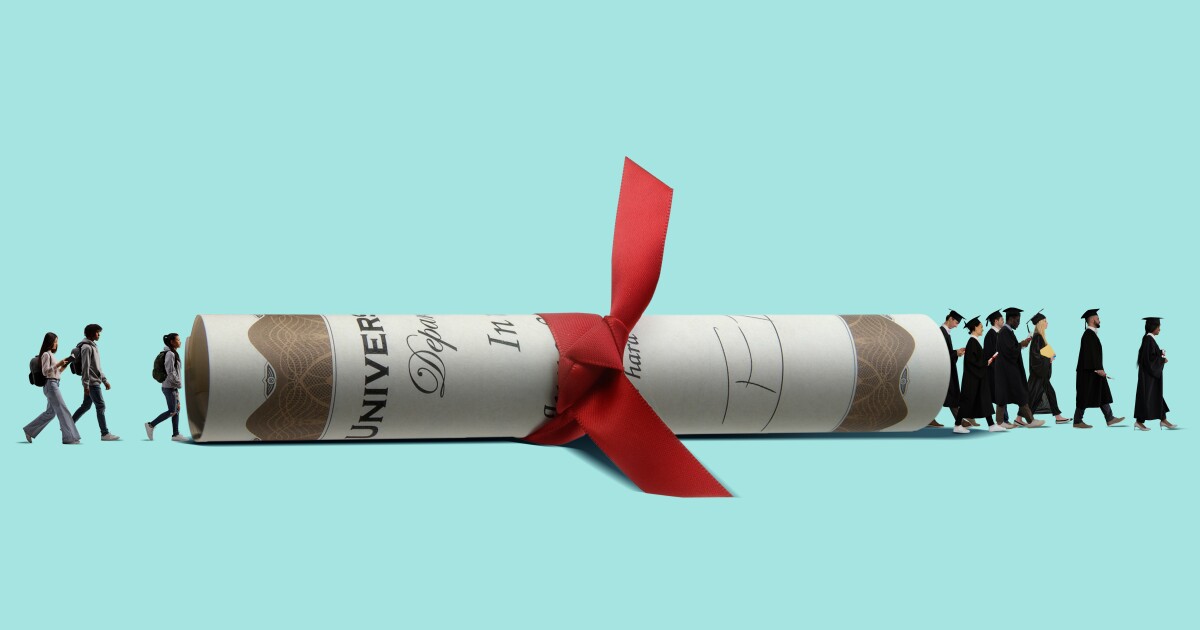
The US is experiencing a decline in 18-year-old Americans due to lower birth rates during the Great Recession, potentially leading to college closures and increased competition, while also facing a surplus of college graduates outpacing available jobs. By 2034, there could be a surplus of 7 to 11 million graduates, according to Gad Levanon, chief economist at the Burning Glass Institute.
The US higher education system is facing two concurrent challenges: a decline in the number of potential students due to lower birth rates during the Great Recession and a surplus of college graduates. Between 2008 and 2019, 6.6 million fewer children were born than expected. College-going rates have also fallen from 70% to 61% between 2013 and 2023. The demographic contraction is expected to affect the entire country. The number of college graduates is outpacing available jobs, with many positions vacated by retiring baby boomers not requiring a college degree. By 2034, there could be a surplus of 7 to 11 million graduates. Some college leaders are economizing by scaling back programs and freezing hiring, while others are doubling down on recruitment. The graduate glut is not unique to the US, with countries like South Korea experiencing similar issues.
This content was automatically generated and/or translated by AI. It may contain inaccuracies. Please refer to the original sources for verification.