How climate-resilient agriculture, sustainable farming are emerging as key investment focus within India’s agtech ecosystem
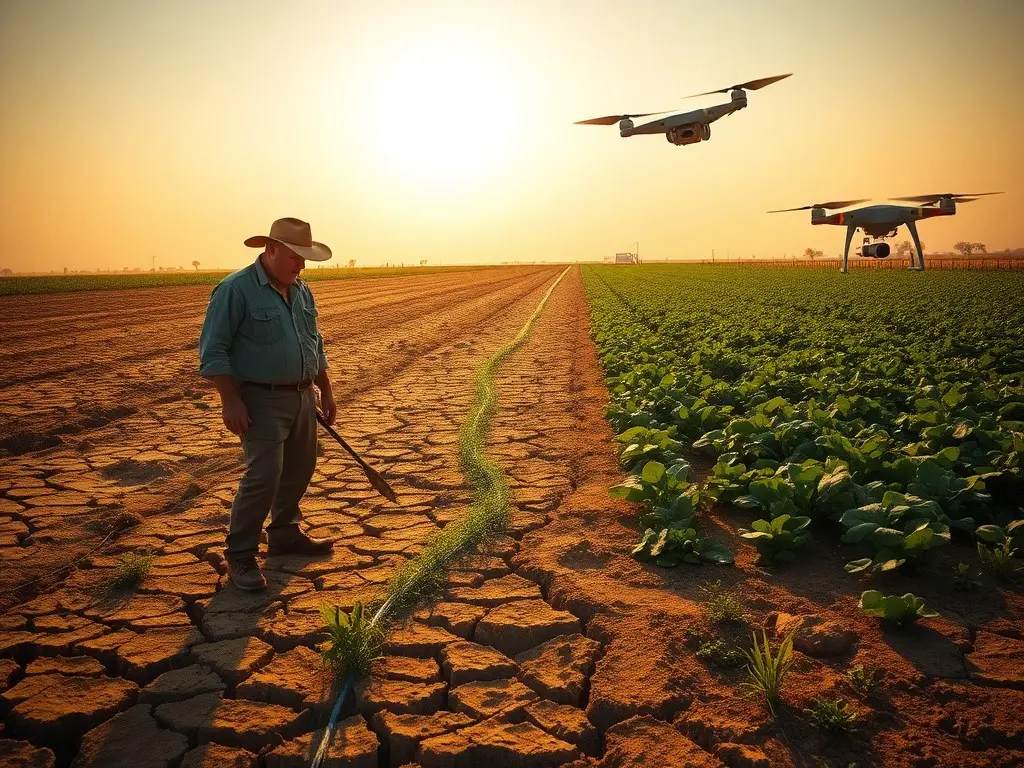
India’s agtech sector is shifting focus toward climate-resilient farming as extreme weather, water scarcity, and soil degradation threaten agricultural productivity, with investments now prioritizing water-efficient technologies, regenerative practices, and AI-driven solutions. The sector is projected to grow from $9 billion to $24-28 billion by 2030, driven by ESG-linked capital and policy initiatives like the National Mission on Natural Farming.
India’s agriculture faces existential challenges: erratic monsoons, depleting water reserves, and soil degradation threaten food security for 1.4 billion people. The Council on Energy, Environment and Water recorded 310 extreme weather events post-2005, while the Economic Survey 2025-26 warns of a 15-25% drop in farm incomes due to climate change. Traditional agtech solutions—focused on market access and inputs—no longer suffice; the priority now is yield per liter of water, temperature resilience, and soil preservation. Water conservation is central to survival. Technologies like drip irrigation, soil moisture sensors, and drought-resistant crops are gaining traction as aquifers shrink. Companies are now selling the difference between farms that persist in 2040 and those that collapse. Meanwhile, bio-stimulants, microbial fertilizers, and regenerative practices offer long-term soil health but require patience, with pilot data showing 15-25% yield improvements when properly implemented. India generates 250 million tonnes of agricultural residue annually, much of it burned. Startups converting waste into bioenergy, biochar, and biofertilizers—paired with decentralized solar for irrigation and cold storage—create farm-side income independent of harvest cycles. Post-harvest infrastructure, traceability, and AI-driven crop advisory further enhance resilience, with adoption scaling through Farmer Producer Organizations and agri-input networks. The sector’s growth hinges on intelligence and policy alignment. AI tools for soil analytics, predictive weather, and carbon/water measurement are making fragmented markets scalable. ESG-linked investments—projected to exceed $40 trillion by 2030—are flowing into Indian agriculture, with carbon credits and regenerative farming under schemes like PKVY and CCTS. The agtech market is expected to triple to $24-28 billion by 2030, but success depends on integrating water efficiency, biological resilience, and data-driven farming into mainstream practice.
This content was automatically generated and/or translated by AI. It may contain inaccuracies. Please refer to the original sources for verification.